Waiting on a Dead World: Science and Being Human

Instead of writing about Halloween, I’ll share a seasonally-appropriate story and talk about science, death being human:

And now, let me tell you a tale from a world whose inhabitants aren’t dead — but aren’t alive, either.


Waiting on a Dead World

They grew in the light of a golden sun. They studied the soil, stones and waters around them. They studied the stars and fire. They studied their world’s myriad forms of life. And they recorded what they had learned.

They lived, engendered more of their kind, watched their young grow and learn, and they died. But their sun continued to shine, and their young grew old, studied, and added to their store of knowledge.

Stars do not grow old, as living things do: but stars change.

As their store of knowledge increased, they came to know that in time their star’s inner fires would fail, choked in ash which had accumulated over ages beyond imagining.

Armed with that knowledge, they could prepare.

Some decided to accept the end of their world as their own end, and the end of all who would come after them, accepting what was to come.

Others built tiny worlds, moving them as the once-golden sun grew, consuming its inner worlds and scorching their home. They lived, grew, engendered and died: and learned.

In time some of them grew restless. They turned their eyes to the stars; left the shrunken, glaring ember that had been their sun behind; and sought other suns.

A few would not die with their world, and would not leave. They had learned, long ago, how to record their memories, habits and desires in forms which could endure boiling oceans and the hot wind which swept air from their home.

And so, as their star billowed out, puffing its substance into the void, they left copies of their minds: buried under miles of rock. Not as inert patterns of memory and habit: but active as their living forms had been. For in this way they thought that some part of themselves, at least, would endure.

And endure they did: as their sun burned the last of its fuel and shrank to a white-hot spot in the sky of their now-airless world.

At last they ventured up, in mechanical bodies well-suited to the vacuum and cold.

Standing on a dead world, their sun a point of light which would have pained living eyes, they discovered that near-immortality was not quite as satisfactory as they had imagined.

Their artificial bodies were adequate, but did not provide the quality of sensation which they remembered.

Some learned to be content with their new form.

Others decided that they wanted to taste, to smell, to touch as they once had. They wanted to live as creatures of flesh and blood again.

It was not a futile desire. The methods they had used to inhabit mechanical bodies could also be used to impose their will on organic creatures, and draw sensations from the living hosts.

There was nothing living on their world. But, they reasoned, just as some of their own kind had traveled the void between stars, others might come to their world.

So they built a huge pattern of concentric rings, surrounded by a pulsing radiance which could have no natural source.

And they waited.

After a very long time, a moving point of light appeared in their sky. It drifted down, until even living eyes could have recognized a mass of cylinders and spheres: a vessel built to carry living beings from world to world.

The vessel landed, opened, and living creatures stepped out. And were met by the waiting minds.

It was worth the wait.

copyright © Brian H. Gill 2009 (revised/corrected October 21, 2020)


Inspiration and Stellar Evolution


(From NASA/JPL-Caltech, used w/o permission.)
(An artist’s illustration G29-38, a dusty disk and a comet that’s come too close to the star.)

I wrote “Waiting on a Dead World” after reading an article about white dwarfs:

Observations from NASA’s Spitzer Space Telescope suggested that asteroids and terrestrial planets might orbit at least one in every 100 white dwarf stars.

That could mean that before they became white dwarfs, they had planetary systems like ours.

Make that “had a planetary system.”

We’ve yet to find a star and planetary system that’s just like ours.

Still Seeking a Solar System Analog

A. Feild (STScI)'s illustration of the Upsilon Andromedae system.
(From NASA, ESA and A. Feild (STScI); used w/o permission.)
(The Solar System and Upsilon Andromedae’s planetary system.)

Some of the 4,000-plus exoplanets we’ve found bear a passing resemblance to worlds in our Solar system. At least two, HIP 11915 b and Upsilon Andromedae e, are about as heavy as Jupiter and in similar orbits. And HIP 11915 is almost a twin to our sun.

HIP 11915 b might be part of a planetary system that looks like ours. But it’s the only planet we’ve found there so far.

Upsilon Andromedae e is the outermost planet orbiting Upsilon Andromedae A, the brightest of two stars in a widely-separated binary.

The outermost that we’ve found, at any rate.

Upsilon Andromedae’s planetary system is arguably the closest to a Solar System analog that we’ve found.

Mainly because of its Jupiter analog, and having a set of inner planets: Upsilon Andromedae b, c and d.

Problem is, the inner planets are more massive than Jupiter, almost certainly gas giants.

Upsilon Andromedae d, that’s the one with the cockeyed orbit, spends at least some of its time in the star’s habitable zone.

With roughly 10 times Jupiter’s mass, it almost certainly has no solid surface and isn’t habitable. A rocky moon orbiting Upsilon Andromedea d might support life, and that’s another topic.1 (June 30, 2017)

Metaphors and the Lives of Stars

“Dead stars” is a misnomer, since stars aren’t alive. Unless Olaf Stapledon’s fictional speculation was right.

“…Stars are best regarded as living organisms, but organisms which are physiologically and psychologically of a very peculiar kind. The outer and middle layers of a mature star apparently consist of “tissues” woven of currents of incandescent gases. These gaseous tissues live and maintain the stellar consciousness by intercepting part of the immense flood of energy that wells from the congested and furiously active interior of the star….”
(“Star Maker,” Chapter XI – Stars and Vermin, 3. Stars; Olaf Stapledon (1937), via gutenberg.net.au))

Saying that white dwarfs are “dead stars” makes sense, though, as a metaphor.

And, I think, sounds nicer than calling the things “degenerate dwarfs” and rolls off the tongue — another metaphor — more easily than “stellar core remnant.”

Either way, a white dwarf is what we get after when a small- to medium-size star runs out of fuel. “Small to medium” means between about 0.07 and 10 times as massive as our sun. Any smaller than that, and there isn’t enough internal pressure to have fusion reactions.

William Herschel spotted a white dwarf, 40 Eridani B, in 1783. Three astronomers, Henry Norris Russell, Edward Charles Pickering and Williamina Fleming, confirmed that 40 Eridani B spectral class A — white-hot — in 1910.2

Sirius, Procyon and Weighing Stars


(From Akira Fujii; via Hubble Space Telescope, ESA, NASA; used w/o permission.)
(The Winter Triangle: Procyon, Betelgeuse and Sirius. The tiny green bracket between Procyon and Betelgeuse highlights the Cone Nebula.)

Friedrich Bessel noticed that Procyon and Sirius, the dog star, wobble. In 1844 he said that Procyon and Sirius were double stars, and that their companions hadn’t been spotted.

Alvan Graham Clark found a faint companion for Sirius, “the Pup” — AKA Sirius B— in 1862. John Martin Schaeberle observed Procyon B in 1896. Both were dim, but white-hot.

Cutting a long story short, knowing the distance to Sirius and Procyon told astronomers how far Sirius B and Procyon B were from their brighter companions. That, timing their orbits, and noting how much they wobbled, showed how massive each star is.

Sirius A is twice as massive as our sun, give or take. Sirius B’s mass is around half that. Procyon B is about six tenths as massive as our star.

We’d learned that the more massive stars are, the hotter and brighter they are. Except for Sirius B and Procyon B and other white dwarfs.

Sirius B is about as hot as Sirius A, so every square mile of its surface should be as bright as the bigger star. But Sirius B is something like 10,000 times fainter.

Turns out that Sirius B is only 12,000 kilometers in diameter, 7,300 miles: smaller than Earth.

For main-sequence stars, that’s tiny. For white dwarfs, it’s normal. And means that at least white dwarf may have a planet that’s wider than its star.

By the way — these numbers are all approximate, but pretty close. Astronomers are still fine-tuning what we know about the universe.3


“Vastness” and Questions

“Many a hearth upon our dark globe sighs after many a vanish’d face,
“Many a planet by many a sun may roll with a dust of a vanish’d race….”
(“Vastness,” Tennyson (ca. 1889) via Bartleby.com)

Finding evidence of dust, debris and maybe comets around white dwarfs wasn’t, I suspect, a surprise. Finding remnants of a planetary system so close to the star may have been.

The last I checked, scientists figure that when our sun runs out of hydrogen and becomes a red giant, it’ll be bigger than the current orbits of Mercury, Venus and maybe Earth. When it finally collapses and becomes a white dwarf, the inner planets will be gone.

That didn’t bother me while I was writing “Waiting on a Dead World.”

Maybe our current models aren’t spot-on accurate. Maybe the “golden sun” and the once-habitable world weren’t just like Earth and our sun.

And maybe those who “would not die with their world, and would not leave” moved their planet to a slightly higher orbit.

We can’t do that. Not yet.

But we do have the science and most of the technology to move small asteroids: a couple centuries after developing steam engines and decades after launching our first spaceships. A billion or so years from now, my guess is that we’ll have learned a few new tricks.4

If folks who are a bit like us live on other worlds, maybe they’re at least as smart as we are. Or have been around longer than we have. Or both.

I think the question isn’t whether or not my fictional “waiting minds” would have a planet to wait on. The real question is how I, as a Christian, could have written something like that story. And would admit having written it.


Embracing Truth

NGC 4848 and other galaxies, image by Hubble/ESA.

I live in a vast, ancient universe.

We’ve known it was big and old for a long time. Some of us have realized that, big and old as what we see is: it’s not bigger or older than God.

“The heavens declare the glory of God; the firmament proclaims the works of his hands.”
(Psalms 19:2)

“Terrible and awesome are you,
stronger than the ancient mountains.”
(Psalms 76:5)

“All your works give you thanks, LORD and your faithful bless you.
“They speak of the glory of your reign and tell of your mighty works,
“Making known to the sons of men your mighty acts, the majestic glory of your rule.”
(Psalms 145:1012)

“Indeed, before you the whole universe is as a grain from a balance, or a drop of morning dew come down upon the earth.”
(Wisdom 11:22)

Over the last few centuries, we’ve learned that it’s much bigger and older than some of us thought. I’m okay with that.

I also figure that God is large and in charge, no matter how much we learn.

“Our God is in heaven
and does whatever he wills.”
(Psalms 115:3)

Philosophers and Models

Some ancient philosophers said that we live in a world that had a beginning and will have an end.

Others said that we’re in a world that had always been here and always will be.

They couldn’t both be right, assuming that reality is real, so the eternity or transience of the world encouraged ancient philosophical debates.

We’ve learned that Earth had a beginning. And we’re learning about how it’s likely to end.

The bad news is that our sun burns — fuses, actually — hydrogen, and has already expended about half of its reserves.

The good news is that our sun can keep burning hydrogen for something like 5,000,000,000 years. On the other hand, it’ll keep getting brighter and hotter before that happens, by 1% every 100,000,000 years. Give or take a bit.

Assuming that mathematical models we’re using are an approximate match to reality.

That’s not an unreasonable assumption, since we’re finding examples of molecular clouds, protoplanetary disks and stars that match the models.5

Again, assuming our current mathematical models are an approximate match to reality.

Earth, Eons and New Puzzles

What we’re learning about stars and how they work says that our sun should have been only 70-75% as bright in Earth’s Archean eon as it is today.

If it had been that bright then, Earth’s water would all have been frozen.

But we’ve learned that our planet had liquid water in the Archean. And that the atmosphere probably wasn’t different enough to have kept Earth sufficiently warm.

I could take that inconsistency, demonstrate that hills east and north of Sauk Centre are no more than a few thousand years old, and proclaim the veracity of Bishop Ussher.

But I won’t.

For one thing, I know that my town is on land that was under glaciers several times recently. “Recently” on a geological time scale, that is.

Besides, I figure that what we haven’t learned all there is to know about Earth, the universe and everything in the last century. But we have learned. And now we have more puzzles to solve.

And I’d be astounded if physicists, cosmologists, geologists, and all the other “ists,” were all wrong — and all came up with pretty close to the same ages for Earth and the universe.6

As I’ve said before, I think Pope Leo XIII was right. (December 24, 2019)

“…God, the Creator and Ruler of all things, is also the Author of the Scriptures – and that therefore nothing can be proved either by physical science or archaeology which can really contradict the Scriptures. … Even if the difficulty is after all not cleared up and the discrepancy seems to remain, the contest must not be abandoned; truth cannot contradict truth….”
(“Providentissimus Deus,” Pope Leo XIII (November 18, 1893))

Faith, Reason and Me

It’s been years since someone told me I shouldn’t talk about science and religion.

My guess is that he felt I should pick a side, and either ignore or attack the other.

Given my country’s cultural history, I see his point.

I’m not sure how many folks assume that a person can accept either science or religion: but not both.

Folks who are rabidly religious and warn the rest of us about the Satanic snares of science don’t help. Neither do those who apparently think that religion, particularly Christianity, demands abysmal ignorance.

I’m also not sure how many American Protestants really believe that Catholics can’t be Christians because the pope is the Antichrist. And that’s yet another topic.7

Me? I was a Christian before I became a Catholic, and I still am. (September 22, 2017)

And because I’m a Catholic, using my brain isn’t an option. It’s an obligation. So is reading and understanding the Bible. (Catechism of the Catholic Church, 154-155, 101-133)

I’m also obliged to embrace truth. All truth. Including truth we find in the natural world. (Catechism, 32, 41, 74, 142-150, 2500)

If I’m doing it right, paying attention to this universe will point me toward God.

“For from the greatness and the beauty of created things their original author, by analogy, is seen.”
(Wisdom 13:5)

Maybe that helps explain why I didn’t and don’t feel guilty about writing a story that depends on what scientists say about stellar evolution.


Life, Death and Dante’s Wood of the Suicides

Then there are the folks in the story who “…left copies of their minds…” and “…discovered that near-immortality was not quite as satisfactory as they had imagined….”

The basic idea, putting someone’s mind into a computer or robot, is a science fiction staple. Examples go back at least to the hapless townspeople in Frederik Pohl’s 1955 “The Tunnel Under the World” and Arnim Zola in Jack Kirby’s 1977 Captain America #208.8

Some stories assume that the process is a transfer: that Our Hero’s or The Villain’s consciousness stop being in one body and end up in another.

Others assume that the memories and personality are copied into another body. Depending on what the author wants, that results in duplicate characters, an Evil Twin or something entirely different.

Writing “Waiting on a Dead World,” I chose the copy option: skipping over the relatively brief interval when the original versions and the copies were both around.

And ignoring the existential angst and animus which might result from two versions of the same individual coexisting.

Neuroimaging and Pickled Brains, Altruists and Lab Rats

We’ve learned quite a bit about how brains work since Arnim Zola first tangled with Captain America.

Neuroimaging is still science fiction. It’s also one of a growing number of new medical diagnostic technologies.

But we still don’t have the tech to scan someone’s brain and upload his or her personality into a computer and/or robot.

That didn’t keep an outfit called Nectome from announcing that, for a fee, they’d pickle your brain: promising to preserve it until someone learned how to revive or rebuild it.9

The pickling process would be fatal. MIT cut ties with the project, and that’s yet again another topic. (May 2, 2018)

Whether or not someone who had his brain pickled is legally dead may be debatable.

My guess is that answers depend on who’s talking, what current laws say, and the odds of ‘revive and rebuild’ tech being developed.

And, as some science fiction authors have realized, folks with such technology would need reasons to revive and rebuild a pickled person. On the ‘up’ side, they could be altruists. Or maybe they ran out of lab rats.

But my “waiting minds” probably weren’t pickled. What I had in mind was more along the lines of Arnim Zola’s approach.

Which brings me to Canto XIII — thirteen, how appropriate 🙂 — of Dante’s Inferno.

Dante’s Hell: Seventh Circle, Second Ring

A Gustave Doré illustration for Dante's Inferno, Canto XIII, line 34.
(From Gustave Doré; via Wikimedia Commons, used w/o permission.)
(Virgil, Dante and Pier delle Vigne in The Wood of the Suicides.)

“So I put forth my hand a little way,
And broke a branchlet from a thorn-tree tall;
And the trunk cried out: ‘why tear my limbs away?'”
(“The Divine Comedy,” Inferno, Canto XIII, lines 32-33 (ca. 1308-1320) Trans. by Dorothy Sayers (1949))

Following the “you won’t know the players without a program” principle, here’s a short who’s who for Canto XIII:

  • Dante
    • A poet who took a wrong turn
  • Virgil
    • Another poet, who’s leading Dante through Hell
  • Pier delle Vigne
    • A diplomat who allegedly dissed his boss, killed himself and now looks like a tree
  • Harpies
    • Nasty critters with wings, claws, human faces and bad attitudes

Canto XIII finds all of the above in the Wood of the Suicides, or Wood of the Self-Murderers. Or, as Dante put it:

“Non era ancor di là Nesso arrivato,
quando noi ci mettemmo per un bosco
che da neun sentiero era segnato….”
(Inferno: Canto 13, Dante, via Dartmouth.edu)

In Dante’s version of Hell, folks who killed themselves experience a unique doom.

When their disembodied souls land in the seventh circle’s second ring, they take root and sprout as trees. They’re currently getting clawed by harpies and bludgeoned by profligates. Then, after the Last Judgment, it gets worse.10

I realize that sounds harsh.

But let’s remember that Dante’s Hell wasn’t supposed to be pleasant. And that his “Divine Comedy” is an epic narrative poem, one of the world’s great literary works: and not on a par with Sacred Scripture.

“Here Shall They Hang” — Wood of the Suicides and Clueless Critics

Gustave Doré's 'Harpies in the wood of the suicides' illustration for Dante's Inferno, Canto XIII.That said, Dante’s Wood of the Suicides reflects Catholic beliefs about body, soul and responsibility.

More accurately, it reflects Catholic beliefs for folks who understand poetry. I’ll get back to that.

Folks whose souls landed in his dreary forest had, in a sense, tried to separate body and soul.

Their punishment, after the Last Judgment, would be to have the bodies they threw away — “spoils” in lines 104 and 105 — hung in their branches.

“We shall take our flight, when all souls take their flight,
to seek our spoils, but not to be rearrayed,
for the spoils of the spoiler cannot be his by right.

“Here shall we drag them, to this gloomy glade;
Here shall they hang, each body evermore
Borne on the thorn of its own self-slaughtering shade.”
(“The Divine Comedy,” Inferno, Canto XIII, lines 103-108 (ca. 1308-1320) Trans. by Dorothy Sayers (1949))

Some folks in Dante’s day didn’t know much about poetry:

‘here shall they hang:’ Nowhere, perhaps, does Dante assert more clearly than in this moving an terrible image his conviction of the intimate and unbreakable bond between spirit and flesh. The Suicides willed the death of the flesh, but they cannot be rid of it: their eternity is an eternity of that death. (The absurd charge of heretically denying the resurrection of the body was brought against Dante on the strength of these lines, but only by those to whom the language of poetic imagery is a sealed book.)”
(Dorothy L. Sayers’ footnote to “The Divine Comedy,” Inferno, Canto XIII, line 107; “The Divine Comedy 1 Hell,” Dante Alighieri, Translation by Dorothy L. Sayers (1949); Penguin Classics reprint)

And that’s still another topic.

Being Human: Body and Soul

As a human being, I’m a body and a soul. My material and spiritual parts are designed to work as a single unit. Death separates body and soul, but it’s a temporary situation. They’re reunited before the Last Judgment. (Catechism, 362-365, 990-991, 1005, 1038-1041, 1059)

So, what’s that got to do with suicide?

Backing up a bit, human life is sacred. All human life: yours, mine, everyone’s. It’s a gift from God. (Catechism, 2258)

If I murdered someone, I’d be taking that person’s God-given life. (Catechism, 2258-2317)

Taking my own life would make a bad decision worse. I’d go straight to my particular judgment, with no time to reconsider and repent. (Catechism, 1021-1022, 2280-2283)

But I won’t tell anyone that a suicide victim is in Hell: irrevocably damned. I’m not sure why some folks share that despairing thought.

For one thing, despair is a bad idea. (Catechism, 2091)

For another, I’m expected to stay hopeful. And pray:

“We should not despair of the eternal salvation of persons who have taken their own lives. By ways known to him alone, God can provide the opportunity for salutary repentance. The Church prays for persons who have taken their own lives.”
(Catechism, 2283)

Avoiding Suicide: Help is Available
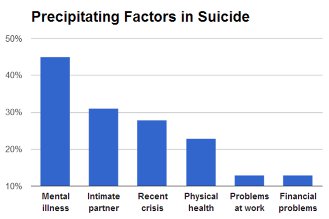
Suicide is a personal topic for me.

I lost a dear friend that way, and have felt the impulse occasionally.

In my case, feeling suicidal from time to time shouldn’t be a surprise. Depression is a major risk factor. That’s something I’ll save for another post.

Today, I’ll mention a resource, and leave it at that:

  • National Suicide Prevention Lifeline
    800-273-8255
    A free, 24/7 service that can provide suicidal persons or those around them with support, information and local resources.
  • Suicide Prevention Lifeline
    suicidepreventionlifeline.org

Art and Being Able to Smell Roses

I was going somewhere with all this. Let me think.

A story beginning with a golden sun and curious folks — ending with disillusioned minds waiting to dry-gulch unsuspecting explorers.

Stars, planets, science and metaphors.

Tennyson’s “Vastness” and a rhetorical question.

Faith and reason, science and religion.

Life, death and being human.

Right.

“In the Image of God”: Creativity Included

I’ve known folks who don’t like fiction because “it isn’t true.” They have a point, and I wouldn’t try forcing them to read Carroll’s “Alice’s Adventures in Wonderland.”

But I won’t stop enjoying stories, and on rare occasions writing my own. I don’t see a problem with that.

That’s because humans are made “in the image of God”. (Genesis 1:2628)

Learning about this world, using our knowledge to develop new technologies, and using our imaginations is in our nature. Science and technology are part of being human. (Catechism, 35-36, 301, 303-306, 311, 1704, 2293-2296)

Part of our job is admiring and describing God’s universe. That’s not even close to thinking we own this world. (Sirach 17:114; Catechism, 283, 341, 2415)

We’re also made with a reflection of God’s creativity.

“…To the extent that it is inspired by truth and love of beings, art bears a certain likeness to God’s activity in what he has created….”
(Catechism, 2501)

And, since we have free will, we can misuse our talents. (March 5, 2017; July 17, 2016)

I figure that what the Church says about art applies to writing: putting words together and recording the result. It’s one of the many ways a human can reflect God’s image.

And it’s something that I can do well: or mess up.

Science Fiction and Attitudes

Back in my first time through college, an earnestly-Christian chap told me that science fiction was evil. He didn’t quite put it that way, but that’s the idea.

The problem, he told me, was that the genre kept describing technical problems that humans resolved by using our brains.

Again, he didn’t quite put it that way. He wouldn’t or couldn’t explain how his view lined up with our “dominion” over this world.

I suspect that what bothered him was the genre’s sometimes-overt contempt of faith, religion, and suchlike “superstitions.”

Make that the contempt expressed by some science fiction authors.

It’s Alive! — Oh, ICK!!

Oddly enough, science fiction and an assortment of allegedly-Christian offshoots share a Gnostic loathing for the material.

Or the organic, at any rate.

“Two guys I would not want along on a camping trip. If H. G. Wells was uncomfortable with nature, Hugo Gernsback had issues with the whole surface of the Earth….

“This illustration reproduced from the magazine SCIENCE AND INVENTION of February 1922, shows a city 10,000 years hence as conceived by Hugo Gernsback…. The city the size of New York will float several miles above the surface of the earth, where the air is cleaner and purer and free from disease carrying bacteria….”

(Floating city, Tales of Future Past, David S. Zondy)

I’ll admit to a bias. I like being human. I enjoy being a creature that’s made from the stuff of this world and God’s ‘breath.’ (April 29, 2018)

I also agree with God’s evaluation of this universe: that it’s “very good.” (Genesis 1:31)

Even if I didn’t, my opinion wouldn’t count for much. God’s God, I’m not, and I’m okay with that. (January 14, 2018)

My “Waiting on a Dead World” isn’t, by any reasonable definition, a “religious” story. Not the sort that lends itself to an Anamianiac “Wheel of Morality” analysis.

But I think it’s “inspired by truth and love of beings” — and may have a moral of sorts. Then again, maybe not.

Kidnapping and Murder, Rules and Principles

“Waiting on a Dead World” involves technology that we don’t have yet, and circumstances that we won’t face for a very long time.

Even so, I’m pretty sure that what the “waiting minds” were planning at the end isn’t right.

I’m not so certain about who or what the copies of long-dead people would be.

Maybe they’re persons with free will. Or maybe they’re merely automata, carrying out programmed functions. Persons or automata, the story ends as they’re about to “impose their will” on folks who flew into their trap.

Maybe the process hijacks the host’s body, leaving the victim’s personality as a passenger but otherwise intact. Or maybe it erases the host’s memories before planting others. Both options are bad news for the victim.

We don’t have rules for how the story’s imaginary technology should be used. But we do have natural law: principles that haven’t changed, and won’t. (Catechism, 1954-1960)

I figure that what the “waiting minds” did would be analogous to kidnapping or murder: which are both bad ideas. (Catechism, 2268-2269, 2297)

So how come I ended the story by saying that “it was worth the wait” — and didn’t soliloquize on the depravity of the waiting minds?

It’s a matter of personal preference and a point I wanted to make.

I don’t enjoy slogging through preachy passages. I figure others don’t, either. Besides, giving readers credit for having good sense strikes me as reasonable.

And a point I had in mind while writing the story is that having a body and a soul is natural for humans. The same would apply to other folks who are like us, but not human.

I suspect that even a born-again Gnostic disciple of Hugo Gernsback might, after several eons of cleaner and purer unlife, want to smell the roses. Or at least be able to.

Posts that aren’t entirely unrelated:


1 Exoplanets, exomoons and looking for life:

2 Stars, science and fiction:

3 White dwarfs:

4 Science, technology and speculation:

5 Philosophy and observations:

6 Taking reality ‘as is,’ or not:

7 Science, religion and being Catholic:

8 Science fiction and serious speculation:

9 New tech, new issues:

10 Dante’s Inferno:

Posted in Being a Writer, Creativity, Discursive Detours, Series, Stories | Tagged , , , , , , , , , , , , , , , , | Leave a comment

Election-Year Weirdness: An American Tradition

A presidential election is looming in my country. We have one every four years.

Great Seal of the United States, reverse side, colorized.Maybe I’d get more attention by demonizing or deifying a candidate.

Or saying that nobody should vote, because “they” put subliminal messages in ballots. Oddly enough, I haven’t heard that claim.

Or I could express deep despair over the demonizing, deifying and drivel that dominates news and social media.

I could do any or all of the above. But my heart wouldn’t be in it.

I am quite sure that no candidate is a fascist, the Antichrist or a pawn of the Illuminati-pixie cabal. I don’t even think the Illuminati-pixie cabal exists.

And, although I’d prefer election campaigns with less sound and fury, that’s not how my country works. Emotional appeals and wild claims are an old American tradition.

Looking Back on Brawls of Yesteryear

(left) Homer Davenport's 'I am Confident the Workingmen are with Us' cartoon. New York Journal (1896) - (right)Karl Kae Knecht's 'A Teddy Speech' cartoon (October 1912)

Take the 1912 election, for example. Some folks still don’t agree about Roosevelt, Taft and anti-trust policies.

Grant Hamilton's cartoon comment on William Jennings Bryan's 1896 'Cross of Gold' speech at the Democratic National Convention in Chicago.Then there were the 1896 election’s campaign issues.

The Panic of 1893 was still in progress. It was an economic depression, a bad one.

I suspect it felt even worse, since America’s economy had been growing during the 1870s and 80s.

(Over-) investment in an Argentine bank, a failed coup and a crop failure spooked European investors, who started pulling gold out of the U.S. Treasury.

Then the Philadelphia and Reading Railroad failed. Americans started pulling their money out of banks and academics are still discussing why the house of cards collapsed.

In 1896, some folks thought America should switch from a gold standard to a silver standard. Or maybe bimetallism, linking a monetary unit’s value to two metals.

Watson Heston's 1896 political cartoon, warning against 'Single Gold Standard,' 'Interest on Bonds' and 'Wall Street Pirates.'And all that’s an over-simplified version.

Small wonder that some politicos boiled the issues down to America being nailed to a “cross of gold.” And reminding voters to be angry at the usual suspects.

That sort of thing’s much easier to remember, come election day.

The 1876 elections were no picnic, either. In some ways, they were even more — contentious? polarizing? — than the 1896 or 2020 fracases.

The 1796 election was the first time we had political parties pushing candidates: not today’s parties. The 1804 Burr-Hamilton duel threatened a cherished tradition,1 and that’s another topic. Topics.

Love of Country: Within Reason

My life might be easier, if I stayed offline and busied myself in reading Nero Wolf novels and playing solitaire.

But that’s not an option. Not if I take being a Catholic seriously. Patriotism comes with the territory. I’d better explain that.

The Merriam-Webster dictionary says a patriot is someone “who loves and supports his or her country.”2

As a Catholic, I should act as if loving God and my neighbors matters. And see everyone as my neighbor. (Matthew 5:4344, 7:12, 22:3640, Mark 12:2831; 10:2527, 2937; Catechism of the Catholic Church, 1789)

Being Catholic also means I’m obliged to do what’s possible in public life: which includes recognizing humanity’s solidarity and respecting authority. Within reason. (Catechism, 1778, 1915, 1897-1917, 1939-1942, 2199, 2238-2243)

And loving my country. Again, within reason. Letting love of country slop over into worship of country is a bad idea. A very bad idea. (Catechism, 2112-2114, 2199, 2239)

Happily, loving my country doesn’t take much effort.

I like being an American, on the whole. My ‘could take it or leave it, and would rather leave it’ attitude toward my country’s politics notwithstanding, I don’t even mind voting. I think it’s a pretty good way of getting citizen feedback.

But I don’t think our system is the only ‘correct’ form of government. Different cultures and eras have different needs, and that’s okay. Provided that the system follows natural law: ethical principles that apply to every time and place. (Catechism, 1915, 1957-1958)

Thinking, Voting and a Hypothetical Situation

Recapping: as a Catholic, I should be a good citizen, contributing to the good of society and taking part in public life. (Catechism, 1915, 2239)

In America, that includes thinking about issues and candidates, voting for whoever and whatever is best; or likely to do the least damage, as the case may be.

Clarifying “do the least damage” — I don’t mean “choosing the lesser of two evils.”

A few things are just plain wrong, no matter what the circumstances. Murder, killing an innocent person, is one of them. (Catechism, 1750-1756, 1786-1789, 2258-2283)

Let’s take a hypothetical situation —

Someone running for Minnesota governor supports my state’s farmers, resort owners and middle-to-lower-income taxpayers. For me, that might be an almost ideal candidate.

Just one problem. This nearly-perfect wannabe governor also promised to euthanize Minnesotans who are too old or sick to enjoy my state’s resorts.

Nobody’s going to run on a platform like that. Not blatantly, at any rate. Like I said: a hypothetical situation.

I think Minnesota’s tourism and agriculture industries are important. I also figure that non-upper-crust folks matter as much as those in the social register.

But I’m getting to be too old for water skiing, and have several health problems. And I prefer to keep breathing. Even if I was young and in perfect health, euthanasia would be the opposite of a good idea. Whether I was the euthanee or the euthanor.

It’d be a bad idea, even if I had an emotionally-compelling reason. (November 24, 2019)

Knowing how I should think about voting helps. But it doesn’t make the process easy.

I’ve voted in every election since I’ve been old enough, and have yet to see an ideal candidate. I have, however, had many opportunities to practice patience and detachment.

And that’s yet another topic.

Resources — or — Not Emulating the Burr-Hamilton Duel

Edison Lee comic: does anyone even know what truth looks like any more?I’ve updated my list of election resources.

They don’t tell me who to vote for, but do show me what’s important and what’s not in deciding how I vote.

This year I’m adding “Civil Dialog.” It includes a seven-point list of “… possible ground rules for civil dialogue:”

  1. Make sure everyone has an opportunity to speak.
  2. Share your personal experience, not someone else’s.
  3. Listen carefully and respectfully. Speak carefully and respectfully. Do not play the role of know-it-all, convincer or corrector. Remember that a dialogue is not a debate.
  4. Don’t interrupt unless for clarification or time keeping.
  5. Accept that no group or viewpoint has a complete monopoly on the truth.
  6. “Be more ready to give a favorable interpretation to another’s statement than [to] condemn it” (Catechism of the Catholic Church 2478, quoting St. Ignatius of Loyola).
  7. Be cautious about assigning motives to another person.

And now, resources from the USCCB (United States Conference of Catholic Bishops):


Vaguely-related posts:


1 American elections, mostly:

2 A definition:

  • patriot
    Merriam-Webster dictionary
Posted in Being a Citizen, Being Catholic, Discursive Detours | Tagged , , , , , , , | 3 Comments

Back from the Hospital: The Masked Minnesotan Rides Again

I didn’t feel all that sick Friday evening. That was August 21, 2020: 45 days ago.

Online self-assessment guides from the Minnesota Department of Health and Mayo Clinic put me on the threshold of needing to call a doctor.

My wife said calling the local hospital was a good idea.

As it turns out, she was right.

I started writing about my hospital stay three days after I returned home. Several days and a few hundred words later, I realized that I’d been really sick. And was still recovering. Make that am still recovering.

Which, under the circumstances, is good news:


Living in Room 20

I was in CentraCare Sauk Centre’s queue for some time before giving my wife our phone.

Long story short, she drove me to the hospital’s emergency room around 10:30 pm Minnesota time. My temperature was close to 105 Fahrenheit.

That was Friday, August 21, 2020.

Within 24 hours, I got good news. I didn’t have COVID-19.

Staph, Strep and Cellulitis

Staphylococcus aureus bacteria not getting destroyed by human white blood cells. From National Institute of Allergy and Infectious Diseases, via Wikimedia commons, used w/o permission.I did, however, have a staph and a strep infection. Which helped explain why an ulcer on my left calf had been hurting so much. And not healing.

That, I gather, is why “cellulitis” showed up in my diagnosis.

Cellulitis is what medicos call a bacterial infection in the skin’s inner layers.

Given time, it’ll work its way down to the bone, into lymph nodes and the bloodstream, and can be fatal. What I had didn’t get that far, happily.

Having Staphylococcus aureus on my skin is par for the course. The bacteria are often a part of the micro-menagerie living on us. Streptococcus dysgalactiae isn’t as well-represented in our skin flora, but obviously I’d acquired enough to start an infection.

Tests at the hospital weren’t all bad news.

An ultrasound Doppler scan showed that I didn’t have deep vein thrombosis. That’s a fancy way of saying there wasn’t a clot blocking normal blood flow in my leg.

In 20-20 hindsight, setting up an earlier appointment at the local wound clinic would have been a good idea. On the ‘up’ side, I was discharged before I was scheduled to see them — and now have more information for those folks.

If I didn’t have diabetes and wasn’t overweight, my immune system might have kept these bacteria from spreading under my skin.1

That’s another incentive for me to keep trying to lose weight.

Conspicuous by Their Absence

I was living in room 20 of CentraCare’s Sauk Centre hospital from early morning of August 22 until around noon, September 2.

It’s a nice place, 15 feet on a side, give or take a bit, with a handicap-accessible bathroom in one corner.

Maybe halfway through my stay, I was transferred to a swing bed.

But I was still in room 20. What changed was the room’s designation. Calling my place a swing bed let the hospital keep treating me while easing back on how often they checked my vitals.2

Spending more than eleven days in one room, apart from chaperoned strolls in the hall, wasn’t how I’d planned to spend late August and early September. It did, however, give me time to read books my family sent in.

On the ‘down’ side, I didn’t see anyone apart from folks working at the hospital.

With a pandemic in progress, they’re being careful. One family member could have been designated as a visitor, passed health checks, and seen me. But my family is being careful, too: so we dropped books off at the front desk. In a plastic bag.

COVID-19 pandemic precautions probably explains the absence of a priest, deacon or Eucharistic minister in room 20.

I’ll get back to that, and why I didn’t go ballistic over the lack of a crucifix on the wall.


A Century of Antibiotics

A hundred years ago, someone with my health issues and a skin ulcer might have survived. But probably not without having at least part of my leg amputated.

And maybe not even then.

Germ theory of disease was catching on, thanks partly to lessons learned during the Second Boer War and the 1914-1918 war.

That was the good news.

The bad news was that antibiotics were still in the R & D stage, and mainly aimed at treating syphilis.

Getting killed by a bullet, explosion or gas was an option for World War I soldiers. But they were more likely to die from infections.

I really don’t miss the ‘good old days,’ and that’s another topic.

Alexander Fleming first noticed penicillin in 1928. Or maybe it was Sir John Scott Burdon-Sanderson in the 1870s. Or Joseph Lister, around the same time. Or an ancient Egyptian physician. Or someone else.

Penicillin applied topically cleared up gonococcal ophthalmia for two infants in 1930. Probably. Another two babies may or may not have had similar treatments. The medical records aren’t complete, and I’m drifting off-topic.3

Mice and a Man

'Hand coloured engraving of Radcliffe Infirmary as it was between 1863 and 1865' via Oxfordshire Health Archives.Fast-forward to 1939.

Researchers at Oxford dusted off Fleming’s research. One of them, Norman Heatley, developed an automated process for extracting and purifying penicillin.

“…The automated process he came up with made use of bedpans, milk churns and baths all rigged together, yet it worked very well….”
(“Penicillin: the Oxford story,” J. Wood, Oxford Science blog (July 16, 2010))

By May of 1940, World War II had started and Heatley’s contraption had produced enough penicillin for testing. Eight mice were given lethal doses of streptococci bacteria. Four got penicillin injections. Those mice lived.

The Oxford folks kept Heatley’s penicillin extractor running. By February, 1941, they had enough to try with humans. Almost enough.

Albert Alexander, a British policeman, had scratched his face on a rose thorn. Or maybe he got hurt in a bombing raid. Either way, the wound got infected and the infection spread.

A doctor at Radcliffe Infirmary treated Mr. Alexander with a penicillin injection on February 12, 1941. Within 24 hours, he was on the mend.

Four days after the first injection, Radcliffe Infirmary’s supplies ran out. Mr. Alexander’s infection got worse in early March. He died a month later.

Meanwhile, World War II was hurting and killing folks in wholesale lots.

That’s why the USDA’s Northern Regional Research Laboratory (NRRL) in Peoria, Illinois, began a search for high-yield penicillin molds. Their quest led to a cantaloupe in a local farmer’s market. Or so the story goes.4

More Than You Need, Or Maybe Want, to Know About Penicillin

Penicillin 'wonder drug' headline. (1943)
(From St. Louis Post-Dispatch and Missouri Historical Society, used w/o permission.)
(St. Louis Post-Dispatch Sunday edition. (June 27, 1943))

'Penicillin saves lives' World War II poster.Penicillin was a “wonder drug” in 1943.

What we’d call clinical testing told doctors that the previously-overlooked fungal byproduct cured ‘incurable’ infections.

Meanwhile, folks at NRRL were learning how to mass-produce the stuff. That, in turn, saved a great many lives.

“…One soldier being treated at Bushnell’s Veteran Hospital in Utah lay sick in a hospital bed for 14 months with wounds containing bits of uniform, missile fragments, and shattered bone.
“Doctors didn’t risk operating on the gangrenous wound. Once the soldier began receiving penicillin injections, he began to improve almost immediately….”
(“How the ‘wonder drug’ penicillin went from discovery to mass production, and the role St. Louis had in it,” From the Post-Dispatch archives (March 13, 2020))

I think preventing death is a good idea. So is dealing with diseases and infections. Using penicillin and other antibiotics imprudently is another matter.

Antibiotics affect bacteria, not viruses. Using them to treat viral diseases does no good.

Usually.

Sometimes an antibiotic keeps a bacterial infection from taking hold when someone’s already sick from a virus.

And there are antibiotic-resistant bacteria.

They showed up right after we started using antibiotics. That’s not surprising. Bacteria develop immunity to toxins: fast.

Doctors who over-prescribe antibiotics haven’t helped. Neither have folks who stop taking antibiotics when they’re feeling better. Someone can feel fine and still be hosting bacteria. And they’re the resistant ones. The bacteria, that is. Not the people.

Like pretty much anything else involving medicine, it’s complicated.

The antibiotic I got is amoxik clav 875. I figure that’s amoxicillin and clavulanic acid. Amoxicillin is two steps removed from penicillin, chemically. It’s been around since 1972. Clavulanic acid makes the antibiotic more effective.5


Pandemic Precautions, Piety — and Prudence

St. Cloud Hospital
(From Google Maps, used w/o permission.)

Spiritual Care Services, CentraCare
“Our staff consists of Catholic priests, Protestant pastors, Catholic sisters, and lay chaplains who visit patients….”

CentraCare’s records include my religious beliefs. They know I’m a Catholic.

So how come I didn’t see a single priest, deacon or Eucharistic minister while I was there?

And why aren’t I ranting at this lack of service?

First, that “Spiritual Care Services” excerpt discusses what’s at CentraCare’s St. Cloud hospital. I was in CentraCare’s Sauk Centre facility, about an hour up the road from St. Cloud.

Second, the COVID-19 pandemic is in progress. I figure that the folks running CentraCare know this, and are taking reasonable precautions.

Besides, I’m a Catholic. I take my faith seriously. That means, among other things, that life isn’t all about me.

I’ve talked about this before.

“The “Source and Summit of the Christian Life”

I’m a Christian, a Catholic.

I depend on Jesus for salvation. (Catechism of the Catholic Church, 456-460, 519-521)

That’s why I think Mass is a big deal.

Each time I’m at Mass and hear ‘this is my body … this is my blood,’ I’m with our Lord at that Passover meal, and Golgotha, and beyond.

Mass is the Holy Sacrifice “…because it makes present the one sacrifice of Christ the Savior and includes the Church’s offering….” (Catechism, 1322-1405, especially 1330)

My senses tell me that the unleavened bread and wine are still bread and wine. But Jesus is really there, in the Eucharist: physically present. (Catechism, 1324-1327, 1378)

“The Eucharist is ‘the source and summit of the Christian life.’…”
“The Sunday celebration of the Lord’s Day and his Eucharist is at the heart of the Church’s life. ‘Sunday is the day on which the paschal mystery is celebrated in light of the apostolic tradition and is to be observed as the foremost holy day of obligation in the universal Church.’…”
(Catechism, 1324, 2177)

That’s why, like I said, Mass is a big deal.

So is acting as if what Jesus said matters.

It’s simple, and incredibly hard to do.

The Common Good

Hans Holbein's 'The Rich Man,' 'The Queen.'I should love my neighbor and see everyone as my neighbor. Everyone. (Matthew 5:4344, 22:3640; Mark 12:2831; Luke 6:31 10:2527, 2937)

I’m obliged to take care of my health, within reason. (Catechism, 2288-2289)

And I’m supposed to work for the common good. Which includes, but isn’t limited to, acting as if I value the life and health of my neighbors. (Catechism, One/Two/Article 2 Participation in Social Life/II: The Common Good, 2258–2317)

The COVID-19 pandemic and my circumstances give me limited options.

Folks with abilities and training I lack are developing vaccines. They’ll be wanting healthy volunteers for testing.6 That excludes me. I wouldn’t be overly-eager to volunteer in any case, and that’s almost another topic. (October 7, 2016)

I don’t have a problem with science, medicine, or testing new treatments.

Healing the sick and keeping folks healthy are good ideas. Provided that we respect each other. And don’t take crazy risks. (Catechism, 2292-2296)

Uncertainty

Coronavirus SARS-CoV-2 illustration from Centers for Disease Control and Prevention (CDC). (January, 2020)We didn’t know about COVID-19 before December of 2019.

Within a month, scientists found the SARS-CoV-2 coronavirus and started learning how it spreads from human to human. That’s part of the good news.

Part of the bad news is that SARS-CoV-2 is something new. It almost certainly didn’t exist in its present form before 2019.

Nobody was immune when the pandemic started. Probably.

Folks who’ve had COVID-19 and recovered also developed immunity to the disease. But we don’t know how long they’ll stay immune. I’ll call that good news: not great, but good.

Social distancing / physical distancing: either way, keeping six feet apart helps slow down COVID-19.Another bit of good news is that we know how the SARS-CoV-2 virus spreads.

That’s why outfits like the CDC say we should wear face masks, avoid big crowds and wash our hands.

More accurately, we’re learning how this virus spreads.

We know that SARS-CoV-2 viruses can ride tiny droplets through the air. We’re not sure how far they can travel or how long they’ll last after landing on surfaces.

We also know that the viruses get into an infected person’s saliva and mucus. That makes touching someone who has COVID-19 risky. My guess is that we’ll see an uptick in obsessive hand-washing. Maybe it’s already happened.

The CDC has been telling us to keep six feet apart.

The Australian Government Department of Health says to “stay 1.5 metres apart.”

European authorities apparently figure two meters is the minimum safe distance.

And the British Medical Journal says two meters isn’t enough.7

All this uncertainty helped inspire pandemic-related conspiracy theories. likely enough. (March 31, 2020)

Weirdness and Worship

Etzel and Page Avenues, St. Louis, Missouri, in 1918: another case of the flu.
(From St. Louis Post Dispatch, via Wikimedia Commons, used w/o permission.)

The COVID-19 pandemic isn’t just like the Spanish Flu. Which started in Kansas — or maybe somewhere else — and killed upwards of 17,000,000 people. And folks didn’t respond to it exactly the same way in 1918 as we are responding to COVID-19 in 2020.

On the other hand, today’s responses aren’t all that different.

I see no evidence that human nature has changed in the last century. Or the last millennium. Or since long before cuneiform was the latest thing in information technology.

Torch-wielding mob from James Whale's 'Frankenstein.' (1931)Times change, human nature doesn’t, so we’ve got new and improved bogeymen.

Along with some tried and true phobias.

Back in 1918, at least one American newspaper said that the Spanish flu was from Germany.

Some folks figured it was in Bayer aspirin. Others blamed German agents at some east coast harbor. 1918 wasn’t a good time to have German ancestors and be living in America.

The last I checked, we still don’t know exactly how the COVID-19 pandemic started.

We’re a bit more certain about where it started spreading. That’s focused pandemic-related xenophobia on folks who look like they’re from east or southeast Asia.8

Ideally, nobody would blame their problems on strangers. Civic leaders would realize that churches aren’t a greater threat to public health than tattoo parlors. And priests wouldn’t use homilies to spread conspiracy theories.

We don’t live in an ideal world.

San Francisco’s Rules


(From Dennis Callahan / Archdiocese of San Francisco, via National Catholic Register, used w/o permission.)
(Following the rules in San Francisco. (August 22, 2020))

Justice Department Calls San Francisco Worship Restrictions ‘Draconian’
Catholic News Agency/National Catholic Register (September 28, 2020)

“…The DOJ on Sept. 25 sent a letter to Mayor London Breed, warning that the city’s rule allowing only ‘one worshipper’ in places of worship at a time regardless of their size — while allowing multiple patrons in other indoor establishments — is ‘draconian’ and ‘contrary to the Constitution and the nation’s best tradition of religious freedom.’
“San Francisco’s restrictions on public worship remain among the strictest in the country. Until Sept. 14, public worship in the city was restricted to 12 participants outdoors, with indoor services prohibited.
“As of Sept. 14, houses of worship are allowed to have 50 people at religious services outdoors, with indoor services still prohibited until at least Oct. 1….”

San Francisco’s ‘maximum occupancy not to exceed 1 persons’ rule for places of worship strikes me as unreasonably cautious.

It Could have been Worse

Indiana historic marker: eugenics law.The city’s government could have required residents to register their religious affiliation, if any — and mandated rehabilitation for those with unhealthy beliefs.

I don’t know how classifying religion as a public health issue would fit into San Francisco’s reputation for tolerance.

I also don’t know how self-styled American patriots of my youth squared their unyielding allegiance to freedom with their equally-unyielding insistence everyone agree with them.

Maybe noticing the difference between “free” and “free to agree with me” is easier for folks who aren’t solidly in control. Or maybe trying to quash dissent starts looking good when folks are losing control.

We’re still uncomfortably close to the days when mental and social hygiene enthusiasts were trying to purify America.

And that’s yet another topic. Topics. (July 4, 2019; November 19, 2017; July 4, 2017)

Seating Capacity

Archdiocese of San Francisco's cathedral.
(From Google Maps, used w/o permission.)
(Cathedral of St. Mary of the Assumption, seen from San Francisco’s Geary Boulevard.)

“…San Francisco’s revised health order from Sept. 14 states that ‘[o]nly one individual member of the public may enter the house of worship at a time,’ with no reason given.
“The DOJ letter called on the mayor to treat places of worship equally with other venues where people share enclosed spaces, such as gyms, tattoo parlors, hair salons, massage studios, and daycares.
At those establishments, San Francisco city authorities already allow capacities of between 10 and 50 percent, depending on the type and provided that sanitary measures and 6-foot distancing is followed….”
(Catholic News Agency/National Catholic Register (September 28, 2020) [emphasis mine])

Putting the ‘one worshiper at a time’ rule into perspective, San Francisco’s Cathedral of St. Mary of the Assumption seats 2,400.9 Someone standing in the sanctuary’s center would be more than a hundred feet from the nearest wall.

That’s well over the European two-meter social distancing guideline.

Maybe allowing 1,200 Catholics inside at a time would be too much. But limiting occupancy to one seems excessive.

Happily, San Francisco now puts worshipers on a par with restaurant patrons. In terms of seating, at any rate.

It’s a step in the right direction.

North Carolina in Cahoots with China?!

I am not making this up.

Archbishop Hebda: Minnesota Priest’s Coronavirus Homily ‘Inappropriate’
Catholic News Agency / National Catholic Register (September 23, 2020)

“…Fr. Altier preached September 6 a homily at St. Raphael Parish in Crystal, Minnesota, saying the COVID-19 coronavirus is a ‘man-made virus, whose work had begun at a lab in North Carolina, then they shipped it to China to finish the work, then it was released so that people would get sick.’
“‘All this is being done on purpose.’…
“…Fr. Altier was ordained a priest in 1989 and has served in various capacities in the Minneapolis archdiocese. A 2018 homily from the priest also went viral online, in which Fr. Altier said in his view the Theodore McCarrick crisis and similar incidents in the Church had been caused by the systemic infiltration of the priesthood by predatory ‘homsexual networks’ [sic] and by communist agents intent on harming the Church….”

I’ve talked about “the Theodore McCarrick crisis,” what makes sense, what doesn’t — and why obedience shouldn’t be blind. (February 17, 2019)

I have no idea why Fr. Altier said that COVID-19 is part of a joint North Carolina/China plot. Or how he got the idea.

New Lyrics, Old Song

'At the Sign of the UNHOLY THREE' cartoon, warning against fluoridated water, polio serum and mental hygiene. And 'communistic world government.' (1955)His ‘communist agents’ claim strikes me as oddly anachronistic.

From my viewpoint, anyway. I remember McCarthyism’s fading echoes.

But it fits his aversion to vaccines. And his perception that the COVID-19 pandemic is a conspiracy. Fr. Altier apparently …

“…said that only 9,200 people have died of the coronavirus pandemic, which is recorded to have killed more than 200,000 in the U.S., and that the virus was launched in order for unnamed figures to create propaganda networks and disinformation campaigns.
“He said the goal of those campaigns is to achieve social control, by inducing people, out of fear, to receive a vaccine that is ‘designed to change the RNA in your body.’
“Fr. Altier said he had told his elderly parents, ‘do not, under any circumstances allow them to put one of these vaccines in your body. The only way that I would allow it to happen to me is if they arrest me and hold me down and force it on me. There is no way.’
“‘It’s time we start to recognize that we are being lied to…. This is all engineered. This is all an agenda. And it’s pointing in a certain direction. So far, like the good sheeple that we are, we’ve all put on our masks and we’re all staying six feet apart, but there comes a part where we have to draw the line.’…”
(Catholic News Agency / National Catholic Register (September 23, 2020))

Vaccine aversion, agenda alarm and sheeple label notwithstanding, I’ll continue acting as if the COVID-19 pandemic is real. (June 12, 2020)

I’ll also continue acting as if ethics matter.

Sound, Fury and Making Sense

Grant Hamilton's cartoon about William Jennings Bryan's 'Cross of Gold' speech. (1896)Finding ardently-held opinions isn’t hard.

Some, like ‘politicians control us with COVID-19 fear’ and ‘anti-vaxxers threaten our future,’ contain a grain of truth. Along with truckloads of sound and fury.

I try to make sense. Which doesn’t make me a good sheeple or anti-vaxxer.

Again, from my viewpoint. I’ve been called a sheeple. Which I am, for folks like Fr. Altier, since I wear a face mask in public. (May 23, 2020)

Getting vaccinated against diseases strikes me as a good idea. Besides helping me, being inoculated keeps me from infecting others: which is supporting the common good. In a small way.

Make that vaccinated against diseases that are a reasonable threat. Wanting every vaccination and inoculation in our pharmacopoeia doesn’t make sense. Not to me.

Vaccinations are generally safe, but not 100% safe. Accepting an unlikely and minor risk to avoid a likely and major risk makes sense. Taking an unlikely risk to avoid a non-existent threat doesn’t.

For example, I’ve yet to hear of a case of Rift Valley fever in my area.10 Getting inoculated against Rift Valley fever wouldn’t make sense for me.

Flu season is coming, so I’ve had my flu shot.

COVID-19 has been infecting and occasionally killing folks here in central Minnesota, so I’d probably have had a COVID shot, too. If a vaccine was available.

Vaccines can be ethically dubious, for reasons that don’t involve communist agents.11 And don’t lend themselves to snappy slogans.

Fear Appeal: Communist Agents, Tiny Cows and More

James Gillray's 'The Cow-Pock—or—The Wonderful Effects of the New Inoculation!' (1802)
(From James Gillray, H. Humphrey, Anti-Vaccine Society; via Wikimedia Commons; used w/o permission.)

On the whole, I’d prefer living in a world where folks didn’t try striking fear into their followers by invoking communist agents rewriting the faithful’s RNA, or an inoculation producing tiny cows.

Whether and how well fear appeal marketing works is debatable, and debated. What’s more certain is that it’s been used to tout everything from deodorant and insurance to antifreeze and plastic surgery.12 And, extending the definition of “advertising” a bit, salvation.

Perceptions

Kumari figurine in a miniature chariot.I’m most familiar with American Christianity’s version of an angry god. (April 6, 2019)

But variations on an irritable Zeus aren’t uniquely American or Christian.

“for a man to infect a family in the morning with smallpox and to pray to God in the evening against the disease is blasphemy; that the smallpox is a judgment of God on the sins of people, and that to avert it is but to provoke him more; that inoculation is an encroachment on the prerogatives of Jehovah, whose right it is to wound and smite.
(Contemporary reaction to inoculation experiments by American physician Dr. Zabdiel Boylston (ca. 1720) via Psychological Sciences, Vanderbilt University)


“…’…If the gods are angry, we will land into more severe problems than coronavirus. I have a serious objection against the Nepali government’s control of religions, which bounds on the sinful as far as I am concerned.'”
(Kapil Bajracharya, an elder gurjus in Bungamati, regarding the Rato Machindranath Jatra (2020) via BBC News)

I could see cross-cultural instances of “the gods are angry” as evidence that religious leaders use fear to control their gullible followers.

Which may be true, sometimes.

I think it’s at least as likely that preachers, priests and others who warn against communist agents and divine anger are sincere. Misinformed, but sincere.

Having a distorted image of God doesn’t help. And isn’t limited to Christians. We’re all dealing with consequences of a really bad decision. (Catechism, 397-401)

I also figure we’re not all that different from folks in Nepal.13 Some of us see communist agents and divine anger.

Obligations and Prudence

St. Paul Cathedral, Minnesota, in winter.Others see prudence in using our brains.

“…’We are yet to discuss with the government regarding the goddess’s presence at Taleju temple … I think there will be no crowds this time like in the past. But we cannot take risks by taking her there.’
“‘Some people fear that bad things may happen if we don’t worship properly,’ he adds. ‘But in my view, we should be realistic. We can organise festivals and rituals and preserve our culture for the future generation only if we survive.’…”
(Kapil Bajracharya, 11th generation Kumari caretaker (2020) via BBC News)


“In ordinary circumstances, Catholics are obliged to participate in Mass on Sundays and other holy days of obligation. This obligation is suspended in cases of moral or physical impossibility, and may also be dispensed for a just cause when it is for the spiritual good of the faithful. In addition, the Church also has the obligation to protect those who are most vulnerable and those who care for the sick.
“Due to the increasing number of confirmed COVID-19/coronavirus cases in the Archdiocese of Saint Paul and Minneapolis, I determine it prudent to dispense all Catholics in the territory of this Archdiocese from the obligation to attend Sunday Mass, until further notice….”
(Statement Regarding Dispensation from Sunday Mass Obligation, Archbishop Bernard A. Hebda (March 12, 2020))

Complimenting an archbishop and a Kumari caretaker? Maybe I’d better explain.

I’m a Christian. I became a Catholic when I learned who holds the authority Jesus gave Peter. (September 22, 2018 )

As a Catholic I think that Jesus is “the way, the truth and the life.” I’m also obliged to respect folks who seek truth, goodness and God. Including those who don’t know Jesus and Our Lord’s Church. (Catechism, 150-152, 839-848, 2614)


Crucifixes and the Eucharist

A crucifix on an open Bible (Matthew 6). From James Chan, via Wikimedia Commons, used w/o permissionCatholics, and some other Christians, have crucifixes on walls and altars.

We carry them in processions and wear them around our necks.

Crucifixes and crosses have been controversial for at least five centuries. Partly because some turbocharged zealots see them as idols.14

I’m a Catholic, so idolatry isn’t an option. Putting a figurine, money, fame, family or anything else where God belongs is a bad idea and I shouldn’t do it. (Catechism, 2112-2114)

But I don’t have a problem with “truth, beauty and sacred art.” All of which can help me stay focused on “the transcendent mystery of God” (Catechism, 2500-2503)

Which gets me back to room 20’s crucifix-free walls and absent Eucharistic ministers.

The Eucharist is the Christian life’s high point. It’s a big deal.

And, as Archbishop Hebda said, our Mass obligations take reality into account.

Sometimes getting to mass is impossible. Sometimes it’s not a good idea.

Risking the health and lives of others during a pandemic, or any other time, is not a good idea.

I can see adding Eucharistic ministers to the folks already passing through CentraCare’s Sauk Centre hospital as a dubiously-necessary risk.

Breaks in Routine

Carl Emil Doepler the Elder's 'Fronleichnamsprozession/Corpus Christi procession.'This isn’t the first time the Church has experienced breaks in routine. We have procedures for dealing with ‘new normals,’ drawing on millennia of experience.

I’ve talked about spiritual communion before. (March 21, 2020; April 4, 2020)

I’d have preferred seeing a crucifix on room 20’s wall. Visible, physical things like that can make prayer and meditation easier.

But I don’t need to see a crucifix to remember that I’m a Christian and a Catholic, any more than I need a knotted cord to pray.

And nothing I see, or miss seeing, is going to keep me away from God’s love.

“For I am convinced that neither death, nor life, nor angels, nor principalities, nor present things, nor future things, nor powers,
“nor height, nor depth, nor any other creature will be able to separate us from the love of God in Christ Jesus our Lord.”
(Romans 8:3839)

More, mostly about life and faith during this pandemic:


1 Staph, strep and all that:

2 Medical care, descriptions and discussions:

3 Antibiotics history:

4 Penicillin’s early years:

5 Learning about antibiotics and bacteria:

6 Developing a COVID-19 vaccine:

7 Still learning about COVID-19:

8 Spanish flu, COVID-19 pandemic and being human:

9 San Francisco’s cathedral:

10 Vaccines and common sense:

11 Human dignity and bioethics:

12 Using and/or exploiting fear:

13 Nepal and a festival:

14 Symbols, procedures and messages:

Posted in Being a Citizen, Being Catholic, Discursive Detours, Journal | Tagged , , , , , , , , , , , , | 4 Comments

Sick in Time for the Weekend: Could be Worse, or Better

The situation could be worse. I’m home, and don’t feel all that sick.

On the other hand, averaging the Minnesota Department of Health and Mayo Clinic Self-Assessment services, I’m either just below needing to check with a doctor. Or just above the ‘get medical advice’ threshold.

Again, it could be worse.

And it could be better.

I’ve talked about this sort of thing before.

Posted in Discursive Detours, Journal | Tagged , , , | 8 Comments

Beirut Blast: Ammonium Nitrate and Human Nature


Update (August 12, 2020)

Beirut port resumes partial operations a week after explosion
Al Jazeera (August 12, 2020)
“…According to Lebanon’s caretaker economy minister, the port is now operating to unload vessels for merchants.
“‘There are 12 cranes out of 16 operating at Beirut port,’ Raoul Nehme said in a Twitter post on Wednesday….”


Last Tuesday, August 4, 2020, something exploded in Beirut. It was around 6:00 p.m., Beirut time, 15:00 UTC.

By Wednesday afternoon, I’d read that the blast killed at least 100 folks and hurt some 4,000. Upwards of 100 people were missing. My guess was that the body count would increase.

I was right about that, sadly. By Monday, August 10, the acknowledged death toll had passed 200.

I don’t know how likely it is that search and rescue teams will find more survivors.

Some of the good news is that there were search and rescue teams. And that many folks in Beirut “…rushed to the blast location … to offer support and assistance….”

Beirut explosion: Frantic search for survivors of deadly blast
BBC News (August 5, 2020)

“…President Aoun declared three days of mourning which started on Wednesday. Opening an emergency cabinet meeting, he said: ‘No words can describe the horror that has hit Beirut last night, turning it into a disaster-stricken city’.

“‘Amid last night’s smoke, flames and destruction, I would like to laud the zeal of the Lebanese who rushed to the blast location and perimeter and the hospitals to offer support and assistance,’ he added….”


I’ll be talking about:


News, Views and Speculation

Beirut explosion: footage shows massive blast shaking Lebanon’s capital
The Guardian/YouTube (August 4, 2020)

“Video circulating on social media shows a massive explosion rocking central Beirut – shattering windows, knocking down doors and shaking buildings several hundred feet away. Lebanon’s health minister told journalists a ship carrying fireworks had blown up in the port, though the size of the blast heard across the country raised suspicions it might have resulted from a rocket strike or detonation of explosives – deliberate or otherwise. The source of the blast has not been confirmed….”

Minnesota is eight hours behind Beirut, so I started noticing headlines about a big Beirut explosion Tuesday afternoon.

An early set said that it happened in a fireworks warehouse or factory.

Given Lebanon’s lively political debates, I wondered if maybe the explosion was deliberate.

Some reports played up the “mushroom cloud” angle.

Wondering if maybe the explosion was deliberate wasn’t unreasonable, though.

Back in 2005, Lebanon’s former Prime Minister Rafic Al Hariri died when a truck exploded. The incident was obviously not an accident.

A UN-backed tribunal fingered four Hezbollah members. They’ve been tried in absentia, with a verdict due this week.

Maybe they were involved. Maybe Iran’s rulers sponsored the attack. Maybe someone else arranged for Al Hariri’s demise. Syria’s a front-runner in that scenario.

Whatever the tribunal says, someone’s going to be upset.

Crisis-weary Lebanon braces for Hariri tribunal verdict
Tom Perry, Reuters (August 4, 2020)

“Fifteen years after a truck bomb killed Lebanon’s former Sunni leader Rafik al-Hariri in Beirut, triggering regional upheaval, a U.N.-backed court trying four suspects from Shi’ite Hezbollah delivers a verdict on Friday that could shake the country again….”

Fireworks? Nukes?!

From Bomb ‘Attack’ to Nukes: Netizens, Politicians Speculate About Cause of Deadly Beirut Blast
Tim Korso, Sputnik International (August 5, 2020)

“The explosion that tore through the Lebanese capital on 4 August claimed the lives of at least 80 people, injuring thousands, destroying numerous buildings, and practically leveling the city’s port….”


WATCH huge mushroom-like cloud cover Beirut’s docks area after ‘fireworks depot’ explodes
RT News (August 4, 2020)

“Terrifying footage has emerged, showing a huge mushroom cloud of fire and smoke covering much of Beirut’s port area, blowing out windows and destroying nearby buildings, as a warehouse in the Lebanese capital’s docks explodes….”


DUAL EXPLOSION AT BEIRUT PORT FIREWORKS WAREHOUSES; NUMEROUS CASUALTIES LIKELY
Industry Global News 24 (August 4, 2020)

“Highlights

“• According to the health minister of Lebanon Hamad Hassan, hundreds are wounded in the explosions

“• The port zone was immediately cordoned off by the security forces and the access is only allowed to fire trucks, ambulances and relatives of people inside the site of explosion

“• The reason behind these explosions remain unclear as of now….”

I don’t know why reporters and editors told us that fireworks caused the blast.

My guess is that we’re looking at what happens in a telephone game. Player one whispers something to player two, who relays it to player three, and so on. In this case, maybe player one said something akin to what BBC News reported the next day:

Beirut explosion: What we know so far
BBC News (August 5, 2020)

“…There was reportedly an initial explosion in the port area around about 18:00 (15:00 GMT) followed by a fire and small blasts that some witnesses said sounded like fireworks going off….”

Confirmation and Conspiracy Theories

Map of Beirut's districts.The folks at BBC News can make mistakes, and have done so.

But I’ve seen evidence that they often do a little fact-checking and confirmation before releasing their articles.

That’s also, I figure, why BBC News is almost always a few hours to a day or so behind news media’s sprinters. And that’s another topic.

I gather that the current consensus says ammonium nitrate interacting with a fire caused the the big explosion.

That seems likely enough. But we’re getting conspiracy theories offering alternative explanations. I’ll get back to that.

Maybe someone will do free association: linking the letters in Beirut’s name, August 4, America’s presidential election and selections from Revelation — and enjoy fleeting fame as a wannabe prophet.

Or maybe not. I hope not. Craziness is not something we need more of. My opinion.

“Lebanon’s Main Grain Silo”

Beirut Survivors.

Lebanon to place Beirut port officials under house arrest: Live
Ted Regencia, Linah Alsaafin, Farah Najjar; Al Jazeera (August 5, 2020)

“Information minister says army will oversee house arrest of those responsible for storage and guarding at Beirut port.

“Lebanon’s cabinet declared a two-week state of emergency in the capital city and handed control of security in the capital to the military following a massive explosion in Beirut that killed at least 135 people and injured 5,000 others….

“…11:30 GMT – After blast, Lebanon has less than a month’s grain reserves

“Lebanon’s main grain silo at Beirut port was destroyed in a blast, leaving the nation with less than a month’s reserves of the grain but still with enough flour to avoid a crisis, the economy minister said….”

Many Lebanese officials have been displaying refreshing levels of common sense and enlightened self-interest.

None of them, apparently, have officially declared that there was no explosion in Beirut. Or that it was the fault of the Jews. Or Americans. Or shape-shifting, space-alien lizard men.

Now that I think about it, maybe ‘Reptilians’ weirdness is limited mostly to the British Isles and former English colonies. And that’s yet another topic.

I’m not sure what to make of the house arrest of port officials. I hope that it’s not revenge disguised as law enforcement.

More likely, I suspect, Lebanon’s powers that be realize that something went catastrophically wrong: and don’t want those responsible to escape.

Or, perhaps just as likely, they want the port officials to live long enough to tell their side of the story.

How and why someone thought storing so much of Lebanon’s grain supply near roughly 2,750 tonnes (metric tons), 3,000 US tons, of ammonium nitrate was a good idea is — a good question.


Ammonium Nitrate

Structural formula: ammonium cation (left) and nitrate anion (right),Ammonium nitrate was discovered, or synthesized, by Johann R. Glauber in 1659.

Which verb applies varies, depending on who you listen to.

I’ve read that there’s no such thing as naturally-occurring ammonium nitrate.

And that naturally-occurring ammonium nitrate is rare, found only in very dry places like the Atacama Desert.

I’ve also read that a mineral called gwihabaite contains ammonium nitrate. Maybe.

I could begin a quest, burrowing through obscure and esoteric sources, seeking lore relating to ammonium nitrate and its history.

That might be fun.

Probably would be. It’s the sort of thing I enjoy doing. But I won’t. Not now, anyway.

Oklahoma City Bombing

Oklahoma City bombing survivors.
(From Shutterstock, via BBC News, used w/o permission.)
(Oklahoma City bombing, 1995: 168 killed, more than 680 injured.)

Most Americans lived in urban areas in 1995, and may not have heard of ammonium nitrate before the Oklahoma City bombing.

That may help explain why some American lawmakers tried to make manufacture, sale and possession of ammonium nitrate illegal.

Their efforts were newsworthy at the time, but now are well under the radar. India’s leadership seems to have been much more effective at protecting their citizens:

Or, arguably, throwing a spanner into India’s food producers’ efforts.

Here in America, happily, someone seems to have gotten the attention of enough politicos to stop their (I trust) well-intentioned efforts.

Among other things, ammonium nitrate is an effective fertilizer.

And, when handled by folks who know what they’re doing, safer than many substances we use. Like anhydrous ammonia or gasoline. Or water, which can be lethal if inhaled.

Ammonium nitrate isn’t an explosive by itself. Not in the form we’d use as fertilizer. Not if it’s fresh, or stored by someone who’s competent.

Mixed with fuel oil, aluminum powder or azides, it’s an explosive.1

As an explosive, it’s useful or harmful: depending on how someone decides to use it. And dangerous, particularly for folks who don’t pay attention.

“What We Have Here is Failure to Communicate”

'...Destruction by Enemy in U.S. - Nitrate explosion in Du Pont works....'
(From National Archives Catalog, used w/o permission.)
(‘After’ photo of Repauno Works, Gibbstown, New Jersey. (1916))

Disastrous explosions involving ammonium nitrate go back at least to 1916. Du Pont’s Repauno Works in Gibbstown, New Jersey, had around 4,000 pounds of ammonium nitrate in a drying pan. The January, 1916, explosion killed one man, injured 12.

World War I was in progress, so folks assumed that America’s enemy’s set off the blast. Pretty much the same thing happened that year in Faversham, Kent and Oakdale, Pennsylvania.

Fast-forward to 1921. Germans were being punished for losing a war. And for being Germans. My opinion. Maybe crushing Germany seemed like a good idea at the time.

'Reparations' cartoon.I think the chap who called what the Allies were doing the “Peace to end Peace” was right. (November 10, 2017)

At any rate, someone in or around Kriewald (German Silesia) let ammonium nitrate fertilizer aggregate in some wagons.

Instead of a manageable mass of crumbled ammonium nitrate, each wagon contained a single whacking great lump of the stuff.

Breaking up the lumps with explosives detonated the cargo, killing 19 folks.

Another 561 died, less than two months later, when pretty much the same thing happened in Germany’s Oppau plant. Twenty years later, folks working in Belgium used explosives to break up an aggregated pile of ammonium nitrate. Hundreds died.2

Several more-or-less-avoidable explosions later, the SS Grandcamp and High Flyer docked in Texas City. The cargo ships were loaded with, among other items, ammonium nitrate; which should have been used as fertilizer in Europe.

Maybe, if folks had passed along knowledge from previous disasters, and others had paid attention, the Grandcamp’s cargo wouldn’t have exploded.

Texas City, 1947

Longhorn II cargo ship, after the Texas City Disaster.
(From Moore Memorial Public Library, Texas City; used w/o permission.)
(What’s left of the Longhorn II cargo ship, after the Texas City Disaster.)

Memorial service at Urakami Cathedral.The “Peace to end Peace” became World War II in 1939. I see it more as the second phase of a conflict that boiled over in 1914. (December 24, 2018; November 10, 2017)

From one viewpoint, everybody lost. Some more than others.

But a remarkable number of us survived. Many, digging out from occasionally-radioactive rubble, decided that we’d had enough.

Even more remarkable, many surviving bosses cobbled together an alternative to the old empire-collapse-rebuild cycle. I don’t think the United Nations is perfect, and I’ve talked about that before. (April 15, 2018; November 3, 2017)

Wesel, Germany, 1945.In 1947, Europeans were still rebuilding their cities and restoring farm land.

Oversimplifying the situation, they needed more of everything.

On the ‘up’ side, America wasn’t in nearly as bad shape, and had materials to trade.

Ammonium nitrate made and packaged in Iowa and Nebraska had been shipped to the Port of Texas City, a deepwater port on Galveston Bay.

It was being loaded onto the Grandchamp and High Flyer in mid-April, 1947.

The 2,300 tons, 2,086.5 metric tons, of fertilizer being loaded onto the Grandchamp was in 100-pound paper sacks. Surviving longshoremen said the bags felt warm. They also said they figured the fertilizer was like cement, in terms of safety issues.3

Besides, the Port of Texas City had already handled some 75,000 tons of the stuff. What could possibly go wrong?

Smoke, Fire and Exploding Fertilizer

A five-story building after the 1947 Texas City Disaster.Longshoremen opened the Grandchamp’s cargo hold on the morning of April 16, 1947. About 2,000 tons of ammonium nitrate were already on board.

They smelled smoke. Removing a few bags, they found a small fire.

Putting it out with jugs of drinking water and a small fire extinguisher didn’t work.

At that point, the folks in charge saw small-arms ammunition the Grandchamp had picked up in Belgium as the biggest threat.

Meanwhile, the captain ordered his ship’s cargo hatches closed and covered. Then he had the ship’s steam fire-smothering system activated.

“…He hoped this would put out the fire without damaging the cargo on the ship….”
(“Fire on the Grandcamp,” Moore Memorial Public Library, Texas City)

We’re not sure exactly what happened below decks. Tanks of fuel oil may have burst, leaking into the ammonium nitrate. What’s more certain is that temperatures in the hold reached 850 degrees Fahrenheit.

By that time, some 200 folks had arrived at Texas City docks to see the fire. And the Grandchamp’s ammonium nitrate cargo exploded.

Everyone on the ship, the firefighters and most of the bystanders died. Flaming bits and pieces of ship and cargo broke buildings, pipes and people, starting secondary explosions and fires.

A mushroom cloud rose some 2,000 feet over the site. Folks 150 miles away heard the blast.

One slip over from the Grandchamp, the explosion and (local) tidal wave broke the High Flyer’s moorings, lodging the ship against the Wilson B. Keene. The High Flyer’s ammonium nitrate cargo detonated 16 hours after the Grandchamp’s explosion.

At least 581 people were killed in the April 16-17 blasts and fires. Maybe more. The exact death toll is still debatable, and debated.4


Mushroom Clouds

Mount St. Helens mushroom cloud.
(From Rocky Kolberg, via Wikimedia Commons, used w/o permission.)
(Composite of photos taken 35 miles from Mount St. Helens on May 18, 1980.)

An inaccurate tweet, saying the Beirut blast was 'atomic.'Let’s give credit to folks who saw a mushroom cloud and said a nuclear bomb had gone off in Beirut.

Above-ground nuclear explosions do produce mushroom clouds.

So do industrial accidents and volcanic eruptions that abruptly release massive quantities of energy.

One clue that the Beirut mushroom cloud was non-nuclear was the absence of a blinding flash, and lack of severely-burned survivors.5


History and a Current Crisis

Port of Beirut panorama.
(From Reuters, via BBC News; used w/o permission.)
(Port of Beirut, as the smoke was clearing.)

Beirut, 2020, isn’t Texas City in 1947. Or Gibbstown, New Jersey, in 1916.

But we’re still human.

We can make mistakes. We can run towards danger to help others. And we can blame others for our problems.

We generally don’t it all at once, though.

Ancient City, New(ish) Nation

Satellite photo map of Beirut, before the blast.
(From BBC News, used w/o permission.)
(Beirut, Lebanon: as it was before the blast, with labels.)

Folks have called Lebanon home for quite a while.

One of its cities, Byblos, up the coast from Beirut, has been inhabited continuously for the last seven millennia. Apart, maybe, for a while after the Late Bronze Age collapse (LBAc).

Beirut is a comparative newcomer, with a history going back only five millennia. Unlike some cities, it’s kept it’s original (?) name, more or less: Be’rot. It’s a Canaanite and Phoenician word meaning “the wells.”

Be’rot apparently survived the LBAc: no small feat. Empires grew and faded. Centuries, millennia, passed.

Fakhr al-Din I was awarded, or seized, the Mount Lebanon Emirate: an autonomous region in the Ottoman Empire. That was about five centuries back.

Politics, wars and the Shihab dynasty came next, followed by the 1840 Lebanon conflict and Mount Lebanon Mutasarrifate. Like almost all history, it’s complicated.

The current nation dates back to 1943, 1946, or thereabouts. Their government is a unitary parliamentary democracy and a confessionalist constitutional republic.

The President and Prime Minister must be, respectively, a Maronite Christian and a Sunni Muslim. The Speaker of the Parliament must be Shi’a Muslim. The Deputy Prime Minister and the Deputy Speaker of Parliament must be Eastern Orthodox.

I gather that the system’s intent is to make sure no one group gets too much power.

Whether it achieves that goal, or encourages backroom deals with a comfortable lack of accountability — is a matter of debate. And protest.6

Beirut’s Fixer-Upper Harbor

Port of Beirut: before and after the August 4, 2020 blast.
(From Airbus DS, BBC News; used w/o permission.)
(‘Before’ and ‘after’ aerial photos of the Port of Beirut.)

Beirut port ‘is no more’ after massive explosion rips through warehouse
Joe Peskett, Middle East Logistics (August 5, 2020)

“The Port of Beirut ‘is no more’ according to an official, after a huge explosion in Lebanon’s capital ripped through the port area….”

Even without pre-existing dissatisfaction with Lebanon’s politicos and the COVID-19 pandemic, Tuesday’s explosion would have been bad for Beirut.

However, I think saying that the Port of Beirut “is no more” isn’t accurate. Not quite.

The harbor is still there. Mostly. But I strongly suspect that it’ll require dredging before deep-water shipping can come in.

The explosion took a sizeable divot out of the bit that held grain silos. I haven’t read anything that discusses where the fill went, but figure much of it fell into the harbor. Hence the likely need for dredging.

On the other hand, the unnamed official had a point.

The breakwater and other (earthworks?) are more-or-less intact, but a real estate agent might call the Port of Beirut a ‘fixer-upper’ harbor.

Most of the buildings are obliterated or heavily damaged. Much of the port’s machinery is kaput, and many folks who worked there are dead or missing.

The Capsized Queen

Orient Queen cruise ship, after the Beirut explosion. © European Space imagingEven so, the situation could have been worse.

There apparently were survivors on the Orient Queen cruise ship, docked across the water from the epicenter.

The ‘before’ and ‘after’ pictures leave out a few intermediate steps.

Seems that the blast damaged the Orient Queen, which started taking on water and eventually capsized.

Surviving crew members had time to evacuate. And that the ship wasn’t filled to capacity with 370 passengers.

And the situation could have been better.7

Loss, Grief and Grievances

Beirut Hospital: grief and waiting.
(From Timour Azhari/Al Jazeera, used w/o permission.)

‘I can’t believe I’m alive’: Survivors recount Beirut explosion
Al Jazeera (August 4, 2020)

“…‘People are going to sleep without windows’

“Habib Battah, a journalist and founder of the news site beirutreport.com, described the incident as ‘a natural disaster’ because it caused widespread damage far beyond the explosion site.

“‘I have friends who live 10-15 minutes away who showed me their entire house was blown out. I am wondering how people are going to sleep tonight without windows,’ he said.

‘This country is not prepared for disasters,’ added Battah. ‘We always lived in the fear of a major catastrophe. A natural disaster, an earthquake … this country has no emergency readiness and no response. There are barely enough police to control highways which are extremely dangerous. In no place you will find the government trying to put regulations and safety for its citizens – so there are no highways patrols, no fire inspections of buildings.’…

“…‘Youssef, dad is in heaven’

“At Hotel-Dieu hospital, itself left damaged by the explosion, dozens of people trying to enter were told to go elsewhere.

“‘It’s a catastrophe, a catastrophe,’ a man said in disbelief.

“Inside the crowded lobby, a family got the news that their relative was dead. A young woman bent over in anguish, spread her arms open to an infant child and said ‘Youssef, dad is in heaven.’ An old man fell to his knees and smacked the ground, over and over….”

Disasters happen. Houses collapse. People die. We grieve our losses. That’s how life works.

When a disaster is preventable, folks often experience anger. Understandably, I think.

“Lebanon’s 9/11”

Faces of Beirut.
(From BBC News; used w/o permission.)

A day after the Beirut blast, BBC News asked three young adults about Lebanon, their lives and their future.

12:49 5 Aug | How young people in Lebanon are feeling: ‘This is the last straw’
BBC News (August 5, 2020)

“…Her school is now completely destroyed, and her university damaged. She graduated just a week ago, but now wants to leave Lebanon.

“‘The revolution was our last hope to get back our country. Now after the explosion, I’ve convinced myself to leave.’…”


“… ‘We have already gone through a lot this year – coronavirus, unemployment, the protests in November 2019. It was all accumulating, and this felt like the last straw.’

“He says the government should be doing more to give people hope during this time.

“‘This is Lebanon’s 9/11. When 9/11 took place in the USA, people came together. The president came down to the rubble, to give hope to people. None of our political class has done that so far…..”


“… ‘Leaving Lebanon goes through my head, because not having stable security and economy is worrying,’ she says. ‘We worry about our families, about our careers, about our friends. We don’t have hope any more.’…”

I don’t know what the first interviewee meant by “the revolution.”

Maybe it’s the 1978 Hundred Days’ War. Or the 1982 Lebanon War, the Mountain War or the War of the Camps.

Or all of the above, the “Lebanese Civil War” in today’s terminology.

Or maybe it was the 2011 Intifada of Dignity and/or the 2012 Syrian Civil War spillover.

Or, perhaps more likely, the October Revolution: the name many Lebanese give to their 2019-2020 protests.8

Lebanese Abroad

Lebanese residents as a percentage of each country's total population.A sample of three, taken 24 hours after a horrific shock, may not give a full picture of Lebanon’s present and future.

Probably doesn’t.

But I strongly suspect that many who’d rather stay in Lebanon are seriously considering moving somewhere with fewer explosions and more hope.

If they leave, they’ll join the millions of Lebanese who either fled Lebanon or were evicted.

Statistics on Lebanese expatriates are iffy. Or speculative, for folks who like big words. Low-end estimates say that someone who’s Lebanese is more likely to be outside Lebanon than still in the disaster area.9

Can’t say that I blame folks who got out while they could. But I also think it’s rough for the folks who didn’t want to leave. Or couldn’t.

On the whole, I’d rather live in a country folks are trying to break into — not out of. And that’s yet again another topic.

“Perceived Government Corruption and Incompetence”

Aerial view of Beirut.
(From BBC News, used w/o permission.)

Beirut explosion: Donors pledge aid for Lebanon but want reform
(August 9, 2020)

International donors have pledged a quarter of a billion euros in aid for Lebanon five days after the explosion which devastated a swathe of Beirut.

“But an online donor summit arranged by France called at the same time for reforms to be made.

“The blast at a warehouse holding over 2,000 tonnes of ammonium nitrate has focused local outrage on perceived government corruption and incompetence….”

Perception and reality don’t necessarily overlap.

However, an ex-premier’s and current president’s behavior strike me as regrettable. I’ll get to that in this post’s next section (“Contested Correspondence…“)

And a whole lot of Lebanese leaders are resigning. Including, at last count, seven Members of Parliament. (Al Jazeera (August 9, 2020))

Contested Correspondence, “The Judiciary Should be Swift…”

The Atlanta Georgian, April 29, 1913: Blaming Leo Frank for the murder of Mary Phagan.
(From Wikimedia Commons, used w/o permission.)
(Swift justice — or blame, at any rate. Headlines from 1913.)

Second day of protests as anger over Beirut explosion grows: Live
Ted Regencia, Arwa Ibrahim, Farah Najjar; Al Jazeera (August 9, 2020)

“…Sunday, August 9

“…19:32 GMT – Environment minister steps down…

“…18:14 GMT – Aid summit raises $300m to be given ‘directly’ to people…

“…15:46 GMT – Michel Moawad becomes latest MP to resign from parliament

“…11:37 GMT – Ex-Lebanon premier denies knowledge of Beirut shipment

“Former Lebanese premier Tammam Salam has denied receiving correspondence or information about the arrival of a hazardous chemical materials shipment in Beirut, which caused the deadly blast in the capital on Tuesday….

“…10:56 GMT – Lebanese president condemns calls for international probe into blast

“Lebanon’s President Michel Aoun said that demands for an international investigation into Tuesday’s deadly blast at the port of Beirut aimed at ‘wasting time’.

“‘The judiciary should be swift to confirm who is a criminal and who is innocent [with regards to the blast],’ said Aoun in a statement released by his office and shared over Twitter….”

Maybe Michel Aoun’s top priority is speedy justice. Which isn’t a bad thing, necessarily. Provided that the process is likely to deliver honest, ethical decisions.

Or maybe he has other reasons. I don’t, and can’t, know what’s happening inside his head.

His diffidence regarding an international investigation might be based on national pride, or concern over what outsiders might find. Again, I don’t know.

I do, however, know that I’m uneasy about what’s being said.

I hope I’m wrong, but I feel that who gets convicted of what may rely partly on who is best at finding and shredding documents. And dealing with witnesses.

“Endemic Corruption”

'Before' and 'after' at Beirut's Mohammad al-Amin mosque and St. George church.
(From Getty Images, via BBC News, used w/o permission.)
(Cleanup at a mosque and a church in Beirut.)

Calling the Lebanese Prime Minister’s resignation of his government good news sounds odd, at least.

But I think, and hope, that it may reflect an effort to start what he called “real change.”

Lebanon government resigns after deadly Beirut blast
Reuters (August 10, 2020)

“…[Lebanon’s Prime Minister] Diab, in a televised speech, said the detonation of highly-explosive material warehoused at the port in the capital for the last seven years was ‘the result of endemic corruption’.

“‘Today we follow the will of the people in their demand to hold accountable those responsible for the disaster that has been in hiding for seven years, and their desire for real change,’ he said. ‘In the face of this reality … I am announcing today the resignation of this government.’…”

I’m not sure what to make of Diab’s saying that the explosive material was warehoused “at the port in the capital for the last seven years….”

I gather that the MV Rhosus arrived at the Port of Beirut on September 20, 2013. Maybe the Prime Minister was rounding up.

MV Rhosus? That’s the cargo ship that carried 2,750 tonnes of ammonium nitrate. And, apparently, was declared unseaworthy. The ammonium nitrate was offloaded into Warehouse 12, assorted legal stuff happened and the Rhosus sank in February 2018.

Seems that customs officials sent letters to judges, asking for a decision about the increasingly-unstable stuff in Warehouse 12. The judges apparently had better things to do, and Warehouse 12 exploded last Tuesday.10

Small wonder folks in Lebanon are upset.


“It’s Much Bigger”

Beirut ARIA Damage Map. (August 7, 2020)
(From NASA ARIA team/Earth Observatory of Singapore/ESA, used w/o permission.)
(Moderate-to-heavy damage in Beirut. (August 7, 2020))

So far, Beirut has survived the 20th century global war(s), the Ottoman and Roman empires and the Late Bronze Age collapse.

I think the city, and the people, will pull through the current mess. Not comfortably, not easily: and not without problems.

But folks living in those parts seem to have at least their fair share of resilience.

And it looks like they’ll need it. The city and the nation were already in trouble when that warehouse blew up.

On the ‘up’ side, there’s at least one convent near Beirut that’s gotten involved in helping folks with immediate needs.

“…A convent outside Beirut has opened its doors to people left homeless.

“One of its members, Sister Jocelyne, told the BBC: ‘We are open in our guesthouse, we are supporting people in order to help them… we are providing food, water [and] clothes.’

“‘In that way we could help them to admit what’s happening because it is beyond what you see in the photos – it’s much bigger.’…”
(BBC News (August 10, 2020)

On the ‘down’ side, there will almost certainly be con artists posing as charitable organizations. And that’s still another topic.

Happily, there are also charitable outfits with good track records. Some more high-profile than others. No pressure, but Catholic Relief Services (CRS) was in Lebanon before the blast; and could use help with the latest uptick in trouble there.

Charity

Anti-Catholic Charitis billboard.CRS is a Catholic charity. Like other Catholic charities, they’re notoriously indiscriminate about who they help.

“…As part of the universal mission of the Catholic Church, we work with local, national and international Catholic institutions and structures, as well as other organizations, to assist people on the basis of need, not creed, race or nationality….”
(CRS Mission Statement)

I see that as good news. Others, apparently, don’t. (September 20, 2016)

Charity, provided that it’s charitable, is a virtue. (Catechism of the Catholic Church, 1813, 1822-1829)

I figure that’s because I should love my neighbor. And see everyone as my neighbor. Everyone, no exceptions. (Matthew 5:4344, 22:3640, Mark 12:2831; Luke 10:2537; Catechism, 1706, 1776, 1825, 1849-1851, 1955)

Prayer

Lenten chaplet.Prayer is a good idea, too. (Catechism, 2558–2565, 2566-2567)

Prayer comes in five varieties: blessing and adoration, petition, intercession, thanksgiving and praise. (Catechism, 2623-2643)

When I do petition- and intercession-type prayer, I’m asking God for something. Asking, not demanding. And I can’t make God do anything.

Prayer isn’t ‘magic.’ Uttering a predetermined sequence of words and making particular gestures is, at best, performance: not prayer. What I’m doing ‘on the inside’ matters. (Catechism, 2111)

Prayers, I’ve found, can be long or short. Some are very short. Like this one, recommended recently by Pope Francis:

“… ‘Lord, save me.’ …”
(“Pope at Angelus: Gospel calls us to trusting abandonment to God,” Pope Francis, Vatican News (August 9, 2020))

Headlines – – –

Beirut, Lebanon, after the August 4, 2020, explosion.
(From BBC News, used w/o permission.)
(Crushed cars, tattered buildings in Beirut. (August 2020))

Beirut and Lebanon are front-page news:

That will change. News agencies, having exhausted variations on the Beirut blast theme, will turn to another incident’s drama.

And maybe Lebanon’s politics will change. Maybe the powers that be will start focusing more on the common good of their country, and less on whatever they’re doing now.

I’m not entirely convinced that the Lebanese Prime Minister’s gesture of dismissing his government will guarantee change for the better.

Lebanon’s ‘powers that be’ seem to include local and regional leaders whose ‘business as usual’ has roots older than Abraham. That’s a tangle that won’t get unraveled for generations. Centuries. Maybe millennia.

– – – And the Long Haul

Jaime Jasso's 'Coppernica City.'
(“Coppernia city,” Jaime Jasso, used w/o permission.)

“…Human-nature will not change. In any future great national trial, compared with the men of this, we shall have as weak, and as strong; as silly and as wise; as bad and good. Let us, therefore, study the incidents of this, as philosophy to learn wisdom from, and none of them as wrongs to be revenged….”
(Lincoln on the 1864 Election | November 10, 1864: In Response to a Serenade)

As I see it, the bad news is that Lincoln was right. Human nature hasn’t changed. We’re as weak, silly and bad as we were when Be’rot was a Phoenician port city. (June 13, 2018)

And the good news is that human nature hasn’t changed. We’re as strong and good as we ever were. (February 23, 2019)

Maybe even a little wiser. As I’ve said before, we do learn. Slowly. (November 10, 2017)

I think that we are, many of us, learning that working together is a good idea. And that fearing the future isn’t.

Maybe, eventually, if enough of us act as loving our neighbors and working together makes sense, we’ll build a reasonable facsimile of Pope John Paul II’s “civilization of love.”

I’ve talked about all this before:


1 Growing crops or killing people, it’s our choice:

2 Life and death on a learning curve:

3 Fertilizer in a port city:

4 Learning from past mistakes:

5 Perceptions:

6 Beirut background:

7 Capsized:

8 Lebanese wars and protests:

9 Lebanon and demographics:

10 A SNAFU’s possible paper trail:

Posted in Discursive Detours | Tagged , , , , , , , | Leave a comment