Great American Eclipse 2017

A Solar eclipse sweeping from coast to coast dominated Monday’s news in America.

I saw headlines describing the event, weather in different states, how folks had prepared and how they reacted, and some of the science involved.

It was nice while it lasted.


Minnesota Drizzles


(From NASA’s Scientific Visualization Studio, used w/o permission.)
(NASA’s map of the Great American Eclipse 2017 crossing North America.)

Monday’s eclipse was partial in my part of central Minnesota, with about 15% of the sun showing. That’s what I’ve read, anyway.

The deepest part of the eclipse here would have been around 11:40 a.m. — 16:40 UTC. I didn’t see it.

The sky had been solidly grey earlier.

Drivers had their headlights on when I caught that picture with my webcam a few minutes after noon.

It wasn’t just because of the eclipse. The overcast had darkened, too, and was drizzling. The drizzle had stopped by 1:00 p.m., but not the overcast.

Science


(From Sagredo, Cmglee; via Wikimedia Commons, used w/o permission.)

NASA’s online “Total Solar Eclipse 2017” resources include a pretty good introduction to eclipses.

Folks have seen the sun’s corona during a total eclipse: ever since around 1715, when Edmond Halley described it.

Before that, maybe not.

Kepler reported “red flames” around the sun during the October 12, 1605, eclipse. Apparently he thought they might be part of a lunar atmosphere.

The earliest recorded observations are almost a thousand years older: but don’t mention anything like a corona.

Maybe folks before Kepler’s day saw the corona but didn’t mention it, or didn’t notice it, or maybe the corona wasn’t there during that period.

Most scientists accept, and track, our star’s 11-year sunspot cycle. It’s half of a 22-year cycle between two magnetic modes.

Other cycles may or may not exist. I figure most of those questions will get answered when we’ve got more data. That could take some time. The Hallstatt cycle, for example, would be roughly two dozen centuries long.1

Misconceptions

Another “Total Solar Eclipse 2017” page has a list of eclipse-related misconceptions, along with a sort of reality check for each. Some of the odd notions were new to me.2

The first two might come from reasonable warnings that looking straight at the sun is a bad idea.

The sun doesn’t, however, produce “harmful rays” during an eclipse. Not any more so than usual.

At least one person heard or remembered that the “harmful rays” were ultraviolet. That’s electromagnetic radiation with wavelengths between 10 and 400 nanometers. Happily, that individual looked for clarification on a Q and A forum: and got a reasonable answer.

Maybe the “radiation” part sounds scary. But UV is like the electromagnetic radiation we call “light,” only with shorter wavelengths. Earth’s atmosphere stops most of the UV coming from our sun, but not all.

The good news is that UV lets us photosynthesize vitamin D. The not-so-good news is that folks can get exposed to too much UV. That doesn’t mean it’s bad, just that we need to use our brains. We can get too much of anything, even water.

Possibly related to the “harmful rays” notion is the also-bogus warning that pregnant women shouldn’t watch the show.

Food preparation during an eclipse is safe, too. More accurately, it’s as safe then as any other time. Using fuzzy mystery meat is always dubiously-prudent.

Eclipses as harbingers of doom might come from old tales like Korea’s Bulgae, fire dogs from the realm of darkness, sent to eat the sun or moon.

My cultural roots include tales of Fenrir, who chases the sun: a chase that ends at Ragnarök. In another tale, Fenrir’s sons Sköll and Hati Hróðvitnisson finally catch the sun and moon — also at Ragnarök.3

Harbingers of Doom

Actual references to belief that eclipses were seen as harbingers of doom are curiously rare. Maybe it’s because folks can predict them, and have: at least since the Seleucid Empire started falling apart.

Herodotus wrote that Thales predicted an eclipse in 585 BC. Since Herodotus didn’t say exactly how Thales knew, some historians say the prediction didn’t happen. Or happened at another date.

They’ve got a point. Thales of Miletus lived around the time Darius I was running Persia. That was more than two dozen centuries back, long before Aristotle’s view that our sun goes around Earth caught on. (June 2, 2017; March 24, 2017)

One argument is that Thales couldn’t have predicted the eclipse, since other folks didn’t know how at the time.

I’m more willing to think that Thales may have predicted the eclipse. Or maybe he made a lucky guess. I think it’s at least as likely that records detailing how Thales arrived at his results didn’t survive.

Another possibility is that the account as Herodotus received it — wasn’t entirely accurate. What we don’t know about the past is frustratingly extensive. (March 30, 2017)

Vikings

Comets are another matter.

Quite a few folks in 11th century Europe thought a big comet showing up meant that a kingdom would fall.

Whether that’s bad news or good news depends, I think, on attitude.

Take Halley’s Comet showing up in April, 1066, for example.

A little background may not be necessary, but I’ll do it anyway.

Normans were descendants of Vikings who had decided that coastal France was nicer than where they’d been living.

The French king — wisely, I think — graciously granted them permission to stay on the land they’d moved to. That was around 911. The Vikings promptly dropped their Scandinavian language, names, and customs. But not, I think, their attitude.

Another bunch of Vikings, the Rus’, did pretty much the same thing: heading east.

Nestor’s chronicle says that they came to help folks living where Novgorod is now. The locals were having trouble dealing with other Vikings.

Nestor apparently worked for descendants of the Rus’, but my guess is that the locals didn’t do too badly in the long run. We call that part of the world Russia these days, and that’s another topic.

England’s King Edward died in January, 1066. England’s Witenagemot said someone named Harold was king now. Assorted other folks disagreed, and Vikings landed on Scarborough beach, adding their opinion.

Meanwhile, Normans saw the comet and were building an invasion fleet. Maybe they figured that the comet meant a kingdom would fall — which made this an excellent time to take over England. Which they did. (December 11, 2016)

About five and a half centuries later, the Great Comet of 1556 caused quite a stir. But this time the Normans mostly stayed put. Apparently they liked ruling their own island.

They — and most other European rulers — were moving in on folks in other parts of the world by then, and that’s yet another topic.

Where was I? Eclipses, Bulgae, Thales, Vikings, the Great Comet of 1556. Right.

At least some folks called it the Charles V comet. He was emperor of the Holy Roman Empire, an impressive title that still meant something in his day.

We’re told that Charles V saw the comet, said “By this dread sign my fates do summon me,” abdicated, and entered a monastery. Another account says that maybe he quit because of gout.

The Thirty Year’s War started little over six decades later. That killed a lot of folks, arguably made the Enlightenment and French Revolution possible, and that’s yet again another topic. Topics. (August 20, 2017; July 14, 2017; November 6, 2016 )

The first predictions of solar eclipses we’ve got good documentation for are the Saros series. Someone worked that cycle out a bit upwards of two millennia back.4


1. Various Angles


(From Pete Marovich/WCIV/Getty, via BBC News, used w/o permission.)
(“Beachgoers at Isle of Palms, South Carolina: The great fear is that cloud will spoil the show”
(BBC News))

“Solar eclipse 2017: US public in thrall to sky show”
Jonathan Amos, BBC News (August 21, 2017)

“The Great American Eclipse is under way.

“A huge shadow cast by the Moon as it passes in front of the Sun has just touched the west coast of North America.

“Over the course of the next 90 minutes it will track east, cutting across 14 states, from Oregon to South Carolina, before heading out over the Atlantic.

“It is the first total solar eclipse visible from America’s lower 48 states in 38 years.

“It is also the first such event since 1918 where the path of darkness traverses both the Pacific and Atlantic coasts, and the first total solar eclipse to make landfall exclusively in the US since independence in 1776….”

ABC News 4 reported that the Isle of Palms county park and municipal parking lot filled to capacity before noon.

Some folks on the beach said they had trouble getting cellular service. The Post and Courier’s Andrew Knapp wrote that folks there saw lightning and clouds, and a bit of the eclipse at one point.


(From Andrew Knapp/Staff; via The Post and Courier, Charleston; used w/o permission.)
(A break in clouds during Monday’s eclipse, Isle of Palms, South Carolina.)

Most news services reported what folks saw and how they reacted as the shadow crossed America. At least one writer managed to find relevant social commentary on this “gods-forsaken age,” and the unseemly expressions of enthusiasm. With, I’m told, a light touch:

I mostly enjoyed seeing how folks were enjoying the show. Like I said, going outside in my part of central Minnesota would have gotten me wet during much of the event.


2. T-Shirts and Science


(From Reuters, via BBC News, used w/o permission.)
(“The US is getting very excited for the eclipse. These T-shirts are being sold in Oregon, because this is the first place that will get to see it!”
(BBC Newsround))

“Solar eclipse: Everything you need to know”
BBC Newsround (August 21, 2017)

“On Monday 21 August, millions of people will be able to witness one of the most amazing space events that can be seen from the Earth.

“Across the US, lucky space watchers will be treated to an incredible total solar eclipse.

“The last time the US witnessed an eclipse like this was in 1979, so everybody is understandably pretty excited!

“This one is being called the Great American Eclipse 2017….”

The 1979 eclipse started over the Pacific; swept across North America, mostly Canada; and ended over Greenland. It was one of 71 total eclipses during the 20th century.

Since eclipses let us look at the sky near Earth’s sun, scientists generally try to set up equipment where there’s good visibility along the path of totality.

A U.S. Naval Observatory expedition tried, unsuccessfully, to test Einstein’s prediction about gravity bending light during the 1918 eclipse.

Two other expeditions tried again during the 1919 eclipse. They collected data, but nowhere near accurately enough to settle the ‘Einstein or Newton’ question.5

Questions, Answers, and More Questions

The idea that gravity bends light didn’t start with Einstein.

At least two scientists had worked out how much gravity would bend light, based on Newtonian physics.

Henry Cavendish recorded his work in 1784, but didn’t publish.

Georg von Soldner did his work in 1801, and published in 1804.

Natural philosophers had been thinking about light long before Isaac Newton added his corpuscular theory of light in 1704. Some had said light acts like waves, others held something like Newton’s view.

Newton said that an aethereal medium might account for diffraction. That was in 1718. Since then, we’ve learned that the ‘wave’ and ‘particle’ ideas were both correct, sort of: but not quite. We’re currently working our way through quantum mechanics.6

Einstein got Soldner’s value for how much light should be bent, given Newtonian physics, in 1911. In 1915, Einstein noticed that general relativity’s math also shows that light would be bent. But only about half as much as Newtonian physics says it should.

Scientist collected data with the needed precision about five decades after the 1919 eclipse.

We’re currently pretty sure that general relativity fits observed reality. Except where it doesn’t. The last I heard, we’re still figuring out how quantum entanglement works. Getting that answer may tell us why it’s so fast. Or maybe instantaneous.

Either way, I’m pretty sure we’ll uncover a great many other questions in the process. My guess is that we’ll continue fine-tuning our understanding of this universe for as long as it’s around.

That will probably upset folks who get uncomfortable around new ideas.

Others will see keep seeing scientific discoveries as opportunities to admire more of God’s work. (Catechism of the Catholic Church, 283, 341)


3. Awe and “Dark Forces”


(From Joe Burbank/Associated Press, via The Sacramento Bee, used w/o permission.)
(“Florida high school students react to seeing the sun, using their eclipse glasses for the first time during a trial run on Friday, Aug. 18, 2017, for their planned viewing of Monday’s eclipse. Eclipse mania is building and so is demand for the glasses that make it safe to view the first total solar eclipse to cross the U.S. in 99 years.”
(The Sacramento Bee))

“Never has a solar eclipse been so timely. At last, something to inspire awe.”
Editorial Board, The Sacramento Bee (August 20, 2017)

“…Times have not been so wondrous lately. We are pulled by dark forces; we have not been ourselves….

“…Some of us, at incalculable cost, have taken the great gift of factual knowledge for granted. Indeed, some of us have retreated into ignorance and superstition….”

I suspect that some of the “dark forces” aren’t so much dark as different.

This is not, I think, a comfortable time for many in America.

Folks who may want a return to the ‘good old days’ before 1954 are, and will remain, frustrated. (August 14, 2016)

Those who have settled comfortably into the post-1967 word, if they’re paying attention at all, may be wondering if their world is crumbling. (August 14, 2017)

I think this may be the end of civilization as we know it.

This is a good thing — or can be.

Today’s America is far from perfect, but we have corrected some past injustices.

I am convinced that we can do better.

The trick will be encouraging change that helps folks, and remembering to notice the beauty and wonders surrounding us:


1 Solar eclipses and cycle(s):

2 Knowledge and unwarranted assumptions:

3 Myth and heritage:

4 Still learning:

5 Recent eclipses and science:

6 Science, answers, and still-unanswered questions:

Posted in Science News | Tagged , , , , , , | 4 Comments

Expectations

Danae’s odd view of Papal infallibility isn’t accurate. (July 30, 2017)

But I’m not upset by Non Sequitur’s ‘Church of Danae,’ particularly since I see the funny side of the cultural quirks Wiley Miller highlights.

I do, however, occasionally use Danae’s distinctive theology and Eddie’s “Biblical Prophecies” as a contrast to my faith.

I’m a Christian, and a Catholic.

I have well-defined views on social and legal issues: but I am not conservative or liberal. I’m Catholic. (January 22, 2017)

That means acting as if Jesus, love, and people matter. It does not mean desperately trying to live as if the 1960s never happened. (June 2, 2017; May 7, 2017; February 5, 2017)

Since I am a Catholic, I must think that seeking truth is vital. I must also support religious freedom — for everyone, not just folks who agree with me. (Catechism of the Catholic Church, 2104–2107)

Insisting on truth occasionally means learning something new.

I like the process, but even if I didn’t — being afraid of truth isn’t an option. As Pope Leo XIII said, “truth cannot contradict truth.”1 Reason, reality, faith, and science get along fine. Or should. (March 31, 2017; January 29, 2017)

Faith, for a Catholic, should mean willingly and consciously embracing “the whole truth that God has revealed.” (Catechism, 142–150)

“The whole truth” means just that — everything, including truth we find in the natural world’s order and beauty. Appreciating the wonders surrounding us is a good idea. (Catechism, 32, 41, 74, 283, 341, 2500)

Granted, other folks, including some Catholics, seem to have other ideas. That may help explain Non Sequitur’s “Church of Danae,” and America’s recurring ‘End Times’ fads.

Some Christians actually believe them. I don’t know why.

‘End Times’ Predicted: Again

Looking up eclipse-related folklore, I ran into another ‘End Times’ prediction. Two, actually.

They both feature ‘signs in the sky.’ Last year’s was a lunar eclipse.

Someone else is having a go at it this year, with a bunch of planets, and I expect pretty much the same results.

I’ll be back on Friday, talking about this week’s eclipse, science, and a cloudy Monday in Isle of Palms.

Meanwhile, here’s a brief — for me — discussion of those two ‘prophecies.’ Also some (real) astronomy.

I’ve said most of this before, so feel free to get a cup of coffee, take a walk, whatever. My take on The Usual ‘End Times’ Silliness starts in a few paragraphs.

I take the Bible seriously. (Catechism of the Catholic Church, 101–133)

I also expect our Lord to come back. That’ll happen when it’s supposed to. (Matthew 24:36–44, 25:13; Mark 13:32–33)

Meanwhile, we’ve got work to do. (Matthew 28:16–20; Acts 1:6–11; Catechism, 668–670, 1928–1942)

My job starts with loving God, and my neighbors; and seeing everybody as my neighbor. (Matthew 5:43–44, 22:36–40; Mark 12:28–31; Luke 6:31 10:25–27, 29–37; Catechism, 1789)

I’m also expected to pass along the best news we’ve ever had. God loves us, and wants to adopt us. All of us. (Romans 8:15; Ephesians 1:3–5; Peter 2:3–4; Catechism, 1–3, 27–30, 52, 1825, 1996)

That, I take seriously.

America’s perennial ‘end of the world’ predictions? not so much.

The Usual ‘End Times’ Silliness

Sales for one bestselling ‘Judgment Day’ book peaked in early 2014.

Biltz and Hagee’s prediction had a catchy name: the blood moon prophecy. Their portents of doom included the September 27, 2015, lunar eclipse.

The lunar eclipses and Jewish holidays they cited were real.

And we’re still here. I see this as yet another fizzled ‘End Times’ prognostication. The odds are pretty good that something bad happened after that date — leaving the door open for their next bestseller.

They may want to wait a while, though. Another ‘End Times prophecy’ has started getting attention. Several news outlets have helped, and there seems to be an AT&T documentary in the works.

A Wikipedia page on this one includes the “may not be reliable” disclaimer for its sources. Maybe whoever put that up had some of the more histrionic news publications in mind. Or maybe not.

Anyway, the folks who launched this ‘End Times’ expectation haven’t given themselves much time. The campaign seems to have started this year — and kickoff for their “Tribulation Period” is in September.

Maybe they’re counting on something making headlines around then.

‘Signs in the Sky’ and El Paso

The promoters added an interesting bit of astronomical trivia to the usual bit from Revelation. Mercury, Mars, Venus, and Jupiter will be near each other in Earth’s sky during September this year.

This conjunction doesn’t happen every year.

But it’s hardly unique.

Someone asked Christopher M. Graney about the September ‘signs in the sky’ prognostication.2 He’s a physics and astronomy professor who’s also a Catholic.

Sure enough, that particular conjunction will happen in September of this year. Again.

Graney did a little checking, and found that pretty much the same thing happened in September of 1827, 1483 — and a bunch of other occasions since 1017.

I did my own checking, and found out that stuff happened in 1827.

It’s an important date in El Paso’s history, for example. Construction of the first residence there started in September, 1827.

I’m pretty sure more stuff happened in 1483 and the other years, too.

I’m also quite sure that this is yet another false alarm. (July 14, 2017)

I don’t know why folks, including some who should know better, keep falling for bogus ‘prophecies.’ (August 13, 2017)

And now for something completely different:


1 Leo XIII and all that:

2 More:

Posted in Being Catholic | Tagged , , , , , , , , , , , , | 4 Comments

Death in Steubenville

Bad as news from Steubenville, Ohio, is — it could have been worse.

Only one person is dead. Two are injured, but probably will recover.

One of the injured people was with the man who is dead, so investigators may get some clue as to why he shot a judge.

On the other hand, the man who drove the deceased to the courthouse says that he had not known what the shooter had in mind.

I regret the loss of life. I also think that attacking a judge seems imprudent.

No Clear Answers Yet


(From Keith Srakocic/AP, via NRP, used w/o permission.)
(“A prosecutor said Monday that Nathaniel Richmond was the man who shot and wounded Jefferson County, Ohio, Judge Joseph Bruzzese. Above, Richmond apologizes to the victim and her family after his son, Ma’Lik Richmond, and a co-defendant were found guilty of rape in juvenile court in Steubenville, Ohio.”
(NPR))

“Ohio Judge Returns Fire After ‘Ambush’ Outside Courthouse”
Laurel Wamsley, NPR (August 21, 2017)

“An Ohio judge traded gunfire with an assailant who shot him outside a county courthouse Monday, before the suspect was killed by a probation officer.

“Judge Joseph Bruzzese Jr. was walking to his car outside the Jefferson County Courthouse along what’s known as Courthouse Alley in Steubenville, Ohio, when he was shot, The Associated Press reports.

“Prosecutors say the gunman was the father of one of the two Steubenville High School football players convicted of rape in 2012.

“Jefferson County Prosecutor Jane Hanlin named Nathaniel Richmond as the shooter. He is the father of Ma’Lik Richmond, who served 10 months at a juvenile detention center after being convicted with a co-defendant of raping a passed-out 16-year-old girl at a party.

“A visiting judge from another county handled most of the rape case, not Bruzzese, according to the AP….”

I suppose that the judge’s connection with Mr. Richmond’s son may be a motive. But that is merely an assumption.

The younger Richmond’s legal trouble started in 2012. Trial transcripts say that two high school students, Trent Mays and Ma’lik Richmond, and two other football players, took a 16-year-old girl to two parties. She was intoxicated, and lost consciousness at some point.

We can be reasonably sure that she was raped, since the high schoolers took photographs of their activities. Some of the photos were subsequently shared on social media, along with less-than-kindly comments.

I think that rape is a bad idea. In addition to physical effects, it hurts the victim psychologically. (Catechism of the Catholic Church, 2356)

I do not think committing such an act is good for the attacker, either.

But as I said before, I do not know why Nathaniel Richmond opened fire, wounding a judge. Thinking that the judge was the intended target, and that Mr. Richmond’s son’s conviction is involved seems like a reasonable assumption. But it is an assumption.

I hope that investigators will piece together what Mr. Richmond had in mind, if only for the sake of letting folks in the Steubenville, Ohio, area know why this happened.

It may, eventually, help some to start thinking about the events. That might help reduce the odds that we will see more needless suffering.

Life and Love

Whatever his motive, I am sorry that Mr. Richmond is dead. That’s because I think human life is valuable: all human life. (Catechism, 2258, 2267, 2270, 2277)

That does not mean that I think the people who returned fire, killing Mr. Richmond, committed murder.

Valuing human life does not mean that I think folks should not protect human life. Even if the death of an attacker is an unintended or secondary result. (Catechism, 2263–2267)

I talked about this last week, after a vehicular homicide in Charlottesville, Virginia. (August 14, 2017)

There is a great deal more to say about life, respect, and thinking about our actions. But that will wait for another post.

I say this a lot, but it warrants repeating. I should love God, love my neighbors, and see everybody as my neighbor. (Matthew 5:43–44, 22:36–40; Mark 12:28–31; Luke 6:31 10:25–27, 29–37; Catechism, 1789)

That’s not even close to thinking that I should constantly feel sentimental. And that’s another topic. Topics:

Posted in Being Catholic | Tagged , | Leave a comment

Taking God Seriously

We live in a big world. We’ve known that for a long time, and have been impressed.

“How great are your works, LORD! How profound your designs!”
(Psalms 92:6)

But impressive as what we see is, God is greater: almighty, infinite, eternal. Ineffable, beyond what can be expressed in words. (Catechism of the Catholic Church, 202, 206-209)

That’s pretty much what God told Moses in the ‘burning bush’ interview:

“‘But,’ said Moses to God, ‘if I go to the Israelites and say to them, “The God of your ancestors has sent me to you,” and they ask me, “What is his name?” what do I tell them?’
“God replied to Moses: I am who I am. Then he added: This is what you will tell the Israelites: I AM has sent me to you.”
(Exodus 3:13–14)

Moses said “but” three times before their talk was over. I’ve talked about him before, and other prophets. Mary also asked a question: a sensible one. I get the impression that her reaction was calmer than theirs. (December 18, 2016; December 4, 2016)

We’re pretty hot stuff, too. It’s in our nature. Maybe that doesn’t seem ‘humble.’ But like I’ve said, humility isn’t being delusional. It’s acknowledging reality, and giving credit where credit is due. (March 31, 2017; July 31, 2016)

Dominion: And Frightening Responsibility

It’s been a while since I heard folks preaching the wretched insignificance of humans. Not that I go around looking for that sort of thing.

I hope they meant well. Maybe their intent was correcting the ‘lords of creation’ attitude popular during the 19th and early 20th centuries.

We’re still cleaning up the mess that left.

On the other hand, the Industrial Revolution wasn’t all bad news. I certainly don’t miss the frequent famines and plagues of ‘simpler times.’ (August 11, 2017; July 21, 2017)

Or maybe the ‘we’re worthless’ stuff was at least partly a reaction to seeing the implications of what we are:

“What is man that you are mindful of him, and a son of man that you care for him?
“Yet you have made him little less than a god, crowned him with glory and honor.”
(Psalms 8:5–6)

“Little less than a god” isn’t “God,” but I think it’s a reasonable description of humanity’s nature.

Like it or not, we have “dominion” over this world. But we don’t own the place. We’re more like stewards: responsible for its maintenance. (Genesis 1:28, 2:15; Catechism, 216, 373)

Part of our job is making reasoned use of its resources, for ourselves and future generations, and keeping our home in good working order. (Catechism, 2402-2406, 2415)

Hubris isn’t, I think, a sensible reaction to seeing what we are: and the responsibilities that come with our nature.

Considering the ‘talents’ parable in Matthew 15:14–30 and what our Lord said about expectations in Luke 12:48, it’s a bit scary. (November 18, 2016)

Using Our Brains

We cannot understand God. Not fully. If we thoroughly understand something or someone, it’s not God. (Catechism, 230)

But learning more about God is a good idea. Ignorance is not a virtue. That’s why we’re told to read the Bible. Frequently. (Catechism, 101-133)

And we’re supposed to be curious about this wonder-filled universe. (July 29, 2016; October 28, 2016)

No matter where we look, we’ll find truth and beauty. They’re expressed in words and in the visible world: “the rational expression of the knowledge;” “the order and harmony of the cosmos,” “the greatness and beauty of created things.” (Catechism, 32, 41, 74, 2500)

I’ve run into folks who seem diffident about knowing or thinking ‘too much.’ I figure that if my faith gets shaky when I start thinking about it, there’s something wrong with my faith. Or the way I’m thinking. (August 13, 2017)

If that happens, I shouldn’t stop thinking. It may take work, and time, but truth wins. Eventually. If I let it. (July 23, 2017; June 2, 2017; May 7, 2017)

“…faith must be there first, if one wishes to see God in Creation.”
(Brother Guy Consolmagno, Vatican Observatory, in a Zenit interview (May 2017))

“…Even if the difficulty is after all not cleared up and the discrepancy seems to remain, the contest must not be abandoned; truth cannot contradict truth….”
(“Providentissimus Deus” Pope Leo XIII (November 18, 1893)

Pursuing truth and beauty will lead us to God. If we’re doing it right. (Catechism, 27, 31-35, 74)

That’s one reason I write about the truth and beauty I see.

Infinity

Like I said, ‘little less than a god’ isn’t God. Not even close.

We’re not infinitely powerful, for one thing.

Philosophers, theologians, and mathematicians tweak infinity’s meaning various ways for their studies. But it still means ‘boundless’ or ‘immeasurable.’ More or less.

“Infinity” isn’t a particularly useful concept for most everyday tasks, except for some engineers and scientists. Also mathematicians. Nobody’s going to pick up an infinite number of items at the grocery, or cut infinitely thin cheese slices.

Early versions of calculus didn’t all deal with infinity. That started catching on around the 1600s. Calculus, the sort engineers use, deals with infinite numbers these days. Engineers started using a lot more math, including calculus, in the 1700s.

I was going somewhere with this. Let’s see. Moses, God, Psalms, human nature, truth and beauty, calculus. Right.

Thomas Paine was an engineer, among other things.

I don’t know how much infinity went into his calculations for the first Wearmouth Bridge.

He’d gotten interested in the French Revolution by the time it was built. I’ll get back to that.

A 20th-century writer said that Paine “…half-understood the concept of infinity and the infinite plurality of possible other galaxies, but he could not leave hold of the idea that this made the terrestrial much more unique….”1

That might help explain why Paine thought that if an “infinite” number of planets exist, God doesn’t.

A remarkable number of folks, religious and otherwise, still think that reality and religion don’t mix. I don’t share that view. (April 14, 2017; March 31, 2017; September 16, 2016)

Comparisons

We cannot completely understand God.

But we can remind ourselves that wherever we look, whatever we know, God is greater than what we can see and understand.

“Terrible and awesome are you, stronger than the ancient mountains.”
(Psalms 76:5)

“He sits enthroned above the vault of the earth, and its inhabitants are like grasshoppers; He stretches out the heavens like a veil, spreads them out like a tent to dwell in.”
(Isaiah 40:22)

“Raise your eyes to the heavens, and look at the earth below; Though the heavens grow thin like smoke, the earth wears out like a garment and its inhabitants die like flies, My salvation shall remain forever and my justice shall never be dismayed.”
(Isaiah 51:6)

“Indeed, before you the whole universe is like a grain from a balance,
or a drop of morning dew come down upon the earth.”
(Wisdom 11:22)

That was true when some of us thought the universe was no more than a few thousand years old. It’s true today.

And it will be true when we’ve found answers to most of today’s scientific riddles. Those answers will most likely uncover whole categories of new questions. (March 26, 2017; January 29, 2017; December 9, 2016)

Judgment Day and ‘Need to Know’

In a way, I can’t die. Not permanently.

But at some point my soul and and my body will be separated, and I’ll be dead: physically. (Catechism, 991, 997)

Then I get the performance review we call the particular judgment, and decide whether I’d rather say ‘yes’ or ‘no’ to God’s offer. (Catechism, 1021-1022, 1023-1029, 1033-1037, 1042-1050)

If I have any sense at all, I’ll say ‘yes.’ But ‘no’ is an option. (April 23, 2017; March 5, 2017; November 11, 2016)

I’ll be rejoined to my body, a permanent one, in time for the Final Judgment: along with everyone else. (Catechism, 1031, 1042-1050, 1059)

I like understanding things, but I don’t know how resurrection works. Not on a nuts-and-bolts operational level. It’s something I can’t understand. (Catechism, 997-1004)

I’ll accept that details are irrelevant to doing my job, which is fine by me. I’ve got enough to do as it is. More about that after I talk about Paine and the French Revolution.

My resurrected body is the one I’ll have at the Final Judgment. I’ll be there, along with everyone else. (Catechism, 1031, 1042-1050, 1059)

That will happen — when it happens. From what our Lord said in Matthew 24:36–44, 25:13, and Mark 13:32–33, I gather that knowledge of the Final Judgment’s timetable is available on a ‘need to know’ basis.

Jesus didn’t need to know, so I sure don’t.

That hasn’t kept folks from trying to second-guess God the Father, which strikes me as an exercise in futility.

At best. (August 13, 2017; April 9, 2017; August 7, 2016)

My guess is that when it happens, nobody’s going to wonder if it’s another false alarm..

“Then the sky was divided like a torn scroll curling up, and every mountain and island was moved from its place.”
(Revelation 6:14)

“After this I had a vision of a great multitude, which no one could count, from every nation, race, people, and tongue. They stood before the throne and before the Lamb, wearing white robes and holding palm branches in their hands.”
(Revelation 7:9)

I hope that I’ll be in that “great multitude,” and will see you there: or later, in God’s new universe.

About those quotes, I take the Bible very seriously: which does not mean that I expect it to reflect a contemporary Western viewpoint.

My Bible’s introduction to Revelation says that it’s full of “unfamiliar and extravagant symbolism, which at best appears unusual to the modern reader. … symbolic descriptions are not to be taken as literal descriptions….”

That works for me.

If I take God seriously, I’ll want to do more than sit around thinking beautiful thoughts. That brings me back to Thomas Paine, the French Revolution, and acting like love matters.


Paine and Interesting Times

From 'La Guillotine en 1793,' Hector Fleischmann (1908); via Wikimedia Commons, used w/o permission.
(Brissot and other Girondins losing their heads. (1793))
Portrait of Thomas Paine: Auguste Millière, after an engraving by William Sharp, after George Romney. (created 1792-1876)
Thomas Paine: pamphleteer, engineer, American.

Many Americans know Thomas Paine as the author of pamphlets that helped popularize the 1776 revolution. “Common Sense” is the most famous one.

I mentioned his engineering career earlier. By the time his bridge was being built, he had avoided death by hanging, and was experiencing prison life. There’s a bit of a story behind that.

He visited France in 1790, and started publishing his “Rights of Man” in 1791.

The French Revolution was in progress, which Paine saw as a wonderful idea.

Paine’s “Rights” was a defense of the French Revolution against Burke’s “Reflections on the Revolution in France” pamphlet.

Paine’s book was a big hit in English coffee houses. Folks who liked the status quo were also impressed, but not the same way.

Paine was accused of seditious libel and would probably have been hung if he’d stayed in England.

He’d gone back to France by that time. He got honorary French citizenship, and was arrested for supporting the ‘wrong’ political party: the Girondins.

Some Girondins escaped. At least 22 were executed. That only took 36 minutes, since the French government had streamlined their version of justice. Paine was merely imprisoned.

1793 was a big year in French history.

The Cult of Reason got traction then. Its state-sponsored toga parties probably aren’t as famous as the Reign of Terror.

Meanwhile, Paine was not enjoying his stay in a French prison.

He thought Robespierre and George Washington were conspiring to keep him there. I’m not sure what Washington’s motive was supposed to be.

The idea isn’t as goofy as it might seem, since Paine had expected Washington to get him out. That didn’t happen.

Paine didn’t lose his head, was released, and moved to the United States. He died in New York City’s Greenwich Village.

Those were interesting times. (November 6, 2016)

Looking Ahead

Excerpt from Mamma's Girls, Chick Publications, ©2012 by Jack T. Chick LLC; used w/o permission.
Chick Publication’s version of reality, 2012.
Not a good match with the real thing.

Today’s world is interesting, too, although I like to think that we’ve learned a bit in the two and a quarter centuries since Paine’s run-in with revolutionary ideals.

I’m not ‘political’ in the sense of feeling that everyone I don’t like is a Nazi, or claiming that ‘they’ are in league with Satan.

I’m pretty sure that most folks have a great deal more sense than dedicated readers of Chick pamphlets and environmentalism’s wackier supporters.

My views are ‘political’ to the extent that some are “conservative.” Some are “liberal” — and they’re all too definite for me to qualify as “moderate.”

I’m ‘none of the above,’ since I am a Catholic: and don’t see the Church’s principles well-reflected in any party’s platform. (January 22, 2017)

I get labeled “conservative” more often that I earn the “liberal” tag: possibly because America’s establishment isn’t what it used to be. On the whole, I see that as a good thing.

I indulge in nostalgia occasionally, but my memory is far too good for me to yearn for some imagined Golden Age. (June 18, 2017; February 5, 2017; October 2, 2016)

Again, I’m not political. But I’m not indifferent or apathetic. Even if I hadn’t kept some of the hopes I developed in the 1960s, I’d be trying to make a difference.

Contributing “…to the good of society in a spirit of truth, justice, solidarity, and freedom…” is part of being a Catholic, or should be. (Catechism, 1915, 2239)

We don’t live in a perfect world — putting it mildly — so I can’t suggest that keeping the status quo makes sense.

I sure don’t want a return to the ‘good old days.’ That leaves one direction: forward.


We Can Do Better

I don’t expect us to approximate St. John Paul II’s “civilization of love” any time soon.

But I am sure that we can work toward it.

For me, that starts with trying to act as if loving God, and my neighbors, matters. And seeing everyone as my neighbor. (Matthew 5:43–44, 22:36–40; Mark 12:28–31; Luke 6:31 10:25–27, 29–37; Catechism, 1789)

Happily, building a better world isn’t just up to me. But I’m expected to help.

That includes showing respect for humanity’s “transcendent dignity” and working for justice — “as far as possible”. (Catechism, 1915, 1929-1933, 2820)

“As far as possible” isn’t very far, in my case. But I can keep suggesting that making this world a better place is a good idea:


1 Paine, infinity, and all that:

  • “Thomas Paine’s ‘Rights of Man'”
    Christopher Hitchens, p. 133 (2008); via Google Books
Posted in Being a Citizen, Being Catholic | Tagged , , , , , , , , , , , , , | Leave a comment

Editing Genes, Ethically

Scientists at England’s John Innes Centre learned how to grow plants that produce polio vaccine. That sounds like a very good idea, particularly since the process should work for other vaccines, too.

The other ‘genetic engineering’ news raises issues that can spark strong feelings: and should encourage serious thought.


Being Healthy: Within Reason

Prayer is good idea. So is getting and staying healthy. Within reason. (Catechism of the Catholic Church, 1506-1510, 2288-2289, 2292)

Some Saints were sickly, but that’s not what makes them Saints. Being healthy or being sick is okay. It’s how we act that matters. (Catechism, 828, 1509, 2211, 2288-2291, 2292-2296, 2448)

Science and technology, studying this universe and using what we learn, is part of being human. It’s what we’re supposed to do. (Catechism, 2292-2296)

I’ll be talking about organ transplants, among other things.

Transplants are a good idea — if the benefits outweigh the risks, and someone isn’t maimed or killed in the process. (Catechism, 2296)

Thinking about Consequences

Say “genetic engineering,” and some folks may think of movies like “Splice” and “Sharktopus.” Or maybe “Gattaca” and “Morgan.”

Others might remember stern warnings about GMOs and the looming specter of unbridled science: as reported in their favorite news service.

I’ve read that “Gattaca” and “Morgan” were serious films. “Attack of the Killer Tomatoes” was anything but.

I like science fiction movies, and think they can be valuable: as entertainment.

I see genetic engineering as something that’s no more dangerous — or idiot-proof safe — than anything else we do.

It’s also “new” only in the sense that we’re developing new ways to tweak genetic code.

Tech like gel electrophoresis is new — genetic manipulation isn’t. Today’s cattle are the result of more than ten millennia of genetic tweaking. (October 21, 2016; July 22, 2016)

I think we need to be careful when using new technology: or tech we’ve had for millennia. What’s been changing is what can go wrong when we don’t use our brains.

The lesson from recent incidents in Fukushima and London is not that we should ban nuclear energy and stop using fire. (July 28, 2017; June 25, 2017)

It’s that using our brains makes sense: even if it means thinking about consequences beyond what we’re doing at the moment. (August 11, 2017; July 14, 2017)

“Rational Reflection”

Maybe life would be easier for Catholics if the Church said that genetic modification was evil, or that curiosity covers all wrongs.

With a little rhetorical work, and using James 5:20 out of context, ‘curiosity covers all wrongs’ might even sound ‘Biblical.’

Happily, roll-your-own theology is not part of being Catholic. (July 30, 2017)

We have a few hard and fast rules, but not many.

They’re based on even fewer very simple principles. I’m expected to love God, love my neighbor: and see everybody as my neighbor. (Matthew 5:43–44, 22:36–40; Mark 12:28–31; Luke 6:31 10:25–27, 29–37; Catechism, 1789)

It’s simple, and not easy.

We’re told that God made us “in the divine image.” We are rational creatures, able to think and decide how we act. God gives us brains. Using them is a good idea. (Genesis 1:26, 2:7; Catechism, 355, 1730, 1778, 2112-2114, 2292-2295)

What St. John Paul II called “rational reflection” may not be easy.1 But I think it makes sense. Particularly when we’re dealing with new circumstances. (October 7, 2016)


1. Vaccines Grown to Order


(From John Innes Centre, via BBC News, used w/o permission.)
(“A close relative of tobacco has been turned into a polio vaccine ‘factory'”
(BBC News))

“Plants ‘hijacked’ to make polio vaccine”
James Gallagher, BBC News (August 15, 2017)

“Plants have been ‘hijacked’ to make polio vaccine in a breakthrough with the potential to transform vaccine manufacture, say scientists.

“The team at the John Innes Centre, in Norfolk, says the process is cheap, easy and quick.

“As well as helping eliminate polio, the scientists believe their approach could help the world react to unexpected threats such as Zika virus or Ebola….”

“Quick” is a relative term. This technique won’t provide ‘next-day’ service for newly-discovered viruses.

But it’s faster than what we’ve got. Vaccines for new flu strains take months to be ready. They’re grown in chicken eggs.2

These folks tested their technique with a Canadian company. They found that they could identify a new virus and have a vaccine ready in three to four weeks.

The vaccine these plants produce doesn’t use live viruses or dead viruses. They’re more like empty viruses.

Influenza: A Digression

“Flu” isn’t always influenza. “24-hour flu” is often gastroenteritis, ‘food poisoning,’ caused by a whole mess of viruses, bacteria and — sometimes — toxins.

Scientists thought they might have spotted a bacterium, Haemophilus influenzae, that causes influenza in 1892.

What folks get from H. influenzae is still called “bacterial influenza” sometimes, but it’s not the same disease. Diseases, actually.

We spotted a virus that causes influenza in 1933. We knew for sure that it was a virus in 1935, after studying tobacco mosaic virus. Tobacco mosaic virus gets listed as the first virus discovered, since it’s the first that scientists realized was what we call a virus.

I’m not sure whether viruses are critters, living things, or not. The last I heard, scientists are still working toward a consensus on that question. I’ve seen viruses called “biological entities.” That’s accurate, and will do for now.

A virus is a bit of nucleic acid in a protein shell. Some add a lipid envelope, using material from the host cell’s membrane.

By themselves, viruses don’t do much apart from attach to cells. Once attached, the protein coat injects its nucleic acid into the host cell, where the nucleic acid’s code ‘hacks’ the cell’s molecular processes to make more viruses.

In 1951, scientists studying diphtheria found viruses carrying a gene from one bacterium to another. In 1984, Harvard’s Michael Syvanen showed that viruses carrying genes between species might be affecting evolution.

It’s called horizontal gene transfer these days, one of many things we have a great deal left to learn about.

Orthomyxoviridae, the “influenza virus,” isn’t just one sort of virus. It’s a lot of different viruses that cause influenza in critters, including humans. Viruses evolve fast, which is one reason I get an updated flu shot every fall.

‘Empty Viruses’


(From St. Louis Post Dispatch, via Wikimedia Commons, used w/o permission.)
(Etzel and Page Avenues, St. Louis, Missouri, in 1918: another case of the flu.)

Many or most of today’s polio vaccines use “inactivated” viruses. They use viruses that are still “alive,” but weakened to the point where they don’t do much besides show the body’s immune system what polio ‘looks’ like.

Like doing anything else, there’s a slight risk involved with vaccines.

But getting immunized makes more sense than risking polio. My opinion.

The disease doesn’t always kill.

Some folks recover completely, others are merely crippled, some spent the rest of their lives in iron lungs. Living with a withered leg is manageable, and so is life in an iron lung. The latter is pricey, though, and — sedentary. (August 21, 2016)

My guess is that someone has a better chance of winning the Power Ball lottery than having a bad reaction to polio vaccines. Like I said, it’s a reasonable risk.

The favorable benefit-risk ratio didn’t keep anti-communist enthusiasts from playing up fears of fluoridation, vaccines, and mental health in the 1950s. Also, apparently, zombies. They weren’t the first, or the last, folks getting conniptions over vaccines. (July 21, 2017)

Or pretty much anything new. (March 26, 2017; October 16, 2016; August 21, 2016)

Inexpensive, Fast, Safe: Not a Bad Idea


(From St. Louis Post Dispatch, via Wikimedia Commons, used w/o permission.)
(“A = VLPs in vitreous ice. B = Reconstruction of poliovirus. C = VLP showing empty internal surface. D and E = Resolutions of poliovirus”
(John Innes Centre))

The John Innes Centre’s team started with genetic code that polio viruses use to build their protein shell. Think of it as the box viruses come in.

They combined that code with instructions from viruses that normally infect plants.

The combined code went into soil bacteria, which ‘infected’ the test plants. After the plants were ‘infected,’ scientists found polio-virus-shaped protein shells in the leaves: with no genetic code inside.

The vaccine they made from the empty shells wasn’t even a ‘dead virus’ vaccine.

All the shells did in vaccinated animals was alert their immune systems to what a polio virus ‘looks’ like. And sure enough: the critters were immune to polio after that.

The World Health Organization supported this research. Since WHO is a UN agency, I’m pretty sure some folks will assume the research is some sort of plot. (July 21, 2017)

Me? I think it looks very promising. Particularly since the technology can apparently be used to produce vaccines for most if not all viral diseases. Inexpensively, swiftly, safely, and effectively.3

This is not a bad thing.


2. Mutant Pigs


(From eGenesis, via BBC News, used w/o permission.)

“GM pigs take step to being organ donors”
James Gallagher, BBC News (August 11, 2017)

“The most genetically modified animals in existence have been created to help end a shortage of organs for transplant, say US researchers.

“The scientists successfully rid 37 pigs of viruses hiding in their DNA, overcoming one of the big barriers to transplanting pig organs to people.

“The team at eGenesis admits preventing pig organs from being rejected by the human body remains a huge challenge …”

The five-dollar word for what these scientists have in mind is xenotransplantation: transplanting organs from a donor of one species into a recipient of another.

Since quite a few folks are squeamish about killing people for their parts, and think that pigs are not people, this seems like a reasonable solution to the organ shortage.

One problem, so far, has been that xenotransplantation isn’t even close to being safe and practical. Not yet.4

Editing viruses out of porcine DNA is a big step in that direction. But it’s just one step.

One of the many issues still needing work is the excellent job our immune systems do.

Our immune system is generally very effective at locating and killing microbes. Some microbes, and that’s another topic.

The problem is that we don’t know how to tell our immune system that a particular piece of foreign tissue is supposed to be there.

We can, however, shut down the entire immune system: which creates its own problems.

Assuming that technical issues get sorted out, I think developing organ-donation-safe pigs is a good idea. Assuming, of course, that the pigs are not mistreated. (November 18, 2016)

In the long run, I think the ‘spare parts’ issue may be solved by coaxing our bodies into growing replacement organs. There’s been some promising research along those lines. It’s still in the ‘lab mice’ state, so far. (February 24, 2017)

Organ Transplants, Law, and Flexible Ethics

Organ and tissue transplants go back at least to Sushruta’s skin graft.

It’s mentioned in the “Sushruta Samhita,” “Compendium of Suśruta,” a medical text written by Sushruta; and almost certainly expanded by others.

There’s debate about whether that was about 26 centuries back, or maybe a bit over two millennia. Either way, it’s a long time ago.

More recently, transplants and related medical technology has gone from skin grafts and entertaining nonsense like “The Brain that Wouldn’t Die” to current legal and technical hurdles.

Emil Theodor Kocher did a human thyroid transplant in 1883. Work by Peter Medawar and others in the 1940s and 50s identified the immune responses that usually killed transplant patients.

Christiaan Barnard’s successful human-to-human heart transplant was in 1967. I hope he waited until the donor was actually dead. (November 11, 2016)

In 1972, researchers at Sandoz developed ciclosporin, the first immunosuppressive strong enough to keep transplant patients alive. Sandoz became part of Novartis after a corporate merger, and that’s yet another topic.

The good news is that we can transplant organs from one human to another, and keep at least one of them alive. The not-so-good news is that we don’t have enough spare hearts, kidneys, lungs, and other organs, to go around.

Complicating matters, there’s a plethora of legal and social standards for organ transplants. Some folks have religious objections, too — and it’s not just ‘back to the old days’ Christians.5

Some objections may reflect a distaste for anything new. Others seem more reasonable. Moldova, for example, restricted international adoption after learning what happened to some of the kids. The country’s rulers apparently didn’t want them broken down for parts.

Other nations exhibit more flexible ethics.

China outlawed the sale of organs in 2006. But not organ donation. Many criminals voluntarily donate their organs before they’re executed. Apparently. China executes quite a few criminals, so there’s a fairly steady supply.

I think flexibility can be a good idea. Sometimes. But not always. The trick is recognizing the difference between positive and natural law. (February 5, 2017; November 21, 2016)


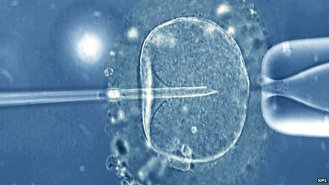
3. Genetic Engineering and Questions


(From OHSU, via BBC News, used w/o permission.)
(“Pictures of the genetically modified embryos”
(BBC News))

“Human embryos edited to stop disease”
James Gallagher, BBC News (August 2, 2017)

“Scientists have, for the first time, successfully freed embryos of a piece of faulty DNA that causes deadly heart disease to run in families.

“It potentially opens the door to preventing 10,000 disorders that are passed down the generations.

“The US and South Korean team allowed the embryos to develop for five days before stopping the experiment.

“The study hints at the future of medicine, but also provokes deep questions about what is morally right….”

I had hoped that I would read about an experimental medical procedure intended to heal the patient. That’s not what happened.

Apparently the “deep questions about what is morally right” focus on wondering if correcting a genetic disorders is okay: if succeeding generations also benefited.

My own view is that worrying about whether healing a person is okay, if the person’s children may be healthy as a result, seems silly. At best.

It’s not that simple, though.

Again, healing an individual is a good idea.

We’re told that gene therapy is okay: in principle. Gene therapy that will affect later generations may be okay. But not if healing today’s individual would harm the patient’s descendants. (“Instruction Dignitas Personae,” 24-27 (September 8, 2008))

That doesn’t mean that gene therapy is bad.

If we learn that we can cure diseases in today’s children, and that their descendants will be fine: that’s good.

If it’s a case of curing today’s kid and crippling the next generation: not so much.

Health and Old Ideas

Some of today’s ambivalence about healing the sick may be fallout from the days when some brands of Christianity sold the notion that God enjoys smiting sinners.

Judging by the Great Awakening’s success, it was effective marketing. Long-term effects on my culture: that, I’m not thrilled over. (March 5, 2017; August 21, 2016)

As I said earlier, being healthy is okay. Getting healthy is okay. Helping someone get healthy is okay.

Making good health the sole focus of my life, more important than anything or anyone else: that would not be okay. (Catechism, 2112-2114)

I should also avoid doing something that’s a bad idea, even if my motive is to help myself or someone I care about. (Catechism, 1789, 2296)

The Francis Crick Institute’s Professor Robin Lovell-Badge expressed another concern:

“…’The possibility of producing designer babies, which is unjustified in any case, is now even further away.'”
(James Gallagher, BBC News)

“Unjustified in any case” is a rather firm statement. I suspect we haven’t entirely forgotten what happened when eugenic standards were enforced. (August 14, 2016)

Frankenfish Fears and Using my Brain


(From BBC, used w/o permission.)

My guess is that some folks will slap the “Satanic” label on this research. I won’t.

I think Satan is real, and that killing human test subjects is a bad idea.

But I also think far too many folks have said “Satanic” when they meant “I don’t like it” or “it’s different.” (May 5, 2017; February 5, 2017; November 13, 2016)

Folks with a less traditionally-religious bent will most likely disapprove because the scientists are altering genetic code — which, apparently, is just simply fraught with peril.

The last I heard, we’re still supposed to be scared of GMOs: Genetically Modified Organisms. They’re new. They’re modified. They’re alive!!! (Muahahaha!)

I don’t share those fears, partly because I know that few if any of today’s crops or livestock aren’t genetically modified.

But we’ve survived macaroni wheat and chickens. I figure we’ll get over fears of “Frankenfish” as soon as another boogeyman shows up. (June 9, 2017; March 31, 2017; July 22, 2016)

There are reasons for caution while using new genetic engineering tech.

Any technology is dangerous if we don’t use our brains: even fire, something we’ve used for well upwards of a million years. (July 28, 2017)

‘It’s for science’ doesn’t make hurting or killing innocent folks okay. (Catechism, 2294)

Ethics matter, no matter what we’re doing.

A Basically Good Motive

I think these scientists had basically good motives. The inherited disorders they’re studying can be lethal.

They focused on MYBPC genes. In healthy folks, some of those genes help our bodies suppress tumors, others keep our hearts beating. When the genes don’t work, the result can be breast cancer or HCM.

HCM is short for hypertrophic cardiomyopathy. It’s one of the main reasons we occasionally read about healthy high school athletes who drop dead.

Defective MYBPC genes only account for about 5% to 10% of all breast cancer cases, and most of us don’t die in our teens. Humanity’s survival doesn’t hinge on this research. But MYBPC genes seem like a good place to start learning about some aspects of gene therapy.

The good news is that the scientists learned a great deal. They also learned that although they could fix MYBPC genes, the technique isn’t practical. One of the donors/parents would have to be healthy, for one thing.6

The bad news, from my viewpoint, is that the 131 human test subjects did not survive the experiment. After waiting five days to make sure their repaired genes were working properly, the subjects were allowed to die. Or maybe killed. I’m not sure which.

Learning: Slowly

This isn’t a Tuskegee scenario.

Researchers filled out all the necessary paperwork. Their study was quite legal.

My guess, and hope, is that they didn’t think the folks they used were people.

I don’t doubt that we have learned a great deal from their work, and that folks will benefit from that knowledge.

But I also think that killing 131 innocent people is not a good idea. Even if they are not, legally, persons. In this case, the test subjects were young enough to be called “embryos.”

Technically, they may not have been “killed.” The easiest way to ensure their death would have been to take them from the environment they needed to remain alive.

I think the ‘viability’ argument might excuse their termination, by current American standards. I don’t see it that way. That’s partly because I don’t see providing nutrition and shelter to a helpless person as “extraordinary” care. (Catechism, 2278-2279)

I willingly accepted that part of Catholic belief, perhaps because I’ve lived in the upper Midwest for most of my life.

Around here, no human is “viable” during winter. Not without clothing, fire, or the more sophisticated tech we’ve developed. We’ll last longer if we’re strong and healthy to start with, keep moving, and that’s yet again another topic.

Seeing all human beings as people, no matter what we look like, where we were born, or how healthy we are, can be inconvenient: even awkward. But I think it is a good idea. (Catechism, 2258, 2266-2267, 2268-2279, 2292-2295)

I also think we may be learning: slowly. One researcher involved with the Tuskegee syphilis experiment quit after learning that treatment for some of the subjects was not planned, and that the subjects would not be informed.

Several decades later, some Americans who weren’t working for the national government learned what had been happening. That was in 1972.

America had been going through a very rapid series of social and cultural changes. Many of us realized that lying to non-whites was a bad idea. So was subjecting them to lethal infections.

Many of those changes were, I think, reforms that had been in progress for many generations. And are far from finished.7

Still Learning


(From New York Public Library, via Wikimedia Commons, used w/o permission.)

The Willowbrook experiments didn’t last as long as the Tuskegee research. They started in the 1960s. In that case, disabled kids at a state housing facility were getting hepatitis. Folks running the place didn’t know why.

So they deliberately infected 60 of the healthy ones. About 6,000 disabled folks were packed into quarters designed for 4,000 by then. Only about 1% of the available test subjects were actually harmed.

A remarkable number of Americans thought it was a bad idea, anyway. I agree.

Research that knowingly endangers someone’s life, health, or sanity, isn’t right. Even if the subject says it’s okay. (Catechism, 2295)

Public criticism of Willowbrook started in the 1970s, too. Like I said: I think we are learning. And we have much more to learn:


1 Thinking about life and Catholic social teachings:

2 Viruses, mostly:

3 Polio:

4 Organ transplants:

5 More about organ transplants:

6 Genetic engineering:

7 Curing social ills takes time and persistence:

Posted in Science News | Tagged , , , , , , , | 2 Comments