Disorders, Decisions

Whether you call it mental illness, lunacy, or insanity, being crazy isn’t fun. It’s not a lifestyle choice either. Not for most. Certainly not in my case. I’ll get back to that.

Folks started talking about “mental hygiene” after William Sweetser coined the phrase in the mid-1800s.

Folks promoting mental hygiene rubbed elbows with social hygiene advocates.

I figure many folks had basically good motives for supporting those ideas. I hope so, anyway.

But some of their methods were — dubious.

Eugenics and sterilization of the unfit developed serious image problems in the 20th century. That’s another topic, for another post.

Somewhere along the line “mental hygiene” got repackaged as “mental health.” I think it wasn’t just a new coat of paint on old ideas. We were learning more about how minds work, and sometimes don’t.

We were also learning what we can do: and what we shouldn’t.1

Solutions: Bedlam, Louis XIV, and the French Revolution
Crazy people have been part of societies for a very long time. Folks in different eras tried various approaches.

Some were better than others, I think.

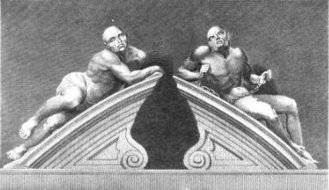
Bedlam started as a priory in 1247. It had a different name and wasn’t a clinic or asylum of any sort.

One of its functions was to house the poor. The city of London got involved in managing the priory’s finances in the 1300s. Two centuries later, Henry VIII owned the place.

There’s probably quite a story behind the Lord Mayor of London asking for, and getting, control of Bedlam, its occupants and revenues. That deal was finalized in 1547.

Somewhere between 1377 and the 1700s, Bedlam started specializing in folks with mental problems.

Hogarth’s final installment of “A Rake’s Progress” isn’t entirely fanciful.

Friends and family could visit inmates — and were expected to bring food and other needed items.

I’m not sure why Bedlam’s management let the general public in. I’ve run into speculation that putting inmates on display helped them make money.

English sensibilities eventually changed, and using lunatics for public entertainment became unfashionable.

As I keep saying, we do learn. Slowly.

Meanwhile, in France, the Pitié-Salpêtrière Hospital has a shorter, but similar, story.

Louis XIV remodeled a Parisian gunpowder factory in 1656, making a hospice for the city’s poor. Part of the hospice was later used as a prison for prostitutes.

The mentally disabled, criminally insane and epileptics got housed there, too.

Given what folks knew at the time, and how European society worked, it may have been the best a secular leader could do.

Orders like the Brothers Hospitallers are another matter. I’ve discussed them, Bedlam, and good intentions before. Briefly. (May 12, 2017)

The French Revolution wasn’t going smoothly in 1792. There was even talk of Royalists and foreigners invading Paris.

Journalist Jean-Paul Marat and others decided something had to be done.

So a bunch of French National Guardsmen and some fédérés forcibly removed folks from the old gunpowder factory and similar institutions, and killed them.

It made sense at the time, sort of. Marat and company figured the lunatics and other prisoners might support royalists. Killing them removed the perceived threat.

These days we call what happened the September Massacres. When we mention it at all.

France got Napoleon next, which may have been an improvement.

Some folks took another look at how their mentally ill neighbors were treated in the early 19th century. We’ve learned quite a bit since then.2 Including, I hope, a little wisdom.

Natural Causes

Hippocrates of Kos talked about diseases and other disorders folks deal with around the time Sophocles was writing his plays.

Talking about diseases isn’t why Hippocrates is famous — among history buffs, anyway. It’s what he thought about illness. He gets credit for being the first in Western civilization to say diseases have natural causes.

The accepted belief then was that folks get sick or crazy because they’d offended some spirit, or run into a grumpy god.

Quite a few folks believed pretty much the same thing after Hippocrates wrote his medical texts.

Some still do, about two dozen centuries later. I see precious little difference between Zeus and the ‘angry God’ intermittently invoked after disasters. That’s yet another topic. (September 10, 2017; August 27, 2017)

Hippocrates was on the right track.

Not leaving milk out for the nisse isn’t why I get a cold. They’re more into practical jokes, now that I think of it. Sort of like kobolds or leprechauns. One of these days I’ll get back to European folklore and myth, but not today. (May 19, 2017)

Some Christians, Catholics included, act like they put their culture’s pre-Christian beliefs and new ideas into a blender.

Make that our culture’s. I strongly suspect that some of American Christianity’s weirder fringes are syncretic religions, and that’s yet again another topic.

I enjoy folklore, but I don’t ‘believe in’ it. Not in a religious sense. (Catechism of the Catholic Church, 2111-2114)

And I sure don’t try to cure a cold by exorcising ‘demon mucous.’

Maybe that needs explanation. Recognizing natural causes doesn’t require ignoring other realities. But trying to exorcise my depression would be an exercise in futility, at best.

Satan, Insanity, and Murder

Thinking that Satan and demons are real is one thing. Seeing direct Satanic involvement in illnesses is another.

That’s why natural causes are ruled out before calling in an exorcist. (Catechism, 391-395, 1237, 1673)

About exorcisms and exorcists — what’s in the movies is ‘Hollywood.’

The Church authorizes exorcisms, occasionally. It’s a well-established procedure, involving specialists. It’s emphatically not a do-it-yourself job, and that’s still another topic.

My depression and assorted psychiatric problems did not start when someone hexed me.

I’ve got glitchy neurochemistry to thank for that sort of thing. Also, almost certainly for the depression, triggering events. With a very different history I might have avoided decades of undiagnosed issues.

On the other hand, maybe it’s just as well that my depression and autism spectrum disorder(s) weren’t caught early. Lobotomies hadn’t quite gone out of fashion, for starters. Still, it wasn’t all bad news in the mid-20th century.

Quite a few folks had gotten past terms like “soulless mass of flesh possessed by the devil” by then. Some psychologists were discussing Asperger’s paper on “autistic psychopaths.” (April 9, 2017)

I’m taking medications that didn’t exist until recently. They don’t ‘cure’ my odd neurochemistry. But taking them makes dealing with it easier.

I didn’t enjoy learning that I have psychiatric/personality problems. But pretending they weren’t there didn’t make sense, and wouldn’t help. Taking reasonable steps to deal with the issues did. And does.

Since I think life and health are “precious gifts,” I have no qualms about taking my meds. (Catechism, 2288, 2278)

Mass Murders

I’ve seen a few op-ed pieces discussing a common factor in recent mass murders. It’s not the technology involved, or who the victims were.

Folks who decided to start killing had mental health problems.

Some of that may be 20-20 hindsight. But I think strictly sane people don’t wake up one morning and start the day by murdering folks in a church or school. Not generally.

Mass murder is hardly a new phenomenon. Separating fact, folklore, and rumor isn’t easy. Particularly for the days before Elizabeth Báthory. More about her later.

Quite a few Roman citizens died in 331 BC: apparently from disease. Maybe they did.

That’s what Livy hoped was the case. But he knew enough about his culture to record an another account of what happened. The apparently-unofficial story was that a servant with access to poison killed the citizens.

Then she made what we’d call a plea bargain, telling how she killed them in exchange for immunity. (“The History of Rome, Book 8,” Titus Livius, (B. O. Foster, Ph.D., Ed.))

I’m not convinced that the servant was a mass murderer in today’s sense. In that era and culture, her actions seem more like an assassin’s. Locusta’s career ended when her last patron, Nero, committed suicide.

Elizabeth Báthory killed several hundred young women before Hungarian authorities took notice. I suspect too many folks started talking about a shortage of peasant’s daughters in her area.

We’ve got pretty good documentation of her trial, thanks to her wealth and social position. That’s helped sort out reality and slightly more lurid details that got added later.

She was convicted, imprisoned, and died in 1614.

Fast-forwarding to December, 2012.

After killing his mother, a young man killed 20 children and six adults at Sandy Hook Elementary School. Then he killed himself.

I saw many opinions, and a few facts, in the news over the next few months.

Some folks focused on the weapon used. Others on video games he’d played.

He’d been home schooled, which prompted predictable responses. That’s a can of worms I’ll open another day.

Some news and opinion pieces focused on the impressive catalog of mental, emotional, and developmental problems the young man had.3

I don’t feel sorry for him: even though we both have autism spectrum disorder in our medical records. I don’t think that excuses bad behavior. But understanding what he was dealing with may help us understand what happened.

Decisions

I’m a mess. Far from “normal,” at any rate.

I spent my adolescence and decades of my adult life dealing with major depression. I still do. But very strong antidepressants let me think without fighting the machinery.

It’s a wonderful change of pace.

My other neural quirks — plural — quite likely started as soon as I had a central nervous system.

Two of my kids have very similar abilities and limitations. So did my father. I very strongly suspect that whatever it is, it’s genetic. At least in part.

I’m not entirely convinced that my non-depression glitches are autism spectrum disorder. But that’s the closest anyone’s come to finding a name for whatever it is.

It gives me and professionals something to work with, so I’m content.

We’ve learned a great deal since my birth. Infants and children who respond as I did are caught early. On the whole, I think that’s a good thing. I also think we’re still learning. And have a very great deal left to learn.

Getting back to antisocial behavior, I don’t think I’m a time bomb about to go off.

For one thing, I started cooperating with treatment immediately after being diagnosed. That was over 11 years ago.

Chucking everything I know about what’s right and wrong is possible, of course. In principle. So is deciding that I’ll ignore what I’m learning about how my brain works. I’ve got free will. (Catechism, 1730-1738)

But I know that would be a very bad idea. (Catechism, 1021-1022)

Perhaps just as important, I don’t want to ignore what I know is right. And that’s — more topics:


1 We’re learning, sometimes from our mistakes:

2 Dealing with disease and disorders:

3 Autism, assumptions, and attitudes:

Posted in Being Catholic | Tagged , , , | 6 Comments

Antarctic ‘Hot’ Spots

Some scientists say there’ll be more carbon dioxide in Earth’s atmosphere this year. They may be right.

I think the information’s interesting, and may be meaningful. But I’m pretty sure this isn’t a portent of doom.

Neither is a new and more detailed map of Antarctica’s bedrock temperatures.

I’ll be talking about that, the Halley VI base getting back in operation: and why I think we should keep learning about how Earth’s climate works.


Avoidable Tragedies

Humans cause some disasters, like what happened in Aberfan.

That plaque is in a memorial garden, where the town’s school used to be.

The last two lines are in Welsh, repeating the last two lines of English text.

“I’r rhai a garwn ac y galarwn o’u colli.”
(Plaque at the Aberfan Memorial Garden. From plaque at the Aberfan Memorial Garden, via Wikipedia.)

A 19th century coal mine near Aberfan was nationalized in 1947. Folks running England’s National Coal Board mine had miners pile debris above their town. Some piles were on springs or streams.

Aberfan is a rainy place. 6.5 inches, 170 millimeters, fell in the first three weeks of October, 1966; about half in the third week.

At 9:15 a.m., October 21, part of tip 7 liquefied and headed for town. Teachers had started taking attendance at Pantglas Junior School on Moy Road when slurry flowed over them.

That was 51 years ago last month. Of the roughly 5,000 folks calling Aberfan home, 144 died that morning: 28 adults and 116 children.

When surviving neighbors reached them, some children were still alive, protected by teachers and staff who had died trying to protect them. Others died with their protectors.

Giving credit where credit is due, their English rulers didn’t mistreat the Welsh. Much.

For example, the British government helped pay for the Aberfan cleanup — confiscating money from the Aberfan Disaster Memorial Fund in the process. Over three decades later, someone decided that wasn’t right, and the money was returned.

Natural Disasters

Some disasters are natural: the sort of thing folks blamed on the gods, and sometimes still do.

About a millennium back, Europe’s scholars began reading what folks like Aristarchus and Hippocrates said.

Some, including Saints Albertus Magnus and Hildegard of Bingen, helped lay the foundations of today’s science. Others got overly excited by Aristotle. The Church reminded us that God’s God, Aristotle’s not, in 1277. (October 6, 2017)

New ideas give some folks conniptions. That, and European politics, spawned ‘based on actual events’ stories about Copernicus and Galileo. (October 13, 2017; April 28, 2017; March 24, 2017)

Thinking that storms, earthquakes, and other disasters are “natural” got traction a few centuries back.

Older ideas are still in the mix, though. My culture’s legalese still describes a natural disaster outside human control as an “act of God.”

I figure God is large and in charge. I also think we affect a growing portion of natural processes, but are not ‘lords of creation.’ I’ll get back to that.

God and Secondary Causes

I don’t see a problem with thinking God exists — and that most of what we experience are natural phenomena.

I’m a Catholic, so I think God is creating a universe that’s following knowable physical laws. (Catechism of the Catholic Church, 268, 279, 299, 301, 302–305)

If I pay attention and think, I’ll see some facet of God’s truth is in everything I can observe. (Catechism, 300–310)

Natural processes, like fire and gravity, involve secondary causes: creatures changing in knowable ways, following laws written into this creation. (Catechism, 301–308, 339)

Dealing with new information and reviewing old assumptions may be hard. But knowledge and faith get along fine. For Catholics who understand what we’re told.

Truth cannot contradict truth. Scientific discoveries are opportunities for greater admiration of God’s creation. We’re supposed to be curious. (Catechism, 159, 214–217, 283, 294, 341)

The Blame Game

A few folks, at least, look for a scapegoat after disasters. Blaming the victim, or God, isn’t a new idea.1

Folks have sometimes done both.

Someone wrote “On the Evil Times of Edward II” after the Great Famine of 1315-17, but before the Black Death. The versions we have are rewrites of a lost original:

“…For tho God seih that the world was so over gart,
He sente a derthe on eorthe, and made hit ful smarte.
A busshel of whete was at foure shillinges or more,
And so men mihte han i-had a quarter noht yore I-gon….

“…And thanne gan bleiken here blé, that arst lowen so loude,
And to waxen al hand-tame that rathere weren so proude.
A mannes herte mihte blede for to here the crie
Off pore men that gradden, ‘Allas, for hungger I die…!’…”
(Symonye and Covetise, or On the Evil Times of Edward II)

“When God saw that the world was so over proud,
He sent a dearth on earth, and made it full hard.
A bushel of wheat was at four shillings or more,
Of which men might have had a quarter before….

“…And then they turned pale who had laughed so loud,
And they became all docile who before were so proud.
A man’s heart might bleed for to hear the cry
Of poor men who called out, ‘Alas! For hunger I die…!’…”
(Poem on the Evil Times of Edward II, c. 1321, via Wikipedia)

I figure there was a bit of truth in seeing generations before 1315 as “proud.”

Folks in Europe, at least, had been enjoying what we call the Medieval Warm Period, a few centuries of mild winters, warm summers, and good harvests. Nowhere near as many died of starvation, more children survived to become parents.

It was good times. Compared to what followed, anyway. But seeing the Little Ice Age as God smiting folks for building cathedrals seems a trifle unlikely.


Global Carbon Dioxide Prediction


(From Global Carbon Project, via BBC News, used w/o permission.)

“First CO2 rise in four years puts pressure on Paris targets”
Matt McGrath, BBC News (November 17, 2017)

“Global emissions of CO2 in 2017 are projected to rise for the first time in four years, dashing hopes that a peak might soon be reached.

“The main cause of the expected growth has been greater use of coal in China as its economy expanded.

“Researchers are uncertain if the rise in emissions is a one-off or the start of a new period of CO2 build-up.

“Scientists say that a global peak in CO2 before 2020 is needed to limit dangerous global warming this century….”

I see this as a ‘glass half full/half empty’ situation.

On the one hand, Carbon dioxide levels stayed steady for about three years. And, assuming that the graph’s data is accurate, the amount was leveling off for a few years before that.

That’s a good thing. Assuming that Earth’s carbon dioxide levels around the early 1700s are “normal.”

On the other, some scientists say it’ll be up a few percent this year. Once the final figures are in. And, predictably, if we don’t do something about it — something “dangerous” is gonna happen. Since it’s carbon dioxide, it’s “dangerous global warming.”

What surprised me a bit is that China was given credit for the projected increase. I had become accustomed to China’s significant pollution problems being soft-pedaled.

I suspect that attitude started fading a decade or so back.

The 2008 Beijing Olympics wouldn’t have helped maintain old habits. Quite a few reporters experienced Beijing’s smog. At least some of them cared about athletics.

Beijing’s pollution was between two and three times higher than World Health Organization ‘safe’ limits at the time.

It’s not all bad news from China. The official line is that they’re trying to clean up their air, water, and land. I’m inclined to believe them. It’s in the leadership’s interests. Running a nation of sick folks isn’t an ideal situation.

It won’t be easy, since they also say they’ll keep making the transition through an industrial to a post-industrial economy.

As I said, I think there’s hope that China’s official line is more than just talk. The environmental situation there is still far from good. But it could be much worse, and monitoring technology makes independent verification easier these days.

Greenhouse Gasses: We’re Learning

I’m not sure why ‘global warming/climate change’ news focuses so much on carbon dioxide. Maybe it’s the easiest to describe.

I don’t have a news editor’s concerns, so I’ll go ahead and talk about carbon dioxide, CO2, and mention the other greenhouse gasses.

The other four of the top five, anyway.

CO2 is one of five main greenhouse gases in Earth’s atmosphere. The others are water vapor, methane, nitrous oxide and ozone.

I don’t think we’d be better off without them. Scientists figure our planet’s average surface temperature would be about -18° Centigrade, 0° Fahrenheit, if they weren’t there.

Earth’s current average surface temperature is 15° Centigrade, 59° Fahrenheit.

That’s higher than it was during the most recent glacial phase, but it’s still below average.

No surprises there. The last I heard, scientists figure we’re almost certainly in an interglacial period of the ice age that started about two and a half million years back. Those who aren’t funded by well-intentioned climate action outfits.

I think, and hope, that most folks try to be honest: scientists included. I also think that it’s very easy to let a desire to please, and stay employed, affect judgment. (April 28, 2017; October 16, 2016)

About pollutants and all that, I’m quite sure that 19th and early 20th century mistakes shouldn’t be repeated. Efforts like the Paris Agreement and Kyoto Protocol have a reasonable motive: maintaining our home.2

The trick will be learning what works and what doesn’t. And being willing to make sense.


Antarctic Hotspots


(From BAS, via BBC News, used w/o permission.)

(“Hotspots are located under West Antarctica; in contrast, the East is broadly relatively cold”
(BBC News))

“Antarctica’s warm underbelly revealed”
Jonathan Amos, BBC News (November 17, 2017)

“This is the best map yet produced of the warmth coming up from the rocks underneath the Antarctic ice sheet.

“This ‘geothermal heat flux’ is key data required by scientists in order to model how the White Continent is going to react to climate change.

“If the rockbed’s temperature is raised, it makes it easier for the ice above to move….”

There’s interesting science going on here, including new data about “Antarctica’s warm underbelly.” We’ve known for some time that western Antarctica’s bedrock was warmer than the continent’s other half.

What’s new is how much we know about exactly where it’s warm, and where it’s not. That’s warm, not boiling hot. Except around active volcanoes, of course.

Despite the “climate change” reference, Jonathan Amos and BBC News aren’t touting this as a portent of doom and gloom to come.

I think learning about Antarctica is a good idea. We’ll probably learn more about how Earth’s climate works, and that’s important.

But I don’t fear a disaster-movie scenario. I just figure learning about the planet we call home makes sense.

Change Happens

I don’t ‘believe in’ climate change, global warming, or the coming ice age.

Not in the sense that I think any of that belongs at the top of my priorities, or will tell me why I’m here. (Catechism, I.1–3, 2112–2114)

On the other hand, I think Earth’s climate has changed, is changing, and will continue to change. It’d be downright odd if it somehow stopped changing at this particular moment.

It’s quite possible that we’ve influenced changes over the last few millennia.

That’s not a typo. Agriculture has been changing landscapes since before we invented writing.

We started getting more aware of our effect on the environment in the 19th century.

I think rapid changes in cities, caused by industrial and economic development, encouraged that awareness.

Top-priority concerns shifted from urban manure to combustion products around 1900. Folks had reason for concern.

How some have reacted has been less than reasonable, I think.

I’m not sure how many scientists took the ‘coming ice age’ seriously. The data was real enough. What got into the news was another matter.

Folks had noticed assorted drops in temperatures and speculated. That gave journalists something to write about from the 1920s to somewhere in the 1970s.3

Next we had global warming, with about as much basis in fact. That’s given way to the more safely-non-committal climate change. That slogan may last longer. Like I said, Earth’s climate keeps changing.

I think folks on all sides of the ‘climate’ fracas would enjoy more success if they turned their hysteria down a few notches. They might at least get more respect from the rest of us.

My view is that we’re not all gonna die of whatever the crisis du jour is. And we should take care of our home. Within reason. More about that toward the end of this post.


Halley VI: Opening Soon at a New Location


(From BAS, via BBC News, used w/o permission.)
(“In good shape: Halley station is now being readied for the summer season”
(BBC News))

“Antarctic base comes out of deep freeze”
Jonathan Amos, BBC News (November 10, 2017)

“The advance party sent in to open up Britain’s mothballed Antarctic base have found no damage.

“Halley station was closed in March and staff withdrawn because of uncertainty over the behaviour of cracks in the Brunt Ice Shelf – the flowing, floating platform on which it sits.

“The base was secured and left to the elements, with temperatures dipping down to around -50C….”

The British Antarctic Survey (BAS) had architects design portable modules for Halley VI, the latest Halley station.

As “portable” as house-size structures can be, that is.

It makes sense, since Halley VI is on the Brunt Ice Shelf, not Antarctica’s mainland ice sheets.

Scientists noticed large cracks in the ice shelf a little less than a year ago. Odds were pretty good that the Brunt Ice Shelf wouldn’t break off from the mainland.

But folks running BAS didn’t want to risk leaving a crew of about 16 on drifting ice during Antarctica’s winter. So they decided to move the station farther ‘inland,’ and mothballed it for winter.

Decisions


(From BAS, via BBC News, used w/o permission.)
(“Halley should be occupied year-round”
(BBC News))

“…Together with the Rothera base on the Antarctic Peninsula, Halley spearheads British activity on the White Continent.

“The station gathers important weather and climate data, and it played a critical role in the research that identified the ozone ‘hole’ in 1985.

“In recent years, Halley has also become a major centre for studying solar activity and the impacts this can have on Earth….”
(Jonathan Amos, BBC News (November 10, 2017))

As the BBC News caption says, Halley VI was designed for year-round occupation.

“…During a ‘normal’ winter, technical specialists keep the station and the scientific experiments running. The wintering team at Halley includes a chef, a doctor, mechanics, an electrician, several electronics engineers and a heating and ventilation engineer….”
(Halley VI Research Station, BAS)

The recent Antarctic winter wasn’t quite ‘normal,’ since an unusual crack had been opening on the Brunt Ice shelf. I think BAS made a prudent decision.

There’s a lot of research going on at Halley other than ‘climate’ observations. A riometer measures 30 megahertz radio ‘noise’ from our galaxy and magnetometers detect ultra-low-frequency waves from space near Earth.4

That last might have effects on our climate. It’s among many things I think we’ll be learning over the next few decades.


A “Newer Dread:” 1898

Before you start stockpiling oxygen cylinders or establish a doomsday cult, Check the date on that Evening Post Saturday Supplement.

It’s from July 30, 1898.

Knowing a little history, and science, helps me avoid jumping on the latest prediction of doom and gloom.

So does remembering a fair number of fizzled End Times Bible Prophecies and their secular analogs.

I haven’t tracked down the Cassell’s Magazine piece about Lord Kelvin’s prediction that “A Startling Scientific Prediction” describes.

Lord Kelvin was a whole lot smarter and sharper than his recent reputation suggests. (May 26, 2017)

He may have spoken with Mr. John Munroe of Cassell’s Magazine. It’s also likely enough that he talked about oxygen consumption and some nifty calculations.

How serious he was about “the speedy end of the human race?” That, I don’t know.

“…Lord Kelvin startled America by an estimate of the speedy end of the human race. We are, he calculates, using up our fuel at such a rate that it will all be consumed in five hundred years. … The newer dread is that we are using up our stores of oxygen faster than our stores of fuel. In four hundred years’ time — at our present rate … — there will be no more oxygen for us to breathe!…”
(“A Startling Scientific Prediction,” Saturday Supplement, Evening Post (July 30, 1898))

Lord Kelvin’s data was reasonably accurate, and so was his math.

If we’d known everything there is to know about Earth’s oxygen cycle and related phenomena in 1898, We’d have a real crisis on our hands.

We didn’t, and we don’t. Concerns, yes. Crisis, not so much. My opinion.

About our “speedy end,” we’ve learned that we’re not running out of oxygen. The oxygen cycle is bigger than he realized. More complex, too.

We’ve also learned more about what Lord Kelvin called “carbonic acid gas:” the stuff we call CO2. Several of the current popular crises focus on global warming. It’s dramatic stuff: our fair cities facing fearsome floods and all that.

As I said before, I think everyone with an axe to grind on the subject could do themselves a favor by toning down their hysteria. There’s a real issue in play, but it’s hard to notice with all this angst flying about.

A Big Job

Folks get odd notions about “dominion” and how humans fit into this world.

Some apparently read bits of Genesis and decided that they owned Earth: and could plunder it at will. We’re still cleaning up the mess that left.

That notion faded during my youth.

Currently-fashionable ones make about as much sense.

One is that we’re helpless before the awesome might of Mother Nature.

Another has the virtue of showing some responsibility. I don’t, however, think that everything we do has terrible consequences for Earth’s delicate ecosystem: and that we know exactly how to make everything better.

About “dominion” and all that, I’m a Catholic. That means I must take the Bible seriously. Including this:

“Then God said: Let us make human beings in our image, after our likeness. Let them have dominion over the fish of the sea, the birds of the air, the tame animals, all the wild animals, and all the creatures that crawl on the earth.
“God created mankind in his image;
in the image of God he created them;
male and female he created them.
“God blessed them and God said to them: Be fertile and multiply; fill the earth and subdue it. Have dominion over the fish of the sea, the birds of the air, and all the living things that crawl on the earth.”
(Genesis 1:26–28)

“What are humans that you are mindful of them, mere mortals that you care for them?
“Yet you have made them little less than a god, crowned them with glory and honor.”
(Psalms 8:5–6)

Sounds impressive, doesn’t it? “Image of God,” “dominion,” “little less than a god.” We’re hot stuff.

I do not see that as reason for smug self-satisfaction.

Yes, we’re powerful. We’re becoming more powerful, and — happily — learning to use that power wisely. Our power comes with scary responsibilities.

Part of our job is taking care of the world’s resources: for our reasoned use, and for future generations. (Genesis 2:5–8; Catechism, 339, 2402, 2415)

Studying this universe and developing new tools using that knowledge will help us do that job. If we do it right. (Catechism, 2293–2295)

About the current climate ‘crisis’ — I’m pretty sure we know enough today to deliberately change Earth’s climate.

I am also quite sure that we do not know enough to do so safely. Not yet.

This is one case where conducting field tests without knowing what we’re doing would be a very bad idea.

The way I see it, we should keep doing what we’re doing: in the sort run. Reducing industrial pollution makes sense. So does learning more about long-term climate changes. In the long run — that’s another topic. One I don’t have time for this week.

More, mostly about being human and getting a grip:


1 Disasters and the blame game:

3 Earth’s long story; and learning wisdom, slowly:

2 Real issues, debatably reasonable responses:

4 Britain’s Antarctic research:

Posted in Science News | Tagged , , , , | 3 Comments

California Murders, and Remembering

I hadn’t planned on writing about murder and getting a grip this week. Or next. But another multiple murder is international news.

“California shooting: Schoolteachers ‘saved’ children from gunman”
BBC News (November 15, 2017)

“A gunman who killed four people on Tuesday in rural California fired into an elementary school but was stopped from entering by teachers, police say.

“Staff at Rancho Tehama Reserve School went into lockdown, securing school doors after hearing nearby gunshots.

“Authorities praised the teachers’ actions as ‘monumental’ in saving ‘countless’ lives….”

A man in his 40s killed several folks: four, most likely. Details are still getting sorted out in the news.

He’s dead, so we may never know why he started killing his neighbors.

The most likely explanation I’ve seen is that he argued with and then killed, a neighbor. He then stole a vehicle and killed other folks. Maybe not in that order. Like I said, details are still getting sorted out.1

This is bad, but could have been much worse. Apparently no children were killed, but some were injured.

Responses: Admirable and Otherwise

I grieve for the folks who died, their families and friends: for the victims and the killer.

That doesn’t mean I ‘feel sorry’ for the killer, or think he should not have been stopped. (November 6, 2017)

Killing innocent folks in near-wholesale lots happens far too often.

Motives vary, But responses don’t, much.

When I start looking, I find accounts of some folks running toward danger because others need help.

Some apparently experience emotional meltdowns.

A little later, many get together: grieving for those we lost, and expressing hope that we can do better.

And there’s the usual hysteria and crass opportunism.

I prefer looking at folks who do what’s right. (October 2, 2017)

Getting back to Northern California.

The usual politicos and advocates started their spiels quite promptly this time around. Many apparently think this country needs more rules intended to control a particular weapons technology. I’ll get back to that.

The Big Bad Wolf: Getting a Grip

It’s easy to see things we like as “good” and what scares us as “bad.”

Maybe that’s why my culture’s folklore often casts critters like wolves as villains.

But stories with a wolf as the ‘big bad’ don’t make wolves intrinsically evil.

Folks getting ‘scary’ and ‘bad, or ‘fool-proof safe’ and ‘good,’ confused is nothing new.

St. Thomas Aquinas talked about — quite a bit, actually.

What I have in mind is what he said about not blaming creatures for acting the way they’re supposed to. Or tools for being what they are. (February 10, 2017)

I think he’s right. Critters, including dangerous ones, aren’t “bad.” They’re acting according to their nature. If we don’t use our brains when dealing with them, what happens isn’t their fault.

The same goes for technology.

Tools, any technology, isn’t “good” or “bad.” What matters is how we use it. (Catechism of the Catholic Church, 2294)

Our rules must change as our technology, and society, changes. Rules are “good” to the extent that they reflect underlying ethical principles that haven’t changed, and won’t. I’m a Catholic, so I call these principles “natural law.” (Catechism, 1954–1960)

I’ve talked about natural law, and why we must keep changing how we apply it, fairly often. (October 22, 2017; July 16, 2017; June 4, 2017; February 5, 2017)

How I see Yesterday and Today

Change happens. My culture, and others, have been changing a lot lately. Fast.

Change can be exciting or terrifying, unsettling or frustrating; depending individual differences.

Those aren’t the only options, of course. I suspect everyone responds a bit differently.

On the whole, I like living in today’s world. But I thought we could do better, back in the 1960s. I still do.

I do not think that adding yet another layer of unenforced — maybe unenforceable — rules makes sense.

I am also convinced that technology doesn’t make folks do what is wrong: or right. All that our tools can do is make it easier to do what we want.

That’s one reason I don’t think blaming firearms for murder makes sense. If that was true, the town I call home would have experienced mass murder on an epic scale a few generations back. We didn’t.

A Skunk, Kids, and Dynamite

I don’t think it was because quite a few kids carried rifles to school in those days.

I see that more as an effect of a very different society’s operation, not the reason most used non-lethal methods for conflict resolution.

The firearms weren’t for defense. Rules were different, which let the kids do a little hunting on their way home.

Kids, and adults, weren’t perfect, of course.

A case in point happened one day when kids outside the school noticed a skunk. The critter was hiding in a woodpile, and couldn’t be coaxed or frightened out.

The kids decided, correctly, that the skunk’s presence was a potential threat. The prudent action would have been to tell an adult, and go on with their daily activities.

They were kids, so that’s not what they did.

One of them went home; returning with dynamite, a blasting cap and fuse. Setting the charge and detonating it was a straightforward task. And successful. To an extent.

The skunk was no longer a potential threat.

It wasn’t there. Neither was the woodpile, along with most of the paint on that side of the school. Nobody was hurt, damage was minimal, but the blast had probably been heard across town.

Back then, we didn’t have the psychological and pharmaceutical options available today. I don’t think either are bad, if used wisely. And that’s another topic.

The kids were informed that they’d made a really bad mistake, and told to re-paint that side of the school. Some may have become criminals, but that is possible for any group.

My guess is that having them repair damage they caused helped them learn that actions have consequences.

I don’t think we can re-create that era, and am quite sure we shouldn’t try. What is past is past: and won’t return.

Maybe, though, we can think about why having ‘dangerous’ technology didn’t result in mass murder.

Don’t Blame Technology

I can’t argue that how we deal with each other today should change. I think that’s long since become obvious.

But I do not yearn for ‘the good old days.’

I remember them, and they weren’t. They weren’t all bad, either.

I think we can learn by looking at what worked. And what didn’t.

Again, I don’t think tech makes folks commit murder. Not even scary tech like firearms.

If that particular technology was the reason folks kill others, murder would have been unknown before the Song dynasty.

That’s not how it is. Or was.

Hammurabi’s law code isn’t the earliest one we know of, but it’s the oldest complete set.

Hammurabi’s Mesopotamia wasn’t today’s America. But the problems folks had then aren’t much different from ours.

Remember: firearms wouldn’t be invented until about two millennia after Hammurabi’s day.

We live a bit over a millennium after that.

Things have changed.

But some things haven’t.

The first of Hammurabi’s laws says that accusing someone of murder, but without proof, was capital offense. Murder was clearly an issue in those ‘good old days.’2

I don’t want us to try re-establishing Hammurabi’s code. That era is in our past.

We can, I think, learn from it: and from all ages which came before ours. But emulating what had to be changed then does not make sense. Not to me.

Neither does finding a scapegoat. Blaming the ‘other’ political party, scary tech, or any other bogeyman might make me feel good.

But I’m quite sure it’d make about as much sense as blaming the November 5, 2017, Sutherland Spring murders on daylight saving time. Even though they happened right after the annual ‘fall back.’

I don’t have any quick fixes or easy solutions. I don’t think there are any.

But I don’t think we’re doomed to a grim and deadly future.

There isn’t much I can do to change the world, or even my homeland.

I must, however, work for justice — “as far as possible.” For me that’s pretty much limited to suggesting that respecting humanity’s “transcendent dignity” is a good idea. (Catechism, 1915, 1929–1933, 2820)

I must also try acting as if loving God and my neighbor, and seeing everyone as my neighbor, matters. (Matthew 5:43–44, 22:36–40, Mark 12:28–31, Luke 10:25–30; Catechism, 1825)

How I act matters. So does my ongoing inner conversion. (Catechism, 976–980, 1888)

Nobody said this was going to be easy.

But I think it’s important. And something we must try.

Living in a less-than-ideal world:

Making sense, anyway; or not:


1 From regional news:

2 Law and technology:

Posted in Being Catholic | Tagged , , , , , , | 2 Comments

The Dream

He woke, heart racing, breathless, wet with sweat, in the starlit time before dawn. He shuddered when something touched his arm. It was his wife.

“Again?” she asked, rolling her belly onto him. Soon she would bear his first child.

“Again,” he gasped. He waited until his breath came more easily. “The same thing. It was awful.”

She waited. He would talk soon. Perhaps then he would sleep.

“There were people everywhere,” he said. “I couldn’t walk twenty paces without passing another’s camp. Too many people. I walked and walked, and finally came to open land.”

She shifted, making room for the baby. Ord was talking now. He would tell her about his dream: the same one he had each night, now. Then he would relax, and she could sleep again.

“It was a meadow, but not a real meadow. All the plants were the same, in rows.” Ord frowned. “Somehow I knew that people had put the plants there, and would eat them later.”

“I walked through the meadow, and through another, then another. I never saw another hunter. But there was a camp nearby. More than just a camp.

The people had made huts, like we do in winter, but huge. And there were more huts than we saw when the Clan gathered.”

“They couldn’t live like that!

There were too many people, too little land, and no one was hunting! I might be able to support me, and you, on that land, but even then it would be hard. Game wouldn’t like those strange meadows.

And with so many people, all in one place, there would be war soon over who would walk out and bring back food for his people. Then they would starve.”

“I kept walking.”

“Finally I came to another cluster of camps. It was even more crowded than the first one. I walked to the center of the camps.”

“People were busy there, but they were not hunting and not gathering food. They were moving little sheets of something like birch bark around, fiddling with complicated things I couldn’t understand.”

“And there were so many of them. All together. All in that one place.

And somehow I knew that this cluster of camps was just one of many, many clusters.

More clusters than I could count, and many of the clusters were much larger than the one I was in.”

“Only a few even knew how to hunt. And to them hunting was something they did for pleasure. Think! A world where only a few know the joy of the hunt.”

“And then I woke up.”

His wife made a sympathetic sound and put a hand on his arm. He lay quiet until she was asleep.

Then Ord, hunter, warrior, mighty with club and spear, soundlessly arose and walked to the brow of the hill where they camped. Below, in the twilight before dawn, he could see a strange meadow someone had cut out of the valley. All the plants were the same in that little meadow. He had talked with the hunter who lived there.

It didn’t seem natural to him, tied to a plot of land so that one could be sure of a few bits of seed and berry. It seemed even less natural after those dreams.

The sun was up now. His wife was stirring. Ord threw down the stone spear tips he had exchanged for a pile of furs. Fire-sharpened spears had been good enough for his father, and his father before him.

Ord knew better now. He would have perhaps one more child, then no more.

His descendants would never be tempted, or forced, to crowd together as the people in his dream. They would never make those strange meadows.

They would never spend their lives away from the hunting grounds.

Ord turned his back on the valley and the strange meadow, and returned to the forest.

(Text © Brian H. Gill 2001)


Not My Usual ‘Being a Catholic’ Sunday Post

I’ve posted this in the “being a writer,” “being Catholic” and “narrative” categories. The “being Catholic” one may want some explaining.

There’s a ‘message’ in “The Dream,” but not the secret code stuff some folks indulge in.

I was trying to show some of what I think about change, new ideas, and how folks sometimes respond. Among other things. It’s a portmanteau story.

I think Ord’s concerns reflect how many folks see tech they didn’t grow up with. His decision to turn his back on new ways reflects an attitude I run into.

It’s not an attitude I share. I don’t see what we’re learning, and how we use that knowledge, the way Ord does.

But I try to remember that today’s Ords may often think they have good reasons for shunning stone spear tips. Metaphorically speaking, of course.

I don’t see knowledge, old or new, as a problem. What we do with it is another topic.

Using What I Have

I talked about faith, writing, Elizabethan English, vocations and natural law back in July:

Also Deuteronomy 5:19, steampunk, Hammurabi’s law code #125 and Nebuchadnezzar II.

The post wasn’t particularly linear.

That’s not unusual for me, and it’s happening with this post, too.

Let’s see. I was talking about writing and being Catholic.

Briefly, #3 daughter and I are both Catholics. We both write.

But as she said, we’re Catholics who write, not “Catholic writers.” Neither of us write “lives of the Saints” or prayer books. Nothing wrong with those genres.

My reading includes both. I also read about history, science — it’s a long list.

I enjoy sharing what I find, how things connect, and why paying attention makes sense. I don’t see a problem with that.

The kit God gave me includes an insatiable thirst for knowledge and freakishly enhanced language skills.

I figure using those qualities makes sense. Provided that I express truth, that is.

Not that I think “The Dream” describes specific folks who were in a particular valley.

Truth, Beauty, and Borogoves

One of these days I may talk about fiction, reality, and why some folks enjoy stories. Even though they’re ‘not true.’ And how fiction, good fiction, is true. In a way.

But not today.

It’s long past brilling, the toves have ceased their gyres and gimbles and mome raths are nowhere to be seen.

Not that I’d expect to see either. We don’t have a wabe, and there’s several inches of snow on the ground.

Alas! Poor borogove! Thy feathers are so shabby!

I have got to get more sleep.

The Church says that knowledge is a gift of the Holy Spirit. Also that truth and beauty are good things. “…Truth is beautiful in itself….” Using language and visual arts to express knowledge is part of being human. (Catechism of the Catholic Church, 1831, 2500-2501)

Not that everyone must be a writer and/or an artist. And that’s yet another topic.

It’s been an — interesting — week. I’ll probably talk about that someday. Then again, maybe not.

How I see life, the universe, and everything; but mostly being human:

Posted in Being a Writer, Being Catholic, Series, Stories | Tagged , , | 4 Comments

Veterans Day 2017

Tomorrow is Veterans Day in my country. It’s a national holiday, related to Armistice Day, Remembrance Day and Volkstrauertag.

I’ll be talking mostly about what’s happened since 1914, why I don’t fear the future, and what I think we can achieve if we use our brains.

It’s mostly history, with a little science. This isn’t the usual “science news” post:


Remembering

It’s been an eventful century.

Those photos show what was left of Pozières in 1916. The top one is a view of the village’s main street.

What happened there wasn’t all bad news.

Someone returned to the Pozières site.

The place was habitable, and inhabited. After folks filled in many of the craters, re-built the road and streets, and restored enough topsoil to make agriculture possible.

That’s good. But Pozières wasn’t just the way it was.

That’s inevitable. Change is among the few constants in this universe. In this case, folks made some good choices over the next century.

I hope that at least some of the folks living in Pozières could get out. But they, or someone else, did what humans do: recovered, rebuilt, and tried to avoid doing what went wrong last time.

ANZAC Day is another war-related holiday, in April.1

I think this ANZAC Day quote applies to the autumn remembrances, too:

“They shall grow not old, as we that are left grow old;
Age shall not weary them, nor the years condemn.
At the going down of the sun and in the morning
We will remember them.”
(ANZAC Day Commemoration Committee)

Nearly a century later, some still remember. Considering what’s happened since, that’s not doing badly at all.

That image, taken from Google Maps, shows Pozières in the early 21st century.

Aside from a few architectural details and signage, it reminds me of many small towns where I grew up.

Land near Pozières isn’t nearly as level as what I was used to. And paved roads in the Red River Valley of the North are almost always raised, with deep ditches. It helps keep them clear after light snow, and helps us find them after heavier snowfall.

And that’s another topic. Back to the 20th century.

Hostilities ceased on the Western Front of the “War to End All Wars” at the “eleventh hour of the eleventh day of the eleventh month” of 1918.

World War I may or may not be the most destructive war ever. It depends on which statistics you look at. By any reasonable standard, though, it was bad.

What with assorted genocides and impressively deadly weapons, about 6,000,000 civilians had been killed. I gather that the problem was, partly, less-than-precise weapons delivery tech. Smart these weapons weren’t.

Small wonder that some folks thought it was the end of civilization as they knew it.

“…Things fall apart; the centre cannot hold;
Mere anarchy is loosed upon the world….”
(“The Second Coming,” W. B. Yeats (1919))

They were right.

The European and Euro-American glory days of the 19th century were gone. For good.

But we had a few good times during the 20th century. Happily, we also grew a little wiser. Enough of us to make a difference, anyway.

We survived another global war — or, in my view, the second phase of a conflict that started in 1914.

The mess started long before Archduke Franz Ferdinand’s assassination set off a cascade reaction in Europe’s interlocking treaties. That’s a definite milestone, though.

Ironically, the treaties had been intended to prevent war.

Using Our Brains — Wisely

European leaders apparently thought they could avoid war by making the next one more cataclysmic than usual.

That’s why they crafted a web of treaties.

By the time they finished, pretty much all European countries would defend or attack each other if anyone started the sequence.

The idea goes back at least to 1870. We tried it again, after 1945; and got lucky. Or maybe enough leaders realized that they were on the front lines, like everyone else. Or meant what they said about wanting peace.

The 1870 theory was sound. In a ‘mutual assured destruction’ system, no rational leader would attack if the action would result in retaliation from other nations.

It would have worked in the early 1900s.

In a world where all leaders were completely rational.

That’s not what our world is like. Not even early-20th-century Europe.

There was more going on, of course. I’ve yet to run across a truly simple situation in humanity’s long story.

Since very strange notions about logic and faith, reason and religion get taken seriously, I keep repeating pretty much the same thing.

Using our brains is a good idea.

That’s not just my opinion. I’m a Catholic, so using my brain is a requirement.

That may take some explanation.

Because I’m human, I can think and decide what I do. (Catechism of the Catholic Church, 50, 1704, 1730–1731, 1778)

I could decide to not think, acting on whatever daft impulse comes along.

I’ve found that it’s easier than thinking, in the short run. It can even result in enjoyable experiences.

Long-term results are less than satisfactory.

Basically, each of us has a brain. We’re expected to think. (Catechism, 1762–1775, 1776)

I’ve talked about reason, emotions, and why it’s so hard to act reasonably. Even when we try. (March 5, 2017; March 5, 2017; October 5, 2016)

The “Peace to End Peace”

That’s what Wesel looked like in 1945. Another reason I don’t miss the ‘good old days.’

Names change as “now” moves through time. So do attitudes, often more slowly.

Somewhere in the 20th century folks in my culture started calling the 1914 through 1918 sequence of battles the World War, Great War, or War to End All Wars.

None of those names stuck, partly because chapter two of the “war to end all wars” started in 1939.

These days I mostly hear the 1914-1918 sequence called World War One or the First World War.

The “First World War” moniker dates to September 1914, when biologist and philosopher Ernst Haeckel discussed what was happening in Europe.

He said it would become humanity’s first global conflict: the “First World War.”

He was right.

Calling it the “War to End All Wars” made slightly more sense when H. G. Wells wrote “The War That Will End War.” The book was published in 1914.

Wells blamed Europe’s Central Powers for starting the war. He had a solution, too: crush German militarism. That’s pretty much what the Allies tried, when the Central Powers ran out of things to be broken and people to be killed.

The ‘blame Germany’ strategy worked pretty well for maybe a decade. Longer, depending on what you look at. And how you define “worked.”

Not everyone agreed with Mr. Wells, or thought that punishing folks when their leaders lost a war made sense.

Even in 1914, a fair number knew enough about history and humans to realize that one conflict is ‘the war to end war’ only until the next one. Some even thought post-war punishments should be vaguely reasonable.

Someone, somewhere, may still call World War One the War to End All Wars without being cynical, sarcastic, or worse.

I think a British staff officer was closer to the mark in how he saw what the Allies were doing at Paris, and called it the “Peace to end Peace.”

Apparently quite a few experts still say that the Treaty of Versailles was pretty much a good idea.

France, the story goes, was ever so lenient and restrained in how Germans were punished for losing the war. Not that experts put it quite that way, of course.

I don’t think anyone who was involved came out Versailles smelling like a rose. Particularly the folks running that show.

One of these days I’ll dig into just how restrictions on German industry, research, and related activities affected that country.

I don’t think it helped that 15.1% Germany’s active male population was dead when Versailles was signed.

A severe global economic downturn my nation calls the Great Depression started about a decade later. It affected everyone, not just Germany.

Americans generally saw it mostly from our country’s viewpoint. So did many Germans.

Germans had a few more reasons to complain.

Some, not all, felt an understandable — my opinion — lack of appreciation for what had been done to their country’s economy by the winners.

I’d better clarify that.

I can see how Germans might not appreciate being forced to pay exorbitant tribute — what we call “reparations” these days — while being forbidden to make ‘bad’ things, or seek ‘forbidden’ knowledge.

Particularly, in the latter case, when the folks who demanded tribute saw no reason to stop building the same tech while pursuing ‘forbidden’ knowledge.

Being upset in circumstances like that is, I think, reasonable. But not all possible reactions make sense. Or are, by any reasonable standard, good ideas.

By the early 1930s, Germans were feeling economic hardships, like almost everyone else.

Add that to already-potent resentment of Versailles restrictions, stir vigorously with a highly effective orator, and you get Nationalsozialismus. That’s a vast oversimplification, and yet again another topic.2

Or maybe not so much.

What I think about it is — a bit complicated. I’ll talk about that another day.

Learning: Slowly

The decades since 1945 haven’t been exactly peaceful.

They could have been much worse, though. Many national leaders have acted as if they don’t want to start World War III.

We’ve endured lots of little wars. Most of which were probably avoidable. But nothing even close to the sort of thing popularized in “The Day the Earth Caught Fire” and “Dr. Strangelove.”

I’m not sure how many folks took melodramatic romps — with or without atomic zombies and giant mutant frogs — and their more dignified siblings seriously. Still more topics.

The last 72 years haven’t been perfect, but we seem to have learned a little.

European nations have refrained from slaughtering each other’s civilians for decades. That’s very remarkable, given the region’s history.

Government-level shenanigans have stayed pretty much the same, I think. At least in America.

The details are different, of course. I haven’t heard “communist menace” or “creeping socialism” for years. Now it’s climate change and gun control.

It’s like the song says: “You Say ‘Tomato’, I say ‘Tomato’…” Sort of. The Astaire-Kelley duet is in a YouTube video, about five and a half minutes long. Song and dance on roller skates: loads of fun.

We survived both phases of the 20th century global conflict.

And we’ve learned a bit.

The Allies didn’t, quite, repeat the blunder they’d committed after phase one.

Germany ended up in two pieces. But folks in the western half weren’t punished to the point where they’d flee to the east.

Also, happily, many or most Germans were horrified by their government’s efforts to purge Lebensunwertes Leben from humanity’s gene pool. Among other things.

I get the impression that nobody except a few crackpots yearn for those days of yesteryear. Or will admit it, at any rate.

Eugenics’ public relations problems affected my country, too. It took several decades for folks who want a better — by their standards — humanity to rehabilitate their goals.

Repackaging their efforts to purge the world of folks like me as supporting ‘quality of life’ was, I think, brilliant marketing.

I don’t approve, partly because I’d probably be culled soon after the first few categories of defectives were processed. And that’s — you guessed it — another topic.

The good news, as I see it, is that it’s been such a struggle to re-establish eugenic ideals. Having pretty much the same thing resurface with new slogans, not so good.

But I think there’s reason to hope that more folks are learning that all humans are people.

My country’s ruling class losing their former control of what we can learn helped. My opinion. I don’t miss the days when most saw the world through traditional information channels, or not at all.

As I keep saying, folks learn. Slowly, but we do learn.

Some of us even developed an alternative to the old empire-collapse-rebuild cycle. It’s been working, far from perfectly, since 1945. (October 30, 2016)

Science and Wisdom

Scientists have been learning a great deal. And, I think, developing a little wisdom.

And it’s not the “wisdom” to turn away from science and suchlike wickedness, lest an irritable Almighty smite us mightily.

The ‘science is bad’ attitude, adapted to a groovier outlook on life, got more traction in the 1960s.

That’s another attitude I can understand, but do not share.

I never considered emulating the ‘hippie’ philosophy and way of life.

On the other hand, many of their concerns and hopes made sense to me. And still do.

Maybe it seems odd, a Christian saying that peace, love, and cherishing nature is anything but a Satanic snare or commie plot.

The explanation is pretty simple. I’m a Christian who eventually became a Catholic. I’m still Christian: and signed up with an outfit that’s not tied to one culture or era. The Catholic Church really is καθολικός. (October 30, 2016; July 24, 2016)

Our version of respecting nature, recognizing humanity’s “transcendent dignity,” and working for social justice, makes sense. (Catechism, 373, 1928–1942, 2402)

We’re not told that God has anger management issues and values ignorance.

Which brings me to an example of that wisdom I mentioned.

In my youth, prospects for large-scale weather control looked very hopeful. We may have the technology now.

One reason we don’t prevent weather disasters is that field tests stopped in the early 1970s. As far as I know.

I think that was prudent. Not because I fear the folly of “tampering with things man was not supposed to know.” (June 23, 2017)

Scientific research is a good idea — provided that we don’t chuck ethics because ‘it’s for science!’

We’re supposed to keep learning how this universe works.

I’ve said it before, and probably will again. Science and religion get along fine. At last for Catholics who understand our faith. (Catechism of the Catholic Church, 159, 214–217, 283, 294, 341)

Like I said, We may already be able to change weather on a local-to-regional scale.

Precision control is a serious issue. And not yet resolved.

Safety protocols for experiments involving hurricanes changed after a scary coincidence in 1947. An altered hurricane made a U-turn.

Then it hit parts of Florida, Georgia and South Carolina. Property damage was only $3,260,000. The death toll was incredibly low: one person.

I think it helped that scientists saw where it was headed.

Also an increasing government awareness that the hoi polli aren’t particularly prone to panic. (September 1, 2017; August 11, 2017)

Later analysis of the 1947 experiment suggests that the hurricane turning around wasn’t entirely due to human actions. Scientists kept the new protocols, anyway. Just in case.

The next major scare came a few decades later. American courts finally decided that scientists who had modified a storm in South Dakota weren’t legally responsible for the death and destruction which followed.

There wasn’t enough evidence. ‘After that therefore because of that’ isn’t enough to convict. Usually. American scientists were even more careful after the 1972 incident. (September 10, 2017)


Let’s Not Do That Again

I can’t see World War I as all good or all bad. Or even necessary, in 20-20 hindsight.

That doesn’t make me a dove. Or hawk. (January 22, 2017)

Happily, a remarkable number of folks survived both global phases of the 20th century’s wars.

We even had enough survivors to rebuild most of what had been destroyed. A few generations after 1945, most of the physical damage has been repaired.

Both/all sides had somehow failed to obliterate quite a few libraries, museums, and culturally-significant structures.

That’s good news.

So was what some survivors, digging out of occasionally-radioactive rubble, thought about going through the same thing. Again.

Many decided that they’d had enough of humanity’s empire-collapse-rebuild cycle.

I think preserving a remarkable number of documents during the post-Ancient ‘rebuild’ phase helped. Knowing about past mistakes, and successes, can help folks make better decisions. If we pay attention. (May 28, 2017)

Good Ideas

I also think some Enlightenment-era ideas made sense. Basically.

Seeking knowledge and avoiding state-sponsored religions makes sense.

Other ideas don’t. I can sympathize with the still-fashionable notion that religion and superstition are the same thing. But I don’t agree. (October 27, 2017)

I think today’s situation looks a bit like the Enlightenment. Back then, surviving Europeans were recovering from the Thirty Years War.

Today we’ve repaired most of the physical destruction from the previous century’s global wars. Or war, as I suspect historians will eventually see the 1914-1918 conflict and its 1939-1945 continuation.

We’re still dealing with psychological and social issues triggered by the war. With mixed success. My opinion.

Many Enlightenment-era folks thought going through something like the Thirty Years War again would be a bad idea. I think they were right. (November 6, 2016)

‘More of the same’ wasn’t an acceptable option.

It’s just shy of 370 years since the Thirty Years War ended. I don’t know when we started using that name. Not exactly.

Like I said, names change. Folks living 370 years after the end what we call World War II will almost certainly have another name for it. I don’t know what it’ll be.

Maybe some will call the 1914-1945 conflict the Colonial War when 2315 rolls past.

I’m not the first person to call it that. My father suggested the name, somewhere around 1970. His interests, habits and quirky mental processes were much like mine, so likely enough he’d run across the idea somewhere. Or its component pieces.

Maybe he noticed the probable motives behind both phases — merging an adjective and noun to get a new name.

Taking the Long View

A half-century after I first read them, these lines by Tennyson are still among my favorite bits of poetry:

“…For I dipt into the future, far as human eye could see,
“Saw the vision of the world, and all the wonder that would be;…
“…Till the war-drum throbbed no longer, and the battle-flags were furl’d
“In the Parliament of man, the Federation of the world.
“There the common sense of most shall hold a fretful realm in awe,
“And the kindly earth shall slumber, lapt in universal law….”
(“Locksley Hall,” Alfred, Lord Tennyson)

I’ve since realized that “the common sense of most” still needs improvement. Or encouragement. How I see being “lapt in universal law” — is complicated.

But I haven’t stopped thinking that we can build a better world than today’s. And that wistfully imagining a return to some illusory Golden Age isn’t practical. Neither is grimly clinging to the status quo. Change will happen.

Which direction it takes us largely up to us.

We can decide to try building a better world.

It’s a huge job. It means cooperating with everyone who will keep what has worked in the past: and change what hasn’t. Everyone. Not just ‘folks like me.’

Our efforts also, I am convinced, won’t see significant results for centuries, probably millennia. I see that as something to accept, and keep working anyway. It’ll be worth it. In the long run.

Building a Civilization of Love

We’ve made some progress over the last few millennia. I think the Code of Hammurabi and United Nations Charter were improvements on what we’d had before.

And I am convinced that they’re not perfect.

Whatever we’ve cobbled together by the time those documents seem roughly contemporary won’t be perfect, either.

But I think we can build a world that’s better than today. I am convinced that we must try.

I think St. John Paul II is right. The future looks — hopeful. If enough of us decide that peace, solidarity, justice, and liberty make sense. And we’re willing to do something about what we believe.

“…In this sense the future belongs to you young people, just as it once belonged to the generation of those who are now adults…. …To you belongs responsibility for what will one day become reality together with yourselves, but which still lies in the future….”
(“Dilecti Amici,” St. John Paul II (March 21, 1985))

“…The answer to the fear which darkens human existence at the end of the twentieth century is the common effort to build the civilization of love, founded on the universal values of peace, solidarity, justice, and liberty….”
(“To the United Nations Organization,” St. John Paul II (October 5, 1995))

Somewhat-related posts, my opinion; your experience may vary:


1 “We will remember them:”

2 We’ll learn from the past, I hope:

Posted in Being a Citizen, Being Catholic | Tagged , , , , , , , , | 2 Comments