Throughout the ages, Saints and sages have pondered the big questions.
Who are we?
What are we?
Why are our lives so messed up?
Storytellers and movie makers — these groups overlap — also reflect on human nature from time to time. Sometimes they use use space aliens as placeholders for ideas and ideals, strengths and failings.
 I’ll be talking about that, and why I don’t “believe in” space aliens: but think we may have neighbors.
Then again, maybe we don’t. Which hasn’t kept folks from wondering “what if?”
- Aliens and Allegorical Figures
- Angels, Demons —
- — and Used Spaceship Dealers
- Agents and Angels
Aliens and Allegorical Figures
 Storytellers have been weaving yarns about space aliens at least since Lucian wrote “A True Story.”
Some follow Lucian’s lead, imagining extraterrestrials as reflections of ourselves. (July 20, 2019)
And sometimes as caricatures, humanity viewed in fun house mirrors.
Or as personifications of our bad habits.
That arguably helps explain films like “Invaders from Mars” and “Plan 9 From Outer Space.”
Another explanation for the ‘alien invaders’ film genre is that the menacing Martians and/or monsters are abstractions of the era’s fears. And I’m drifting off-topic again.
Or maybe not so much.
Space aliens have been presented as stand-ins for humanity as a whole, or personifications of our vices and virtues. And occasionally as allegorical figures of a sort.
So are those whose main, or only, character trait is invading Earth.
Memorable Tales
 I don’t have a problem with allegory or allegorical figures.
They’ve been in many memorable tales. Bunyan’s “The Pilgrim’s Progress,” for example, is still in print: Lord Hate-Good, Apollyon and all.
“…So he went on, and Apollyon met him. Now, the monster was hideous to behold: he was clothed with scales like a fish, and they are his pride; he had wings like a dragon….”
(“The Pilgrim’s Progress,” Chapter IV, John Bunyan (1678) Edited by Rev. Jesse Lyman Hurlbut (1909))
Apollyon’s name means “the Destroyer” in Greek, more or less. I figure Bunyan added that “hideous to behold” description, just in case his readers didn’t know Greek.
But Bunyan’s allegorical figures weren’t all bad guys. There’s Christian, of course, the main character. Goodwill and Watchful, too. And these folks:
“…Now, as he stood looking and weeping, behold, three Shining Ones came to him, and saluted him with ‘Peace be to thee.’…”
(“The Pilgrim’s Progress,” Chapter III, John Bunyan (1678)…)
More than four centuries later, publishers are still reprinting “The Pilgrim’s Progress.” I’d be very surprised if such recent cinematic works as “Earth vs. the Flying Saucers” and “The Thing from Another World” are as well-remembered.1
But I’ll talk about a couple films anyway.
One of which featured Bunyan’s “Shining Ones.” Sort of.
Angels, Demons —

Movies often provide answers to life’s big questions.
Not particularly profound answers, but answers nonetheless.
“…It’s become a cliché of science fiction that we can look to the stars for deliverance from our base impulses. The more enlightened beings that live there will give us a leg up and free us from ourselves. Roddenberry, Spielberg, and Sagan looked at outer space and found hope in the guise of figurative angels.
“Quatermass did so and literally found the Devil.”
(“Quatermass & the Pit,” David S Zondy’s Tales of Future Past)
Zondy’s “…literally found the Devil” is more like hyperbole. Or maybe metaphor. Simile, maybe; then again, maybe not.
At any rate, construction of a fictional subway line under London’s Hobb’s lane stops when workers find a skull. That’s intact, as a result of having been inside — something.
“Quatermass and the Pit” (or) Beware the Demonic Martian Nazis!

(From Hammer Film Productions, via IMDB.com, used w/o permission.)
(Two snippets from “Quatermass and the Pit”/”Five Million Years to Earth.” (1967))
 My hat’s off to Hammer Film’s version of “Quatermass and the Pit,” a BBC 1958-1959 television drama.
It reflected a good-faith effort to make the story’s science seem scientific.
The space aliens looked alien, and the film offered a clever take on original sin. Which isn’t science. I’ll get back to that.
In the Quatermass universe, Mars was a dying world.
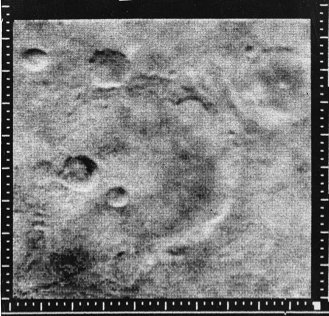 That wasn’t “scientific” in 1967, two years after Mariner 4 sent back pictures of a cratered and desolate Mars.
But when Nigel Kneale wrote the original “Pit” serial, in the late 1950s, a marginally-habitable Mars was (barely) plausible.
Besides, a Lowellian “…Abode of Life” scenario has become an accepted science fiction tradition. Or cliche.
Meanwhile, in the ‘Pit’ universe — Martians couldn’t save their planet or themselves. So they turned at least a quorum of early humans into folks who would carry on Martian culture. Not a bad idea, from the Martian viewpoint.
 Problem was, the Martians were heavily into ethnic cleansing and suchlike pursuits.
So they programmed their values into these enhanced humans.
Along with, if my memory serves, a destructive and irrational respect for authority. Let’s remember that the movie was released in 1967.
In the film, authoritarian oppressor Martians corrupted our nice ancestors with their nasty values. that’s why some humans do bad stuff. Like purging Lebensunwertes Leben, life unworthy of life, from the population.
And why a London street over a buried Martian spaceship got called Hobbs Lane.2
Historical Context: The British Empire

(“The Flags of a Free Empire,” Arthur Mees. (1910); from Cornell University Library, via Wikimedia Commons, used w/o permission.)
(The British Empire in 1910, from a British viewpoint.)
“Quatermass and the Pit” had a Message: following in the footsteps of “Sherlock Holmes and the Secret Weapon” and “Confessions of a Nazi Spy.”
Which I suspect explains some favorable reviews of both the serial and the film.
Work on the BBC television serial began in 1957.
The 1958 Notting Hill race riots hadn’t happened yet, but trouble was obviously brewing.
Folks who had lived in British imperial territories were moving to England.
Some, not all, ethnic English weren’t at all happy about their new neighbors.3 Today’s news media would probably call them white supremacists and/or racists. I’ll get back to that, and the Quatermass Martians.
More Historical Context: the Darien Disaster

(From Herman Moll, via Wikimedia Commons, used w/o permission.)
(“Isthmus of Darien.” Bay of Caledonia was south of “I. of pines.” (1697))
Backing up a bit, European warlords started building empires around five centuries back. England and Scotland were two distinct kingdoms then.
 The Darien scheme, building a colony on the Isthmus of Darien, looked like a good idea to many Scots investors.
English investors saw it as a threat. So did Spain’s movers and shakers. That’s partly because Mercantilism was in vogue: an economic theory that said if Scotsmen do more trade with the natives, then Englishmen or Spaniards will do less.
Thinking that trade can and should benefit everyone still seems to be a hard sell, and that’s another topic.
Meanwhile, back in 1698, 1,200 people reached a bay they called Caledonia and began building New Edinburgh.
Establishing their city on a harbor that ate ships was, in retrospect, a mistake.
So was building a fort with 50 cannon and no fresh water supply. On a site near Spanish shipping routes.
Crop failures and at-best-inept leadership didn’t help.
Locals hadn’t been interested in combs and trinkets offered as trade goods. But as settlers started dying in lots of 10 daily, they gave the immigrants fruit and a sort of banana.
Even so, all but 300 settlers died.
One of two resupply ships reaching Caledonia in August of 1699 caught fire. Then a ship with more settlers arrived, and after that Spanish forces attacked.
The Darien scheme collapsed, taking maybe 20% of Scots currency with it.
That, and English succession issues, gave us the Kingdom of Great Britain. It’s what we call the United Kingdom these days, basically.
Fast-forward about 108 years, and the British Empire is a world power.4
Racist Martians and Pax Britannica
 I could wax rhapsodic on those halcyon days between 1815 and 1914.
For in those days Pax Britannica bestowed peace and prosperity upon a baseborn world. From a British viewpoint.
British rulers abolished slavery and apprenticeship within their domain.
I see that as good news. The slavery part, certainly; apprenticeship because it had arguably become a sort of short-term slavery. (Catechism of the Catholic Church, 2409, 2414)
England ruled the waves. And, with help from France during the second Opium War, forced China’s Qing dynasty to allow opium imports.
That last wasn’t good news.
And so, although I could wax rhapsodic, I won’t.
But I see no point in either demonizing or idolizing England’s empire.
Remembering what went right, and what didn’t? I think that’s a good idea.
One of the things going right, my opinion, was that the United Kingdom allowed and still allows folks from former colonies to relocate in England. Even if they lacked English ancestors.
One of the things not going right was intolerance. It’s still a problem in the UK. And elsewhere. How much of a problem, and how many folks are responsible, depends on who’s talking.
Which gets me back to “Quatermass and the Pit” and BBC television’s racist Martians.
Non-English folks immigrating from the Caribbean were giving some Brits fits in the 1950s. The BBC television bunch apparently figured that presenting ethnic intolerance as something alien to humanity made sense.5
Origin Stories
 “Quatermass and the Pit” wasn’t the first story about alien influence on human evolution and civilization.
I read two such tales in my youth.
I can’t remember the titles or the authors. Frustrating. Given time, maybe I could ferret out those details. Lots of time. Instead, I’ll work from memory. And hope that you’ll bear with me.
One tale was a straight-up rewrite of the second Genesis creation story. Parts of it. (Genesis 2:7–9, 15–25, 3:1–24)
The author recast God as an alien scientist. Eden was the scientist’s research facility and the tree was a tree-shaped symbol on one of the doors.
His science project included making two humans. He told them to not open the ‘tree’ door. Which the humans, being human, did. And got expelled from the facility.
Backwater Babylon and the Ancient Astronauts
 The other story was an early, honestly-fictional and comparatively probable, version of later ‘ancient astronaut’ claims.
In the story, a two-alien spaceship landed on some backwater planet.
They were considerably less ‘alien’ than Frank R. Paul’s “man from Venus.”
Think Michael Rennie or Chris Hemsworth. (“The Day the Earth Stood Still” (1951), “Thor” (2011))
Anyway, the aliens did their job. Which in this case included learning how to talk with the locals.
Then they got a message from home. Something had gone horribly wrong. A war had started, and they were being recalled.
The aliens were unwilling to completely abandon their job.
They gave the local they’ve been talking with a highly condensed version of what they’d intended to share. And, lending verisimilitude to their narrative, a flashlight. Or something like that.
Then they left. The local walked back to his village, ‘which would become Babylon.’
I’d probably enjoy reading the story again.
I’m not sure about the ‘Eden as a laboratory’ tale. And I’ve drifted off-topic.
The Martians Made Me Do It?
 I said that “Quatermass and the Pit” had a clever take on original sin.
The story assumes that there’s something wrong with humanity.
And tells us that we’re a mess because Martians meddled with our nice, natural ancestors.
That sounds a bit like original sin from a Catholic viewpoint. Or the noble savage and Rousseau’s natural man — the notion that if we chucked society’s corrupting influence, then our problems would go away. Which is a massive oversimplification.
Maybe the Quatermass writer and directors had the Catholic version of original sin in mind, with their Martians as Satan’s stand-in.
Or maybe not. Given England’s history and post-Enlightenment ‘enlightened’ attitudes towards religion, it seems unlikely.
But, likely or not, I see parallels.6
Feel free to skip the next section. I’ve talked about sin, original and otherwise, recently. (February 9, 2021; June 28, 2020)
Love, Sin and Consequences
 Ideally, I’d always love God and my neighbor. And see everyone as my neighbor. (Matthew 5:43–44, 22:36–40; Mark 12:28–31; Luke 6:31 10:25–27, 29–37; Catechism, 1033, 1931, 2055, 2196)
When I fail to love God and neighbor, that’s sin. (Catechism, 1849-1851)
So, if all I need to do is love God and my neighbor, then how come I don’t always act as if I believe that?
And how come so many folks act as if they see their neighbors as annoyances, obstacles or worse? Explanations for why folks behave badly abound.
This isn’t even close to a comprehensive list.
- The gods are bored, yanking our chains for amusement
- We’re living with consequences of a bad decision
- Humans and humanity are depraved: bad to the bone
- Society’s rules make us crazy
I’m a Catholic, so number three won’t wash. Neither will numbers one or four.
About number three, I don’t think humanity is the proverbial dunghill with an optional coat of snow. Luther may not have said that justification is like putting snow on a dunghill. But the quote started somewhere, and reflects an all-too-common opinion of humanity.7
Original Sin, Catholic Style
 I think that God creates a world, including us, that’s “very good.” The visible world is not, from God’s viewpoint, icky. (Genesis 1:26–31; Catechism, 337-385)
And neither are we.
But we live in a world where allegedly-civilized nations supported drug pushers, and where calumny oozes from election-year politics.
Our problems started when the first of us put ‘what I want’ ahead of what God said. Then we got caught. After that, the man blamed his wife, and God. The interview did not end well. We’re still dealing with consequences of that choice. (Genesis 3:1–20; Catechism, 385-412)
That’s original sin, Catholic style.
But we’re still human. We’re made in God’s image. Each of us is a someone, not a something: able to decide how we get along with each other and with God. And we’ve still got our old job: taking care of this world. (Genesis 2:15; Catechism, 307, 355-373, 2415-2418)
Recognizing humanity’s transcendent dignity, and doing our job, is much harder than it could have been. (Catechism, 374-378, 1929)
I’m not personally responsible for a decision made by the first of us. (Catechism, 405)
But I inherited humanity’s legacy: dignity, responsibilities and all.
It’s good or bad news, depending on which bits I look at, and how I deal with what I’ve got. And that’s yet another topic.
Close Encounters of the Shining Kind
 Spielberg’s “Close Encounters of the Third Kind” made a lot more sense when I realized it was a religious film. Of sorts.
Complete with a contemporary analog of Bunyan’s Shining Ones: space aliens using really bright lights.
“Close Encounters” won assorted awards, was put on America’s National Film Registry and gave film critics something to talk about.
Apparently it’s rife with Judaeo-Christian analogies and spiritual yearnings. I’ll agree with the yearnings part.
Equating the film’s Devils Tower with Mount Sinai seems like a stretch.
I think it’s more likely Spielberg picked Devils Tower/Bear Lodge Butte because it looks cool. And because humanity has a habit of associating mountains with mythology and the sacred: Mounts Athos, Damavand, Kailash and Miwa, for example.8
So maybe Devils Tower in “Close Encounters” is like Mount Sinai, in a generic sense.
Spiritual Yearnings and Kidnapping on an Epic Scale

(From Science Examiner, used w/o permission.)
(The big alien in “Close Encounters of the Third Kind.” (1977))
Then again, maybe Spielberg didn’t have spiritual yearnings and UFO religions in mind when he made “Close Encounters.”
Which seems unlikely, given how much of the film is dedicated to signs in the heavens. And the big alien’s ‘bless you, my children’ gesture. Granted, that’s how I saw it. Folks with different backgrounds and personalities probably have their own ideas.
One of my interpretations of the alien’s arms-out gesture involves pretending that “Close Encounters” is a documentary, not a movie: that incidents in the film really happened.
Think about it. Scientists and officials learn that folks from somewhere else have committed crimes including grand theft bulk carrier (Emergency Fleet Corporation’s SS Cotopaxi) and kidnapping on an epic scale.9
The aliens arrange a meeting. In a remote spot. Their ship is bigger than the landmark they specified. And they start negotiations by having dozens and dozens of folks they’ve kidnapped walk out of the ship.
Walk? That’s not quite right.
Like I said, it’s been a while since I’ve seen the film. But I think “shambled out” of the ship might be a better description.
Maybe the alleged abductees had been sitting in the space-alien equivalent of economy class all those decades.
Or maybe they weren’t — or weren’t quite — what they looked like. Which might explain why they didn’t talk.
And none of the scientists or officials saw anything odd about shambling non-talking maybe-abductees.
Or, apparently, wondered why the aliens wanted a fresh supply of humans.
Small wonder that I never felt like joining a UFO religion.
‘Believing in’ Space Aliens
 UFO religions started in the 1930s, after 1947, or in the 1950s. The roster of UFO religions is variable, too.
Outfits like the Aetherius Society, Raëlism and sometimes Scientology generally make the cut.
I don’t know whether members would self-identify as UFO cult members.
Many UFO religions have lasted longer than Heaven’s Gate. Hardly surprising, since that bunch committed mass suicide.
I gather that they thought they were shedding they corporeal bodies as a “…’graduation’ from the Human Evolutionary Level….”
The Heaven’s Gate website apparently said that they were “…happily prepared to leave ‘this world’….” They seem to have believed that their souls would go to a spaceship hiding behind Comet Hale-Bopp.
For their sakes, I hope that the Heaven’s Gate folks really believed that they were graduating “from the Human Evolutionary Level.”10
Death, Judgment and Doing my Job
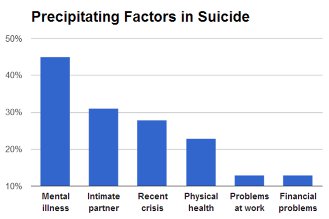 About that the Heaven’s Gate deaths — Suicide strikes me as a really bad idea. I’ve talked about this before, but figure it’s worth repeating.
Human life is sacred. All human life. Yours, mine, everyone’s. It’s a gift from God. (Catechism, 2258)
That’s why murder is a bad idea. If I killed someone, I’d be taking that person’s God-given life. (Catechism, 2258–2317)
Killing myself would be murder, with me as perpetrator and victim. I’d have committed an extremely serious offense while giving myself no time to repent. (Catechism, 1021-1022, 2280-2283)
That kind of trouble I don’t need.
I’m also strongly disinclined to pass judgment on folks who commit suicide. Judging persons is God’s job, not mine. (July 7, 2018; February 4, 2018)
I suspect that today’s UFO religions have roots in 19th century spiritism, theosophy, Western esotericism and even older beliefs.
And some, like Church of the SubGenius, seem to be strictly for laughs.11
Priorities and Respect
 Another point — obviously, or maybe not so much — I can’t be a Catholic and ‘believe in’ space alien celestial spirit guides.
Giving anyone or anything other than God first place in my priorities is a bad idea and I shouldn’t do it. (Catechism, 2112-2114)
Even less obviously, I suspect — judging from screed I occasionally see — I shouldn’t vilify folks who seriously see space aliens as analogs to folk from Faerie and Álfheimr, sent to help (or hinder) us.
I’m a Catholic and a Christian. I’m as sure as I can be that becoming a Catholic was and is a good idea.
But because I’m a Catholic, I must respect folks who are seeking truth, and have found an echo or reflection of it in, say, devotion to “Cosmic Masters.”11
I think they’re wrong. But I also think folks pursue truth within the limits of their experience. Part of my job is passing along the best news humanity’s ever had. (Catechism, 811-865)
Alien Abductions and Ufology
 I think it’s possible, but extremely unlikely, that little grey men from Zeta Reticuli ambushed Barney and Betty Hill in 1961.
That’s ‘extremely unlikely’ as in winning the Irish Sweepstakes and Powerball on the same day. More than seven times running.
B & B Hill’s little grey men arguably inspired ufology’s Greys, AKA Grays. And decades of lurid tabloid cover stories.
Folks who take alien abduction stories seriously say that Greys are not alone. They’ve cataloged at least a half-dozen distinct varieties of space aliens visiting Earth.
Someone apparently sorted the perpetrators of 138 alleged abductions into six types: Alpha, Beta, Gamma, Delta, Sigma and Omega.
That list’s Omega aliens are “energy beings.”12
An Ology by Any Other Name
 My guess is that ufologists come in two basic varieties. Those who:
- See UFO claims as subjects for psychological or sociological research
- Believe that ‘we are not alone’
- Organizing their research around that assumption
I also think sticking “logy” onto UFO doesn’t make ufology of the ‘we are not alone’ persuasion a serious science.
Interesting, sometimes fascinating, yes. Entertaining, occasionally. But as solidly grounded in physical evidence and rigorous analysis as, say, geology? No, I don’t think so.13
That said, I think using Greek letters as labels for classifying 138 alleged abductions is cool. So are the Omega energy beings. Or would be, if they were presented as fictional characters.
— and Used Spaceship Dealers
 Both demonic and angelic space aliens are variations of the ‘planet of hats’ storytelling gimmick. Trope. Whatever.
Science fiction abounds with such planets.
I figure it’s because painting a word-picture of plausibly complex non-human people and their societies would take a great many words.
On top of that, editors have only so much space available for each story.
And they’re probably looking for engaging tales, not essays on hypothetical psycho-sociology.
Basically, isolating and dramatizing a single aspect of the human experience is arguably easier than imagining plausible non-human people. And takes far fewer words. Or screen time.
And readers have only so much patience. Having space aliens who fit into familiar pigeonholes lets writers and readers skip essays on non-human psychology, and start enjoying the story.
Screenwriters have the additional issue of production budget.
As a result, we get Captain Burke and Science Officer Hare negotiating with a planet of hairdressers one week, saving Cobblers on Planet Boot from Flip-Flop fanatics the next: and viewers accepting actors with rubber masks as real space aliens.
Then there’s alien physiology.
I put Fred Hoyle’s “The Black Cloud” at or near the top in that category. But that story’s perception and communication issues are something I’ll save for another day.
I suspect the odds are good that if we do have neighbors, and that’s still an emphatic “if,” then we’ll learn that they’re no more monotonously monolithic than we are. So maybe that pulp science fiction’s “Stories of the Stars” reflects, however dimly, what we’ll find.
Although why Our Heroes landed in an open-pit mine — is yet again another topic. Topics.
“…Our Cousins in the Cosmos….”
 A point I’m trying to make is that if we have neighbors, they will almost certainly not be just like us.
But they’ll also almost certainly be very much like us:
“…Frankly, if you think about it, any creatures on other planets, subject to the same laws of chemistry and physics as us, made of the same kinds of atoms, with an awareness and a will recognizably like ours would be at the very least our cousins in the cosmos. They would be so similar to us in all the essentials that I don’t think you’d even have the right to call them aliens.”
(“Brother Astronomer,” Chapter Three, Would You Baptize an Extraterrestrial? — Brother Guy Consolmagno (2000))
They may even have individuals specializing in transferring ownership of used spaceships.
Questions and “a Mighty Soberin’ Thought”

(From Efbrazil, via Wikimedia Commons, used w/o permission.)
Another angle of the ‘are we alone’ question is whether we’ll find them, or they’ll find us.
Assuming, again, that ‘they’ exist.
If we have neighbors who are even remotely like us, then I figure they may find us. Unless we’re the first people in this universe.
If the ‘remotely like us’ neighbors were only a million years older than us, then odds are good that they’ve long since started exploring this galaxy. And may have at least left a probe near our star.
Which reminds me of this bit of clear thinking regarding extraterrestrial intelligence.
“I been readin’ ’bout how maybe they is planets peopled by folks with ad-vanced brains. On the other hand, maybe we got the most brains…maybe our intellects is the universe’s most ad-vanced. Either way, it’s a mighty soberin’ thought.”
(Porky Pine, in Walt Kelly’s Pogo (June 20, 1959) via Wikiquote)
I think Porky Pine’s right, and that the inspiration of “a mighty soberin’ thought” isn’t necessarily a threat.
Whether and how much we should fear “folks with ad-vanced brains” — is more than I want to talk about to day. So I’ll save that topic for another day.
Agents and Angels
 The Omega energy beings in that Greek-letter list remind me of the Matthew 28 angel.
“His appearance was like lightning and his clothing was white as snow.”
(Matthew 28:3)
But I emphatically do not think space aliens are angels.
Or that angels are “energy beings.”
Before I tie myself in semantic knots, I’d better define my terms.
“Angel” comes from a Greek word that means messenger.
The Greek word is a translation from Hebrew malʾāḵ, which also means messenger.
In a way, anyone who serves as a messenger or agent for God is an “angel.” St. Augustine of Hippo, and others, talked about that.14
But humans aren’t angels. Not the way Gabriel and Raphael are.
People, But Profoundly Different
 On the other hand, angels and humans have much in common. We’re both people: creatures with intelligence and free will.
But we’re made from spirit, “created in the image of God,” and made with the stuff of this world. We live in time and space. (Genesis 1:27, 2:7; Catechism, 302, 355-373)
They’re made of pure spirit. And, although they can and do interact with us, they aren’t limited to our space-time. (Catechism, 328-336)
We’ve known about angels for millennia. Some of humanity’s best minds have studied them.
But we know very little about them. I figure that’s partly because they’re so profoundly not like us. Those hypothetical Omega energy beings, by comparison, would be close cousins. Which gets me into mass-energy equivalence and ontology.15
And tells me that it’s time for me wrap this up.
After adding the usual links to somewhat-related stuff:
- “Seeking Strange New Worlds, Life and Civilizations”
(January 16, 2021) - “My Top 10 Science News Stories For 2020”
(December 29, 2020) - “Oxygen, Alien Life”
(February 23, 2018) - “Alien Life: Notions and Research”
(January 5, 2018) - “Mars, Aliens, and SETI”
(December 16, 2016)
- Wikipdeia
- Introduction to Medieval Allegory
English 512, Dr. Debora B. Schwartz, English Department, California Polytechnic State University - “The Pilgrim’s Progress
From this world to that which is to come.”
John Bunyan (1678) via Gutenberg.org
2 Five Million Years to Martian Nazis:
- Wikipdeia
- Quatermass and the Pit” (1967)
IMDB - Mars, imagined and otherwise
- “Oxygen, Alien Life” (February 23, 2018)
- Wikipdeia
- Wikipdeia
- Wikipdeia
- “UK prejudice against immigrants amongst lowest in Europe, University research finds”
Natalie Fry; NEVADA Today; The University of Nevada, Reno (March 7, 2019) - “Shades of Intolerance: The Influence of Terrorism on Discriminatory Attitudes and Behaviors in the United Kingdom and Canada.”
Chuck Baker, Rutgers (May, 2015)
- Wikipedia
- Living in a vast and fascinating universe
- “Early Birds, Unisex Fish” (March 9, 2018)
- “Science and Religion” (January 12, 2018)
- “Calvinist Origin of Luther’s (?) ‘Snow-Covered Dunghill’?”
Dave Armstrong, Catholic, Patheos (May 14, 2019) - “Luther and Snow on Dunghills”
Fr. Dwight Longenecker, Blog, Fr Dwight Longenecker (December 10, 2018) - Did Martin Luther effectively teach that our justification is like white snow covering over dung?
Christianity, Stack Exchange
- Wikipedia
9 SS Cotopaxi, real and imagined:
- Wikipedia
- Bulk carrier
- United States Shipping Board Merchant Fleet Corporation/Emergency Fleet Corporation (EFC)
- SS Cotopaxi
- Wikipedia
- UFO/Flying Saucer Cults
Melodie Campbell, Stephen A. Kent; Encyclopedia of Religion and Society; William H. Swatos, Jr. Editor; Hartford Institute for Religion Research; Hartford Seminary
- Wikipedia
- Wikipedia
13 Serious, maybe; science, no:
- St. Thomas Aquinas
- “Summa Theologica” (1265-1274)
- St. Augustine of Hippo
- “On the Trinity (Book II)” (ca. 400)
- “On the Trinity (Book III)” (ca. 400)
- Catholic Encyclopedia
15 Stuff I’m not talking about today:
- Wikipedia
- Stanford Encyclopedia of Philosophy