Secondary Causes: Both/And, not Either/Or

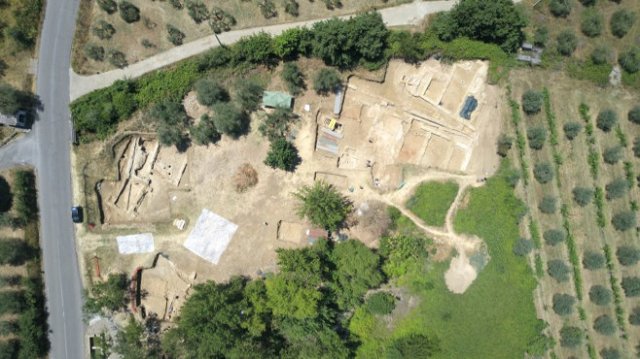
How the Grand Canyon was formed depends on who’s talking.

Scientists say it’s what happened as a river cut through the Colorado Plateau.

Since I think scientists are right about the Colorado River’s role in making that mile-deep gulch, and think that both are part of God’s creation, maybe an explanation is in order.

To begin with, I’m a Christian and a Catholic, so I must believe that God made and makes everything. Which doesn’t mean I see God as a supercharged Paul Bunyan.

Origin Tales, Science, Logic and Me

William B. Laughead's illustration, a tale of Paul Bunyan, Babe the Blue Ox and efficiency engineering. (1922)
(From William B. Laughead, via The Red River Lumber Company, Project Gutenberg, used w/o permission.)

American folklore says Paul Bunyan made the Grand Canyon by absent-mindedly dragging his axe, or maybe a ski pole. And credits the giant lumberjack with making many of my country’s other landmarks.

I enjoy my homeland’s origin myths, but don’t see a point in trying to impose profound spiritual principles on them. As for why I’m also not upset that myths aren’t “true” in a hardwired American literalist sense, that’s another topic.

Anyway, getting back to Paul Bunyan and secondary causes —

Climate change protestors in penguin suits. (2015)A fair fraction of Paul Bunyan stories come from North American lumberjacks via publications like the Duluth News Tribune and The Red River Lumber Company’s “The Marvelous Exploits of Paul Bunyan.”

Since the written tales grew from oral traditions of lumberjacks, with roots going back at least to the days when companies clear-cut forests,1 I could put on an ‘environmentalist activist’ hat and call for a ban on P. Bunyan tales.

Because they glorify destruction of forests and cause global warming.

But I won’t.

That’d be as silly as slapping the “Satanic” label on Paul Bunyan stories, and insisting that God made the canyon by dragging an axe. Or that, since there’s no scriptural reference the Grand Canyon or Arizona — neither exists. Because they’re ‘not Biblical.’

I’d like to think that nobody could be quite that crazy.

I’m [not] a “Belivir”

But then there’s this discussion, from about eight years back:

#3
“Two errors in posted image:
1) The dates are significantly too long ago.
2) The Flood, which caused the immediate burial of dinosaurs, etc needed for good quality Fossilization, is absent.”

#5
“Not sure if serious or trolling..”

#6
“Please cite the Bible as your source, so that everyone can be keenly aware you have made no distinction between mythology and science, and thereby safely ignore you.”

#7
“As a beliver in the one true God who created all things, who is over all things even science, and logic…..”
(Google Developers post, Google+ (October 11, 2013))

Orlando Ferguson's 'Map of the Square and Stationary Earth.' (1893) The legend at top says, in part, 'this ... is the Bible Map of the World.'If I thought the “beliver” and an earnest young chap who told me the sun goes around Earth because the Bible says so were typical Christians, then I might be an atheist today.

Or, more likely, since I’ll willingly think that spirit exists, maybe an agnostic or Buddhist; maybe a Hindu; all of which were popular options in my youth.

But my parents were both Christian and accepted that this universe is considerably older than Ussher’s six and a quarter millennia.

I don’t know how many American Protestants are still faithful Ussherites, much less why some Catholics apparently believe that accepting an anti-Catholic British bishop’s chronology is vital to being Catholic. And that’s yet another topic.

My faith isn’t built on science and logic, but I don’t have to ignore either.

As for how I can think that God makes everything we see and that stuff like erosion and gravity are real, it’s basically about secondary causes. (Catechism of the Catholic Church, 306-308)

“…God Fixed a Certain Order….”

Detail, Gentile da Fabriano's 'Valle Romita Polyptych.' (ca. 1411)St. Thomas Aquinas talked about that sort of thing. At length:

“…God’s immediate provision over everything does not exclude the action of secondary causes; which are the executors of His order, as was said above (Question [19], Articles 5, 8)….”
(First Part, Question 22, Article 3)
“…For the providence of God produces effects through the operation of secondary causes, as was above shown (Question [22], Article 5)….”
(First Part, Question 23, Article 5)
“…The fact that secondary causes are ordered to determinate effects is due to God; wherefore since God ordains other causes to certain effects He can also produce certain effects by Himself without any other cause….”
(First Part, Question 105, Article 1)
“…God fixed a certain order in things in such a way that at the same time He reserved to Himself whatever he intended to do otherwise than by a particular cause. So when He acts outside this order, He does not change….”
(First Part, Question 105, Article 6)
(“Summa Theologica,” Thomas Aquinas (ca. 1265-1274))

Briefly — I suspect St. Thomas Aquinas didn’t say anything briefly — and that’s a very brief excerpt — I think God creates everything.

I’d better, if I’m going to be a Catholic. (Genesis 1:1-2:3, 2:4-25; Catechism, 279-314)

Before I go on, an explanation: why I said “God creates” instead of “God created.”

Genesis and Bemidji, Minnesota


(From Wikimedia Commons, used w/o permission.)
(“Paul Bunyan and Babe the Blue Ox” in Bemidji, Minnesota. (2006?))

ESO/INAF-VST/OmegaCAM, OmegaCen/Astro-WISE/Kapteyn Institute; via Wikimedia Commons; used w/o permission.Several decades back now, I read a discussion of why God probably doesn’t exist, and anyway couldn’t be all that all-knowing or all powerful.

The author pointed out that nothing can travel faster than light, so if all Hell broke out and God was a light year away, the “all-knowing” deity wouldn’t have a clue until a year later.

That almost makes sense.

If God was like us, an entity existing in a particular part of time and space, then God couldn’t know everything.

But since I’m a Catholic, thinking of God as a supercharged Paul Bunyan, living in Bemidji, Minnesota, or any other spot in this space-time continuum: that’s not an option.

God isn’t ‘in‘ time and space. Not the way I am, at any rate. He’s ‘there,’ immediately aware and present at every time and every place: past, present and future. (Catechism, 300, 600)

So “In the beginning, when God created the heavens and the earth —,” as Genesis 1:1 puts it, is accurate enough: from our viewpoint. The moment at which this universe began is in our past, hence “God created.”

But God, again, isn’t ‘in’ time and space. Although the Almighty is still ‘here and now,’ and “at every moment, upholds and sustains” every creature. (Catechism, 301)

So that’s why I use present tense when talking about God creating this universe. It’s my way of saying that God’s actively engaged in creation in whatever “now” I’m in at the moment.

Talking About God, Appreciating God’s Work

My 'Cosmic Coffee Cup.' (2014)

Illustration of a spherical Earth 'L'Image du monde, by Gautier de Metz. (14th century copy of a 13th century original)God is large and in charge. (Catechism, 268)

“Our God is in heaven
and does whatever he wills.”
(Psalms 115:3)

I figure God could make stars, planets and people pop in and out of existence: but that’s not how this universe works.

I’m assuming that God isn’t also updating our memories to make reality in the current ‘now’ closely resemble ‘five minutes ago’ and ‘last year.’

At any rate, I think that God weaves knowable physical laws into reality’s fabric. What we observe are parts of creation acting in ways determined by their nature. (Catechism, 268, 279, 299, 301-305; “Gaudium et spes,” 5, 15, Second Vatican Council, Bl. Pope Paul VI (December 7, 1965))

Folks who converted the Genesis narratives and other parts of Sacred Scripture from oral tradition to writing had a habit of giving God credit for events in this universe.

I could claim that, since they didn’t discuss the Friedmann-Lemaître-Robertson-Walker metric,2 Biblical authors were ignorant and simple-minded; but that would be silly.

As I see it, they were talking about God: and recognizing that God is what philosophers call the first cause. (Catechism, 304-308)

On the other hand, recognizing that God makes reality possible does not mean I must try hard to ignore — or at least not think about — this wonder-filled universe.

Everything — every grain of sand, every galaxy, every butterfly, every scientific law, everything reflects a facet of the Creator’s truth. What it reflects comes from its nature. (Catechism, 301-308)

And since I believe that God creates everything, learning about this universe gives me more reasons to admire God’s work. (Catechism, 159, 214-217, 282-283, 294, 341)

I’ve talked about that before. A lot.

“…Who’s Right?”

Bill and Jeff Keane's 'Family Circus' at the Grand Canyon: a river, a ranger, God and a good question. (August 14, 2021)Billy asked a good question last Saturday:

“The ranger said the river dug the canyon, Mommy, and you said God did it. Who’s right?”
“The Family Circus,” Bill & Jeff Keane (August 14, 2021)

As I see it, since I think God creates everything and maintains a universe in which creatures produce effects according to their nature, they’re both right.

God made the river, made both the rock and water which form their substances and determined the physical laws they follow; so God is the first cause.

Water, rock, gravity, and all natural laws involved in forming the canyon exist because God wills it, so they’re secondary causes.

Which reminds me of natural law: something I haven’t talked about for some time.

I asked a priest about natural law and how it’s defined, this was a month or three ago now.

Up to that point, based on what I’ve read, I’d taken natural law to mean ethical principles written into reality’s source code.

The priest defined natural law as that subset of God’s rules for how things work — what we call physical or scientific law and ethical principles — that we’ve noticed.

That makes sense, particularly since we’re starting to learn that altruism has specific and measurable effects.3 And that’s yet again another topic.

Finally, the usual links to more stuff:


1 It’s true! Wood does grow on trees:

2 Dealing with knowledge – – –

3 – – – and still learning:

Posted in Being Catholic, Discursive Detours | Tagged , , , | Leave a comment

“…We Wait, and are Patient, and Back We Come….”

This is among my favorite quotes:

“‘…Here they stabled their horses and feasted, from here they rode out to fight or drove out to trade. They were a powerful people, and rich, and great builders. They built to last, for they thought their city would last for ever….
“… ‘People come — they stay for a while, they build — and they go. It is their way. But we remain. There were badgers here, I’ve been told, long before that same city ever came to be. And now there are badgers here again. We keep on going, and we may move out for a time, but we wait, and are patient, and back we come….'”
(From “Wind in the Willows,” Kenneth Grahame (1908))

Posted in Journal | Tagged , , | Leave a comment

Robots on Mars, an Empty Sample Tube and a Laser

Several days ago, a robot on Mars selected a hollow coring bit from its tool kit, drilled into a rock, withdrew the tool and placed the core into a sample tube.

At least, that’s what should have happened.

But just to be sure, Perseverance felt inside the tube and took a look before sealing it.

Oops. The sample tube was empty.

NASA’s discussion of the robot’s first try at collecting samples is more detailed and less anthropomorphic:

At any rate, after finding the core sample in the tube, Perseverance radioed a report back to Earth; including a picture of what wasn’t inside sample collection tube number 233.


Science!

'Journey to Mars:' NASA's Perseverance rover's caching strategy.
(From NASA, used w/o permission.)

Sample collection tube number 233 was supposed to hold the first of many core samples taken by Perseverance, and left at a depot for later pickup. It’s not the robot’s only job on Mars, but it’s an important one.

If at First You Don’t Succeed — Try Another Spot

Mars 2020 sample collection tube 233: empty. (August 6, 20201)
(From NASA/JPL-Caltech, used w/o permission.)
(CacheCam’s view of (empty) sample collection tube number 233. (August 6, 2021))

The last time I checked, humans back on Earth decided that Perseverance should head for the next sampling spot and try again.

Looks like the tools worked fine. The Corer drilled seven centimeters into the rock, just as it was supposed to.

Perseverance pulled it out and would have dropped a core sample into the collection tube, but apparently the rock was too crumbly. The robot has looked for the missing core, or pieces of a broken core, on the surface and even peeked down the hole it drilled; but found nothing.

Scientists figure that —

“…the coring activity in this unusual rock resulted only in powder/small fragments which were not retained due to their size and the lack of any significant chunk of a core. It appears that the rock was not robust enough to produce a core….”
(“Assessing Perseverance’s First Sample Attempt,” Louise Jandura, Chief Engineer for Sampling & Caching at NASA/JPL, Mars Perseverance Rover Blog (August 11, 2011))

Perseverance found some stuff at the bottom of the hole. Scientists figure that the missing core sample is either at the bottom of the hole, mixed in with the cuttings pile, or both.

Either way, there’s not much point in trying again there, so they’re telling Perseverance to try again at the next sample collection spot.1

‘Here’s a Map, Good Luck!’

Mars 2020 flight systems.The Mars rover is a smart robot.

It had to be. Folks at NASA wanted MARS 2020 to explore Jezero Crater: an interesting bit of real estate.

But what made it interesting also made it a very dangerous landing field.

So they gave Perseverance a map of the landing zone, told the robot which patches of the Martian surface were comparatively safe, and let the onboard EDL and TRN systems decide which one to pick.

TRN is technospeak for Terrain Relative Navigation and Entry. EDL means Entry, Descent, and Landing.

Again, Perseverance is a very smart robot. It’s autonomous, making many of its own decisions, but it’s not fully autonomous.

If it were, then it wouldn’t have been waiting for folks back on Earth to tell it what to do after the first core sample drilling came up empty.

That’s the way it is now. But we haven’t stopped designing smarter robots.

Sooner or later, autonomous spacecraft and rovers will almost certainly call home only when they have something they figure humans will want to see: based on criteria we’ve given them.2

The Little Helicopter That Could


(From JPL/NASA, via ISAE-SUPAERO/YouTube, used w/o permission.)
(Ingenuity’s fourth flight: another short flight for a helicopter, another giant leap for robots. (May 1, 2021))

Ingenuity, the Mars 2020 helicopter, is another smart robot: and has to be, too, since flying requires decisions based on what’s happening now: not five to twenty minutes ago.

Make that ten to 40 minutes ago, depending on where Earth and Mars are in their orbits.

Ingenuity can’t wait that long for ‘current’ flight data to reach Earth, someone with a joystick to react, and the data to travel back to Mars. So, although folks back on Earth tell Ingenuity where to go, The little helicopter flies itself.3

Snapshot From Mars

Image from Ingenuity's 11th flight: Perseverance rover. (August 4, 2021)
(From NASA/JPL-CalTech, used w/o permission.)
(‘I can see my rover from here!.’ Ingenuity’s view of Perseverance. (August 4, 2021))

Besides flight-testing the first Martian helicopter, Ingenuity is scouting ahead on Perseverance’s route; looking for possible hazards and interesting items.

Although I gather that humans back on Earth decide what’s safe, what’s not, and what’s worth a closer look.

Eventually, I’m pretty sure that our robots will decide what they’ll do next on their own. Based, again, on whatever folks back on Earth told them to be looking for.

Which reminds me. Besides sending back pictures and video clips — and, we hope, collecting core samples for later pickup — Perseverance has been zapping rocks with a laser.

A New and Improved Martian Rock-Zapper

US Army Research Laboratory's schematic of a LIBS system. (2010)Perseverance’s LIBS — Laser-induced breakdown spectroscopy — isn’t the first rock-zapper on Mars.

Curiosity used an earlier model some 160,000 times at 4,500 locations.

The rover’s LIBS laser is just like the one in a DVD player, except that instead of bouncing light off a DVD disk, it vaporizes rock.

Not much rock, just enough to make plasma that’s bright enough for the LIBS spectrometer. That instrument tells scientists what elements are in the rock.

The Perseverance rover’s LIBS is about the same size and shape as Curiosity’s, but holds more and smaller instruments.

I gather that the LIBS laser’s pulse lasts no more than a few nanoseconds and carries upwards of 12 millijoules of energy.

A millijoule is — feel free to skip ahead, geek-speak can be boring — one thousandths of a joule, a joule is equivalent to one watt of electricity for one second, so it’s not much energy.

Just enough to make a bit of rock go “pop” and flash for a moment. That’s useful, since measuring how fast the “pop” reaches Perseverance’s microphone tells scientists the speed of sound in Martian air.4


Robots!

'Does it LOOK Like We Need Help?!' Brian H. Gill (2014)

Robots are everywhere, not just on Mars. They’re building cars, packaging products and carrying them around warehouses.

Children dreaming of a life spent working as stock clerks will be sorely disappointed, unless we stop using robots.

This may be the end of civilization as we know it, which strikes me as a good thing. Particularly since I’m quite sure today’s world isn’t the best of all possible worlds.

And that, along with Leibnizian monadology and Voltaire’s “Candide,” is another topic.5

It’s been some time since I’ve seen scary headlines about robots replacing humans, so I’ll keep this brief. Brief for me, that is. Besides, I’ve talked about it before, and will put links to that stuff when I’m done here.

“To err is human….”

Boston Dynamics Atlas robots, showing how they'd work as stock clerks. Boston Dynamics, via Digital Trends, used w/o permission. (2017)If I thought humans in general and me in particular were defined by our jobs, then I’d have reason for concern.

I might also be a bit muddled about who and what I am, since I’ve had a whole mess of jobs: including but not limited to delivery guy, beet chopper, radio DJ, computer operator and list manager.

Today’s robots can probably do some of my old jobs better than I did. Tomorrow’s will most likely serve even more functions.

But replacing humans as humans? There’s an old joke about that, sort of, from the days when computers were scary new tech:

“To err is human.
To really foul things up, you need a computer.”
(20th century joke)

As I see it, humans are so good at being humans that no robot can ever replace us. Although I’m pretty sure that robots will eventually make better stock clerks.


Martians!!

Amazing Stories magazine cover. (March 1939)I’m quite sure that nobody’s raised concerns over NASA’s Mars rovers rolling across the Martian landscape, taking potshots at rocks with their lasers.

Ever since the Mariner flybys, we’ve realized that Martian civilizations aren’t here.

And almost certainly never were.

I’d say certainly, with no qualifier, since the most optimistic serious speculation about Martian life has been downgraded to maybe what Earth had a billion years back.

I think the current scientific consensus regarding Martian life is right, but also think that “certainty” can wait until after we’ve thoroughly explored the place.

Granted, locally-grown Martians like the multicolored Burroughs Barsoomians are wildly improbable, putting it mildly.

Just the same, before we send fully-autonomous robots to places that might have folks who’d take umbrage at being zapped — even it was just a little “pop” of a zap — maybe we should think about how a robot could tell the difference between a rock and, say, a backyard barbecue grill.

Or how to apologize, if a rock said “ouch” and moved. And that’s yet another topic. Topics.

I said there’d be links. Here they are:


1 A missing core sample:

2 A smart robot:

3 Another smart robot:

4 Energy units and a laser on Mars:

5 Philosophers and robots:

Posted in Discursive Detours, Science News | Tagged , , , , , | 3 Comments

Ritalin, the 2020 Summer Olympics, and Me

I haven’t been following the Tokyo 2020 Olympics, but could hardly help noticing major stories in my news feeds.

Some of them weren’t what I’d call news. Not “news” in the sense of being unexpected.

China won the table tennis medals, for example, and COVID-19 put a crimp in events and/or coverage thereof. That last, actually, was news of a sort. COVID-19 coverage outpaced team Russia doping news this time around.

Here’s a headline sampler, from Wednesday and Thursday:

On the other hand, I’ve been particularly aware of an American gymnast: Simone Biles. This is the first time I’ve had something aside from nationality and human nature in common with an Olympic athlete.

We both take methylphenidate, the main ingredient in Ritalin.

I haven’t read much past the headlines in most ‘Biles and Olympic gymnastics’ stories, so I’ll link to these two, and move on:

Balancing Mental Health and the Olympics

Fernando Frazão's photo: Simone Biles, balance beam, Summer 2016 Olympics. (August 15, 2016)I don’t know why Simone Biles set her sights on the Olympics, or the rationale behind approving methylphenidate for an Olympic athlete.

Based on what little I’ve read, my hat’s off to her for making it to the Olympics.1

And for putting her mental health before staying in the competition.

“…Naomi Osaka inspired her to protect her mental health
“I say put mental health first. Because if you don’t, then you’re not going to enjoy your sport and you’re not going to succeed as much as you want to. So it’s OK sometimes to even sit out the big competitions to focus on yourself, because it shows how strong of a competitor and person that you really are — rather than just battle through it….”
(Bill Chappell, NPR (July 28, 2021))

I gather that her decision to bow out didn’t sit well with some fans.

Maybe because the ‘it doesn’t matter how you play the game, it’s whether you win or lose that counts’ ethic is still around.

That attitude inspired jokes like this:

‘I agree. Sports builds character. That’s what I have against sports.’
(A joke I first heard ca. 1970)

And that’s another topic. Almost.

One more quote.

Simone Biles @Simone_Biles · Sep 13, 2016
“Having ADHD, and taking medicine for it is nothing to be ashamed of nothing that I’m afraid to let people know.”(Twitter)

Psychiatric Disorders and Me

Sauk Centre's Ash Street South.I’m no gymnast. Being born with two gimpy hips saw to that, although I might not have prioritized athletics anyway.

I do, however, have ADHD of a sort; plus a variety of other psychiatric problems:

  • ADHD (attention deficit hyperactivity disorder), inattentive type
  • Autism spectrum disorder
  • cluster A personality disorder
  • GAD (generalized anxiety disorder)
  • Persistent depressive disorder
  • PTSD (Post Traumatic Stress Disorder)

And that’s why I take methylphenidate.

It doesn’t, I gather, cure anything. But it, and mirtazapine, let me think without having to fight my mental machinery. Metaphorically speaking.

Oddly enough, autism spectrum disorder and PTSD aren’t on my current diagnosis list, Not the one I can access, at any rate. If that becomes an issue, I’ll deal with it; but if it doesn’t, I’ll be a happy camper. I’ve quite enough to deal with as it is.

My guess is that updates in the DSM are responsible for some changes in my psychiatric disorders roster. DSM: That’s the Diagnostic and Statistical Manual of Mental Disorders, something the American Psychiatric Association has been updating since 1952.2

Delayed Diagnosis

My methylphenidate prescription, with one day left. (June 10, 2021)Glitches like autism spectrum disorder and ADHD often get spotted in childhood. Now.

I was born in 1951.

My folks noticed that I woke up screaming when they let a light switch click, so they turned off lights by unscrewing the bulb.

But I grew out of that, and did well enough in school. Happily, my parents and kindergarten teacher didn’t mind that I enjoyed reading.

My social skills were lagging, but my folks most likely expected that. I’d had two operations by the time I started school, and regressed about a year each time.

When I was 12, my mother had a severe stroke. I’m told that I was with her at the time, and accompanied her in an ambulance. My father tells me that he blamed me. That’s understandable. Dealing with me can be stressful.

I have no memory at all of the ‘stroke’ events, all my knowledge of them and the month or so surrounding them I have second-hand, from my parents.

I suspect that’s how PTSD got on my list, and am as sure as I can be that those events started my experience with depression.

Maybe life would have been easier, if autism spectrum disorder and ADHD-inattentive had been widely known in the early 1950s.3

Or maybe I’m lucky that they weren’t.

Lobotomies, Cure-Alls and Making Sense

Illustration of 'icepick' lobotomy, from Dr. Walter Freenan II's 'Psychosurgery in the Treatment of Mental Disorders and Intractable Pain.' (1950)The 1949 Nobel Prize for Physiology or Medicine went to Walter Rudolf Hess for mapping the midbrain, and to António Egas Moniz for popularizing lobotomies.

Dr. Walter Freeman II picked up where Moniz left off, with his handy-dandy transorbital lobotomies. I suspect they’re better known these days as ‘icepick lobotomies.’

The procedure was fast, simple and — according to Dr. Freeman — didn’t require anesthetic. Simply zap the patient with an electroshock machine, and get to work.4

I keep saying this: I do not miss the ‘good old days.’

As it was, my autism spectrum disorder, ADHD-inattentive or whatever label I use for my trick wiring — the problem or problems weren’t diagnosed until the early 21st century.

I had been an adult for decades when I decided that trying methylphenidate made sense.

That doesn’t mean that I think the drug is a good idea for everyone who deals with disorders like mine.

But, despite the unpleasantness of dealing with bureaucratic-SNAFU-enabled withdrawal, I also don’t think that nobody should use it. Double negative, but I’ll let it stand.

By the same token, I think dosing every kid who isn’t blandly “normal” with Ritalin is a bad idea, and think that some children may benefit.

Basically, I’m dubious about anything peddled as a cure-all. Or denounced as Satanic, unscientific, or whatever scares the target audience most.

Getting and Staying Healthy: Within Reason

I. Cruikshank's 1808 political cartoon, supporting Jenner, Dinsdale and Rose in the vaccination controversy.Backing up a bit, I’ve been taking methylphenidate for more than a dozen years.

I think doing so makes sense.

And, since I’m a Catholic, taking care of my health — within reason — doesn’t involve a crisis of faith.

Even if it means taking prescribed medication that didn’t exist in days of yore.

That’s because I think life and health are “precious gifts.” (Catechism of the Catholic Church, 2288)

I also think that I can decide whether or not I take my meds, or do pretty much anything else. Emphasis on can decide. Free will comes with responsibility. (Catechism, 1730-1738)

If I decide to stop taking methylphenidate, for example, I’ll experience consequences.

So: taking meds that keep me healthy, or less unhealthy than I’d be otherwise, makes sense.

Within reason.

Priorities

'Reefer Madness' (1936, released 1938-1939) theatrical release poster. (1972)I could take the first bit of Catechism paragraph #2291, “The use of drugs inflicts very grave damage on human health and life,…” for example, ignore it’s context: and the rest of the paragraph that okays “strictly therapeutic” meds.

I could, but that wouldn’t be reasonable, so I won’t.

Recapping, getting and staying healthy is a good idea.

But if I made being healthy my top priority, that’d be a problem. Top rank is where God belongs. Putting anything or anyone else — health, family, money, success at sports — at the top of my list would be a bad idea. (Catechism, 2112-2114, 2289)

It’s not that health, family, and Olympic medals are bad.

Just that they’re not as important as God.

Which ought to be obvious, but often isn’t.

There’s a reason for that, involving free will and a profoundly imprudent decision. But I’ve talked about original sin, Catholic style, before; which isn’t believing that humanity is rotten to the core. (Catechism, 396-412)

Now, the usual list of allegedly-related stuff:


1 Olympics and an athlete:

2 DSM, Dysthemia and all that:

3 ADHD with a difference:

4 Nobel Prize 1949 (or) It Slices! It Dices! – – –

Posted in Being Catholic, Discursive Detours | Tagged , , , , | 3 Comments

Olympic Games Tokyo, Stearns County Fair Sauk Centre

Stearns County Fair. (July 28, 2012)

The 2020 Summer Olympics and Stearns County Fair are both in progress this weekend.

One is an annual agricultural and commerce show, the other is half of a four-year Olympiad; but they’re not entirely different.

The COVID-19 pandemic shut both down last year, for example.

Rescheduling Tokyo 2020 and cancelling what would have been the 118th Stearns County Fair disappointed a lot of folks, but I think it made sense.

COVID-19 was becoming a global pandemic in January of 2020.

Can’t say that I blame Tokyo officials for saying that they could keep athletes and visitors safe, though. My culture has variations on ‘the show must go on’ — and sometimes it makes sense.

But the International Olympic Committee said ‘not now, maybe next year.’

Can’t say that I blame them, either.

I had quite a bit to say this week, mostly about Olympic history, so here a list of headings:

Feel free to skip ahead. Or go get a cup of coffee, watch whatever Olympic event’s on, or take a walk. I should still be here when you get back.


The Games Must Go On! Usually

President Gerald Ford getting swine flu vaccination, 1976Sure, Zika didn’t block the 2016 Rio de Janeiro games; and H1N1/swine flu didn’t stop Vancouver’s 2010 Winter Olympics.

On the other hand, we knew how the Zika virus was transmitted in 2016; and had been studying it since the 1940s.

Swine flu was and is a serious disease, but the 2009-2010 H1N1 outbreak wasn’t nearly as deadly as the one starting in 1918.

COVID-19, in contrast, hadn’t been identified and almost certainly didn’t exist before late 2019; and by early 2020 we could tell that, on average, someone catching it was more likely to die than someone who got the H1N1 flu.

Besides, we weren’t sure exactly how the SARS-CoV-2 virus spread. And having no COVID-19 vaccine at the time didn’t make an international get-together seem like a good idea.1

Even, so, the International Olympic Committee had historic precedent for ignoring obvious and avoidable hazards:

“…Cannon to right of them,
Cannon to left of them…
…Boldly they rode and well,
Into the jaws of Death,
Into the mouth of hell
Rode the six hundred….”
(“Charge of the Light Brigade,” Tennyson (1854) via VictorianWeb.org)

The last I heard, we’re still not sure why the Light Brigade charged the wrong target; and that’s another topic.


Three Distinct ‘First’ Olympics

Olympiad of the Republic, Paris: Olympics of the French Revolution. (1796))
(From Musée de la Révolution française, via Wikimedia Commons, used w/o permission.)
(First Olympiad of the Republic, Paris. (1796))

Today’s Olympics began in 1859, when Evangelos Zappas paid the bills for an Olympics revival in Athens. Athletes came from Greece and the Ottoman Empire. Folks liked the games, so the ‘Zappas Olympics’ were on again in 1870 and 1875.

Or they started in 1850, with the Wenlock Olympian Games in Shropshire, England.

Then again, I could say that Charles-Gilbert Romme’s L’Olympiade de la République revived Olympian glories in 1796 — and made them metric. His idea was celebrating the First Republic’s first four years.

But Romme was more than a sports promoter.

Charles-Gilbert Romme had been elected to the revolutionary Legislative Assembly as a Girondist. After moving on to the National Convention, Romme joined the Montagnards. Somewhere along the line he voted for Louis XVI’s execution.

Girondist? Montagnard? Think Whig and Tory, Republican and Democrat: political parties, important at the time.

Then Romme said rioting sans-culottes — blue collar workers in Revolution-speak — had reasonable demands. Anti-Montagnard activists disagreed, so Romme was sent to the guillotine. Or would have been.2

I’ve seen two versions of what happened. One says he stabbed himself outside the courtroom and died with “I die for the republic” on his lips. Another says he was guillotined. I suppose he could have been guillotined postmortem, and I’m drifting off-topic.

Romme missed the L’Olympiade de la République opening ceremonies by about a year.

Another ‘First’ Olympics

'Zappas Olympics' opening ceremonies. (1896)
(From Wikimedia Commons, used w/o permission.)
(Summer Olympics opening ceremony, Panathenaic Stadium, Athens. (1896))

Another ‘first modern Olympics’ was in 1896, when Baron Pierre de Coubertin’s International Olympic Committee sponsored their first Olympic games, back in Athens.

And Let’s Not Forget the Cotswold Olimpicks!

'Cotswold Games' woodcut, from the cover of Annalia Dubrensia.'(1636)But the Cotswold Olimpick Games, near Chipping Campden, England, predates them all. They started in 1612.

“Olimpick?!”

That’s how Robert Dover, he’s the chap who started the games, spelled it in 1612.

I’d use today’s “Olympic” spelling, but I’m an American who was born during the Truman administration.

My guess is that “Olimpick” was a correct spelling for someone born in Norfolk, East Anglia, when Elizabeth I was queen.

I like English, my cradle tongue.

But I sympathize with anyone who tries to learn our spelling conventions.

That tangle is what happened when a Germanic language got modified by Vikings who spoke their version of French. After which, from around 1400 to 1600, we got the Great Vowel Shift; and those were just two high points in the story of English.

Or maybe the Great Vowel Shift ran from 1400 to 1800.3 There’s consensus that it happened. When, how and why it happened is still debated.


The First Olympian Olympics

Locations for major ancient Greek games
(From Sport in the Ancient Greek World, Joukowsky Institute, Brown University; used w/o permission.)

So, recapping, the modern Olympics started in 1612, 1796, 1850, 1859, and/or 1896.

Or maybe some other year, depending on who you’re listening to; and when you say the “modern” era starts.

If you thought the Great Vowel Shift was debatable, then you haven’t seen historians discuss historiography, timeframes and labels.

Basically, Tokyo 2020 is part of a tradition going back maybe four centuries: counting from when Europeans got excited about one of the four Panhellenic Games. Five, if you count the games in Athens.

At any rate, the big four were at Olympia, Delphi, Nemea and Isthmia: that last apparently a temple of Poseidon that got its name from the Isthmus of Corinth.

The games were in honor of Zeus, or maybe Hera; Apollo; Heracles, who isn’t or isn’t quite Hercules; and Poseidon. They ran on a four, two and six year rotation.

An Olympiad is four years long. It’s a unit of time dating from archaic Greece, but not officially used until the Hellenistic period, which was after the Greek Golden Age, and that’s another topic.4

If all that sounds complicated, I agree.

Olympia and a Puzzle with Pieces Missing

Olympia sanctuary; archaic, classical, Hellenistic and Roman periods; by N. Kaltsas. (2004)
(From N. Kaltsa, via Wikimedia Commons, used w/o permission.)
(Sanctuary at Olympia, archaic to Roman periods.)

Each Olympiad started at — where else? — Olympia, just south of Mount Kronos.

Historians and archaeologists agree that folks have been living at Olympia since 1500 B.C. and started worshiping Zeus around 1000 B.C., or maybe they’ve been there since 1000 B.C. and built a Zeus sanctuary a few centuries later. Probably.

We’re pretty sure that the Altis, the Olympian sacred precinct, was a quadrangle or a grove, dedicated to Zeus, Hera, Herakles: or maybe it’s what folks called a pavilion or marquee, back in the day.5

We’d almost certainly know more about Olympia’s story, if the Late Bronze Age collapse hadn’t happened.

Catastrophe, Survival and Reconstruction

Finn Bjørklid's map; showing migrations, known battles and burned cities during the Late Bronze Age collapse.
(From N. Kaltsa, via Wikimedia Commons, used w/o permission.)
(Known and inferred movements, battles and destroyed cities. (ca. 1200 B.C.))

Something bad happened about 32 centuries back.

Then, 27 and a half centuries back, give or take a few decades, Homer composed the Iliad: an epic poem describing what we call the Trojan War. Up until maybe a century back, Western scholars assumed that the Iliad described a real war.

Since then, assorted scholars have decided that the Troy didn’t exist, the Trojan War never happened and Homer wasn’t a real person.

Folks like Schliemann deflated the ‘Troy didn’t exist’ notion, but I gather that Homer’s identity is still up for grabs.6

As for the Trojan War —

Myth and Memory

Johann Georg Trautmann's 'Blick auf das brennende Troja'/'The Burning of Troy.' (18th century)
(From Johann Georg Trautmann, via Wikimedia Commons, used w/o permission.)

I’ll grant that the Trojan War, as described in Homer’s Iliad, is part of Greek mythology; and that we don’t have documentary evidence that Homer was Homer.

Detail of 'The Apotheosis of Washington,' United States Capitol rotunda; Constantino Brumidi. (1865)But I see an 18th century war, George Washington, Abraham Lincoln and Paul Bunyan as part of American mythology.

And, although I know Paul Bunyan didn’t really have a blue ox, I’m convinced that Minnesota exists and that what I call the American Revolution happened.7

I don’t have a problem thinking that maybe Homer’s Trojan War, which could easily have happened around the time of what we call the Late Bronze Age collapse, was based on actual events.

Loosely based, maybe. Along the lines of today’s ‘based on actual events’ movies.

Looking Back, After 32 Centuries

British Museum Room 55, the Cyrus Cylinder at leftThink of it this way. Let’s say that WWIII happened in the late 1960s.

It didn’t, I’m just setting up an imaginary situation to illustrate speculation about the earliest Olympics.

Anyway, let’s say my hypothetical WWIII started after the 1968 Summer Olympics in Mexico City. As a result, the 1972 Munich Olympics didn’t happen, and survivors spent several centuries rebuilding their societies.

Some even managed to preserve their most valuable records.

Then, around 2450, someone told an epic tale set in New York City: a story of star-crossed lovers, dark legacies and lost hope. Not unlike “West Side Story” and “Romeo and Juliet.”

Except that the storyteller’s New York City was pronounced Nyooyork Shahar, as the mythical metropolis was called in the era’s civilized language.

Fast-forward to the year 5221. The best and brightest scholars — if you don’t believe that, just ask them — say that Nyooyork Shahar never existed. And they’ll be right. Sort of.

Nyooyork Shahar’s fate didn’t depend on an adolescent romance, trial by combat wasn’t part of the city’s judicial system; but it was, nonetheless, a real city.

And that’s almost, but not quite, another topic.

A point I’ve been making is that myth and fiction intersect reality. And an earliest known recorded event may not be the earliest event of its kind.

So as I see it, the ancient Olympics started in 776 B.C. — assuming that the traditional date is correct, and that the traditional ‘first Olympics’ really were the first.

“Mukanuh” and Linear B

Underwood & Underwood's 'The Lion Gate at Mycenae' stereo photograph. (1897)
(From Underwood & Underwood, via Google Art Project, used w/o permission.)
(Mycenae’s Lion gate, after excavation and before partial reconstruction. (1897))

The Mycenaean civilization flourished from around Hammurabi’s time to when Wu Yi of Shang defeated Bi, or maybe when Di Xin allegedly torched his own palace, with him inside.

Mycenaeans — I’m guessing that’s not what they called themselves.

“Mycenaean” comes from Greek Mykenai via Latin. Mykenai AKA Mycenae, a place near today’s Mykines and an important city in its day.

Since writing on an Amenhotep III-era statue mentions “Mukanuh” and some Linear B text lines up with names in Homer’s epic, it’s a fair bet that the Mycenaeans and Minoans — who used Linear A and almost certainly called themselves something else — were related.

Or used similar writing systems, at any rate.

Mycenaean civilization and Linear B stopped being current after the Late Bronze Age collapse. Folks in Mycenae/Greece didn’t start writing again until a few centuries later, when they apparently adapted a Phoenician alphabet.8

And that’s when the first Olympics happened. Traditionally.

Olympics, the First Millennium

the Kleophrades Painter's 'athletes running' black-figured Panathenaic amphora. (ca. 500 B.C.)Koroibos, AKA Coroebus, of Elis won the stadion race in 776 B.C. — that’s what Eusebius said, at any rate, a half-millennium later.

We get our word “stadium” from stadion, and traditions like the hundred yard dash and hundred meter sprint.

That race was the first, last and only event in the 776 B.C. Olympics.

Event organizers added a pentathlon in 708 B.C., which I figure inspired forecasts of doom and gloom for the games.

Not only was the pentathlon something ‘we’ve never done before,’ but it favored athletes who could do more than run a hundred yards.

I gather that experts of the day agreed in viewing specialist-athletes as better than those who could do more than one thing well.

But the Olympics kept going until nearly the end of the third century A.D., with maybe a mini-revival after that.9 We’re not entirely sure, since the Roman Empire had started fraying by that time. And that’s yet another topic.

Where was I? Let me see.

2020 Summer Olympics. Stearns County Fair. Zika, swine flu and COVID-19. Cotswold Olimpick Games and the French Revolution. Homer, Linear B, the Late Bronze Age collapse, Olympic origins and the Roman Empire.

Right.

The Stearns County Fair’s origins go back to — maybe an annual regional get-together somewhere north of Mesopotamia. I don’t know, and I sure don’t have time to try tracing the roots of trade fairs and agricultural shows.

So I’ll take a quick look at the Champagne fairs.


Fairs, the Black Death and Minnesota

Illustration of a Champagne fair. (1898)
(From Armand Colin & Cie, via Wikimedia Commons, used w/o permission.)
(19th century illustration of a 13th century Champagne fair.)

The Champagne fairs started as local agricultural and stock fairs in the region between Paris and Brussels. They grew into a regular annual cycle of six major get togethers. During the 1100s and 1200s, they were as big a deal as, say, Amazon.com and Twitter.

The Champagne fairs weren’t just about selling grain and livestock. Folks came to trade textiles, dye, spices: whatever folks in one place had that was wanted elsewhere. Besides commerce, they swapped stories, ideas and whatever was news that year.

Then the Little Ice Age and Black Death, along with France developing a central government and an uptick in Europe’s endemic wars turned the Champagne fairs from a ‘must go’ to a ‘remember when.’

But people still had goods to trade and and stories to share, so other fair circuits grew.

and Europe’s fair circuits shifted to other places.10

Stearns County Fair

Brian H. Gill's photo: 4H model rocket exhibit at the Stearns County Fair (2012)
(4H rocketry exhibit at the Stearns County Fair. (2012))

The first Stearns County, Minnesota, Fair was held in 1871, in St. Cloud. In October.

Folks came to the 1871 fair, despite rain and snow; and returned the next year.

I gather that fair organizers then tried moving the county fair to Sauk Centre, where the weather wasn’t much better.

Then we went a few years without fairs. I gather that financial issues were in play.

At any rate, Stearns was a county without a fair from 1871 to 1903. That’s when we got a new fair association, someone bought 28 acres in Sauk Centre, and the new fairgrounds and race track opened: on July 3, 1903.

And the Stearns County Fair has been here ever since.11 Except last year. I mentioned COVID-19 earlier.

More Weather

Minnesota Air Quality Index Map. (3:00 p.m. CDT July 29, 2021)
(From Minnesota Pollution Control Agency, via MPR, used w/o permission.)

Pigs at the Stearns County Fair. (2012)Having the Stearns County Fair in July, now July and early August, strikes me as a good idea.

That puts our county fair before the Minnesota State Fair, and pretty much guarantees that we won’t have snow during our event.

And that said, this is the Upper Midwest. Like the old joke says, this is Minnesota. “We don’t have climate. We have weather.”

But, although there hasn’t been an official recorded July snowfall in my state since the National Weather Service set up shop here, there’s a story about a Fourth of July snowfall. The story’s unofficial, but based on credible sources, and that’s yet again another topic.

My guess is that folks in the Arrowhead region, at least, have had July snowfalls.

Maybe here, too.

But not most years. This time around, we’ve been dealing with heat and air quality advisories. The latter explains why Thursday afternoon’s sky was a slightly brownish yellow. We set an Air Quality Index record that day.12 On the whole, I’d almost prefer snow.

None of which has much to do with the Stearns County fair, where we still show off our best livestock and — nowadays — rockets.


Going for the Gold, Within Reason

Carl Hassmann's 'The Almightier' illustration for Puck. (May 15, 1907)Today’s Olympics, officially at any rate, are for amateur athletes.

Aside from their medals, I gather that there’s little to no financial payoff for their years of hard work.

No immediate payoff, at least.

My culture, at least, has options for winners to cash in on their fame; including but not limited to product endorsements and celebrity appearances.

I don’t have a problem with that, or with their willingness to put so much time and effort into some athletic event.

On the other hand, do I see a problem with focusing too much on being the world’s best amateur athlete, or even on having the best pig or rocket at the Stearns County Fair.

It comes down to priorities.

I’m focused on writing, for example; and have been since childhood. But I haven’t put writing ahead of family, and happily haven’t had opportunity to put either ahead of God.

As I see it, there’s nothing wrong with wanting to be a competent athlete, writer, or farmer; or with wanting to be the best.

God made a world that’s jam-packed with beauty and wonders, so I figure appreciating and enjoying them makes sense. Within reason. (Genesis 1:31; Catechism of the Catholic Church, 32, 41, 74, 283, 341, 2500)

Appreciating them so much that I think Olympic medals, prize pigs or anything else is more important than God? That’s a problem.

I’m a Catholic, so I call that sort of daft prioritizing “idolatry.” And a very bad idea. (Catechism, 2112-2113)

I’ve talked about that, and other stuff, before. Often:


1 Diseases and decisions:

2 Assorted first Olympics:

3 The Cotswold Olimpicks and my language’s recent history, briefly:

4 Olympics, background:

5 South of Mount Kronos:

6 Catastrophic collapse, a poet and an archaeologist:

7 Mythical names:

8 Mycenae, scripts and people:

9 Remembering a millennium of big-time athletics:

10 Before the Stearns County Fair:

11 My part of world:

12 Minnesota’s climate weather:

Posted in Discursive Detours | Tagged , , , , , , | Leave a comment