Pesticides in the Water

I live on Earth, so caring about what happens here makes sense. I’ve talked about enlightened self-interest, Yeats, Ehrlich, and getting a grip, before. Often, actually. (February 17, 2017; January 20, 2017; September 16, 2016; August 12, 2016)

A news item about scientists finding a particular sort of pesticide in America’s drinking water got my attention. So did what they said about it: which made sense.

Whether or not this becomes a hot news item, like the “Flint Water Crisis,” depends partly on how badly editors need something to angst over. My opinion.

What happened in Flint, Michigan, was real enough. There’s a pretty good Wikipedia page on it. Briefly, Flint’s drinking water was okay until the city started drawing from the Flint River instead of Lake Huron and the Detroit River.

I might see that as a problem, if I had my ancestral attitude about ‘offending the spirits.’ (December 16, 2016; July 22, 2016; July 15, 2016)

I’ll get back to that.

Folks running that territory should have put corrosion inhibitors in water from the Flint River. Or, better yet, made the river itself safer. I’ll get back to that, too.

Improperly treated water running through past-replacement-date pipes put lead in the city’s drinking water. From there, it got into the city’s people.

There’s nothing basically evil about lead, or anything else in the universe. It’s almost as easy to work as gold, and a great deal easier to find. We’ve been smelting it for something like nine millennia.

It’s not particularly pretty, so lead mining may have happened mostly because of our interest in silver, and that’s another topic.

Folks made beads from lead, Egyptians used it in cosmetics, the Xia dynasty’s royalty used it as a stimulant, for currency, and as a contraceptive.

Folks in what we call the Indus Valley civilization and Mesoamericans made amulets with the stuff, and folks in eastern and southern Africa made wire drawings with lead.

Lead: Tastes Good, is Bad For You


(From MM, via Wikimedia Commons, used w/o permission.)
(Parts of the Appian Way, Via Appia, from Rome to southern Italy, are still in use.)

Romans were top-notch engineers, not theorists. That, and a habit of building permanent structures that have been remarkably durable, made their roads famous.

We’d still be using more of the Roman transportation network, if Roman engineers had realized we’d be driving multi-ton vehicles on them at speeds seldom attained birds. And had a numbering system that made math easier.

About Romans and math, try dividing LXIV by VIII, and you’ll see what I mean.

Like I said, Romans were very capable engineers. But they didn’t invent cement, a sort of artificial rock made by binding sand with lime or something similar. It’s arguably a better binding material than the bitumen Assyrians and Babylonians used.

Credit for inventing cement goes to Egyptians, Minoans, Macedonians, or someone else. Greeks, perhaps unaware of the irony, used solidified ash from Thera in making cement. I talked about Minoans and Plato last month. (March 12, 2017)

Roman engineers thought cement was practical, and started using cement in what we might call industrial quantities.

They thought the same about lead. They called it plumbum, and installed lead pipes throughout the Roman Empire, which is where we get our word plumbing.

Folks like Cato the Elder, Columella, and Pliny the Elder, noticed that using lead or lead-coated vessels while preparing sweeteners and other food or wine additives gave a pleasant taste.

They were right about that. The taste is certainly better than you’re likely to get from bronze or copper vessels.

Vitruvius noticed connections between lead and health problems. He recommended switching to clay- or masonry-lined tech for water transport and storage.

He was right, that was a good idea, and we kept using lead pipes anyway.

Lead pipes and lead-laced food didn’t help Rome’s public health, but I seriously doubt that it’s responsible for the Roman Empire’s collapse.

Fountains and Theoderic


(From Diliff, via Wikimedia Commons, used w/o permission.)

For one thing, folks in Rome went through water at a per capita rate close to today’s New Yorkers. Rome’s water came through a system of aqueducts, including 14 serving Rome. Roman Legions built them, slaves maintained them.

Slavery isn’t a good idea, but after two millennia we finally convinced quite a few folks that it’s not nice. Another few millennia, and we may get close to removing another societal ill; like maybe war as a conflict-resolution method.

I’ve talked about that before. (January 22, 2017; October 30, 2016; September 25, 2016)

Romans weren’t the first to make fountains. But like pretty near everything else, they built fountains on a massive scale.

Water flowed from assorted sources, through aqueducts, out from fountains and other outlets, and from there into Rome’s equally-massive sanitation system.

Some of it went through Romans on its way to the sea, but any given unit of water almost certainly didn’t spend enough time in any part of the system to absorb lead. Not in significant quantities.

Sextus Julius Frontinus said that Rome had 39 monumental fountains, 591 public basins, plus waterworks in the Imperial household, private villas, and — of course — baths. Frontinus said each major fountain connected to two different aqueducts, which allowed maintenance of the system.

Even Roman engineering requires maintenance, which is why much of their aqueduct system stopped being useful about 15 centuries back.

As we’ve done during and after each speed bump in our civilization’s long history, we survived and tried again. We started repairing and upgrading parts of the Roman aqueduct system about a millennium after Theoderic killed Odoacer. Colorful chap, Theoderic.

Back to Flint

Folks responsible for running Flint’s water supply knew, or should have known, why Vitruvius was right.

That photo is from a news item that got me started writing this. It’s about water, but doesn’t involve Flint.

Nicander had noticed health problems associated with lead a century or so before Vitruvius, Dioscorides did the same about a century after.

Fast-forward to the 1950s, when Herbert Needleman did the same thing as Nicander, Vitruvius, and Dioscorides. We’d developed better analytic tech and math by then.

Needleman eventually convinced the powers that be that phasing out lead from plumbing, paint, and other tech, was a good idea.

I gather that Clair Cameron Patterson’s interest in lead was more geochemical than biology-related.

But by then a remarkable number of folks had realized that eating, drinking, and inhaling lead was a really bad idea; so his work led to getting lead-free gasoline.

Once in our system, lead has a nasty way of binding with sulfhydryl groups in many enzymes. On average, only about 15% of inorganic lead gets absorbed this way, but that’s an average. In children and pregnant women, the percentage is higher.

Lead in teeth, hair, and bones apparently doesn’t do much harm, not immediately; but it plays havoc when it gets in neurons. Lead-laced neurons lose their myelin sheaths, don’t grow normally, and don’t produce enough neurotransmitters.

Studies with animals suggests that lead makes neurons die faster, and happily nobody has gotten the bright idea of testing that with humans. Not as far as I know, anyway.

Lead doesn’t stay in the body indefinitely. The half-life for blood is on the order of weeks, months for soft tissues, and years for bone.

The half-life for bone is probably 20 to 30 years. My guess is that we’d know more about that if we lived more than something like 120 to 130 years, max, and that’s yet another topic.

Like I said, lead in bones doesn’t seem to do much harm while it’s there. The problem is, lead goes into our blood and soft tissues after it leaves our bones. Once there, we’re back to serious health issues.

Again, those numbers are averages. Human children don’t have quite the same metabolism as adults, so lead affects — hurts — them more.

Basically, letting lead get into us is pretty much the opposite of good. We’ve known that for upwards of two millennia, and we’ve been learning more about why it’s so bad for us in the last few decades.

Responsibility

Folks running cities are generally around my age, maybe a little younger, so they probably didn’t learn about lead poisoning along with the alphabet and how to add.

But they presumably learned how to read, so staying ignorant about a major health issue doesn’t make sense for them.

Like I keep saying, health is precious. Staying healthy, and regaining health, is a good idea; within reason. (Catechism of the Catholic Church, 22882290)

About folks who are supposed to be in charge, and the rest of us, rational respect for competent authority is a good idea. Blind obedience isn’t. (Catechism, 18971917, 19511960)

That’s not even close to thinking that some king, president, or anyone else in a top position, is above the law; much less has some divinely-ordained right to unthinking obedience. (Catechism, 1902, 1960, 2155, 22422243, 2267, 2313, 2414)

I’ve talked about the Thirty Year’s War, Louis XIV’s spin on his “divine right,” the Enlightenment, the French Revolution, and getting a grip, before. (November 6, 2016 )

I assume that the bunch running Flint was compos mentis, and could either read or have somebody read aloud for them.

If that was the case, and since I think responsibilities of those in authority include not poisoning their people, I think there’s good reason for the stink being raised about the city’s water problem.

Politics and hysteria — those shouldn’t be synonyms — got involved, and that’s yet again another topic.

Brains and Stewardship

I’m a Christian and a Catholic; so I see the universe, Earth included, as a place of order and beauty. It’s being created and upheld by God, in a “state of journeying” toward an ultimate perfection. (Genesis 1:131; Catechism, 3132, 302, 341)

God gave humans brains, pretty good ones. We’re rational creatures, created in the image of God, “little less than a god;” given dominion over this world. That power, and our nature, comes with frightening responsibilities. (Genesis 1:2627, 2:7; Psalms 8:6; Catechism, 355373, 2402, 24152418, 2456)

We’re this world’s stewards, responsible for managing the place. Using this world’s resources wisely, showing concern for our neighbors and future generations, is part of our job. (Catechism, 339, 952, 24022405, 2415, 2456)

Forgetting that “little less than a God” isn’t “God” gets us in trouble, and that’s still another topic. (March 5, 2017; January 29, 2017)

Here’s what got me started —

Pesticides in America’s Water


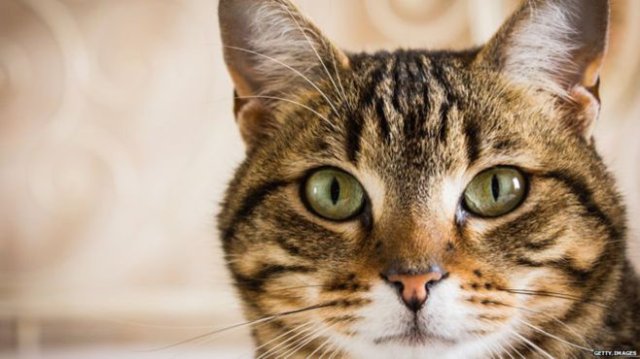
(From Getty Images, via BBC News, used w/o permission.)
(“Neonicotinoids have been found in samples from US water treatment plants”
(BBC News))

First study finds neonic pesticides in US drinking water
Matt McGrath, BBC News (April 5, 2017)

Small traces of the world’s most widely used insecticides have been detected in tap water for the first time.

“Samples taken by scientists in the US state of Iowa showed that levels of neonicotinoid chemicals remained constant despite treatment.

“However drinking water treated using a different method of filtration showed big reductions in neonic levels.

“Scientists say they cannot draw any conclusions relating to human health but argue that further study is needed….”

Getting pure, very pure, water is possible; but not easy. That’s why we’ve developed different standards for different uses.

For example; the U.S. National Committee for Clinical Laboratory Standards say that water for laboratory use with fewer than 50 parts per billion total Organic Carbon, 0.1 — tighten your belts, there’s more.

— fewer than 0.1 milligrams per kilogram total solids, under 0.05 parts per billion silica, and fewer than 10 per milliliter colony-forming units, is NCCLS Type I purified water. Standards for municipal tap water aren’t, I understand, quite as extreme.

Before you recoil in shock, horror, and/or dismay, and start demanding laboratory-grade purified water for everyone, keep reading.

Removing many impurities is a good idea for tap water. Removing all impurities might be possible; but there’s pretty good reason to think that it wouldn’t be good for us.

For starters, there’s good evidence that traces of several minerals helps keep our nervous system in good working order. This is not a bad thing.

Returning, briefly, to the Flint water SNAFU; I gather that one of the early responses to a memo about excess lead in the water was an official proclamation that there was no problem.

That strikes me as ineffective, to be charitable.

In fairness, the mayor got around to declaring a state of emergency a few months later. I have no idea how long it will take to replace dangerous pipes, and settle lawsuits that are starting to accumulate.

About who is to blame, I get the impression that at least a few city officials were grossly incompetent, corrupt, or otherwise unsuited to their position.

I’ll let the courts decide some of that, and hope that folks in Flint get a chance to make informed decisions during the next few election cycles.

Neonicotinoids and Getting a Grip

About the SNAFU in Flint; it’s my considered opinion that no living person is Adolph Hitler, the Antichrist, or Nero. (November 8, 2016)

I think individuals are almost certainly guilty of incompetence, or worse.

But I don’t see a point in blaming politicians in general, the EPA, or the ‘other’ party. Taking a rational interest in local, regional, and national public issues is a good idea. Blind accusations or praise in the interest of ‘my’ side isn’t. (January 22, 2017)

About neonicotinoids and drinking water, I won’t be moving to the mountains and digging my own well. I’m reasonably confident that local water is safe: and because of family health issues, we already purify the already-purified tap water before drinking it.

Besides, like the scientists said, quoting Matt McGrath’s article, “further study is needed.” I think that’s a good idea. Blind panic, not so much.

Shell started developing neonicotinoids in the 1980s, Bayer in the 1990s. I do not think it’s part of a plot to overthrow Western civilization.

I do think it was a good idea, since neonicotinoids kill insects without hurting birds and mammals as organophosphate and carbamate insecticides.

Without hurting them as much, that is. All critters have pretty much the same sub-cellular machinery. I talked about that, mutant mice, and macaroni, last week. (March 31, 2017)

We’re learning that neonicotinoids may not be as safe as we’d hoped. We learned the same about PCBs. (February 17, 2017)

The lesson, I think, is that we don’t know everything: but we’re learning. The trick is using our knowledge rationally.

More, mostly getting a grip about environmental concerns and stewardship:

Posted in Science News | Tagged , , , , , , , , , | Leave a comment

Family Names


Not everyone is happy about this decision, understandably. I still think their choice of name is imprudent. (Updated April 21, 2017)

However, I also think that a government’s legitimate interests do not include a need to tell parents what name their children may have. Particularly if the government’s preference is based on the dictates of a long-dead monarch in another country.

Georgia parents win legal battle to name baby girl Allah
BBC News (April 21, 2017)

A couple in the US state of Georgia have won their legal battle to give their baby daughter the surname Allah.

“The state had refused to issue a birth certificate for ZalyKha Graceful Lorraina Allah on the grounds that neither parent has that last name….”


NASA/Jim Grossmann's photo: American citizen applicants came to the Rocket Garden for a naturalization ceremony. (July 1, 2010) via Wikipedia. See https://www.kennedyspacecenter.com/explore-attractions/all-attractions/rocket-garden/
Naturalization ceremony at the Kennedy Space Center Rocket Garden. (2010)

Officials in an American state think forcing a young couple to give their baby a name the officials prefer is a good idea. I don’t agree. At all.

I wouldn’t have picked the name the couple want. But my preferences don’t matter much in this case.

What is important, I think, is the idea that government control must end somewhere. And it’s certainly not needed to enforce an English king’s wishes.

Dick Orkin's Chickenman, fighting crime and/or evil: see superheroes.fandom.com/wiki/Chickenman http://www.the60sofficialsite.com/Chickenman.html https://content.time.com/time/subscriber/article/0,33009,843884,00.html
Dick Orkin’s Chickenman, fighting crime and/or evil.

And that gets me started on a less-than-usually-linear post. For me, that’s saying something.

The men — that’s another topic, for another day — who signed the United States Constitution ‘looked American’ and had ‘American’ names by some standards.

To this day, I suspect some Americans feel that being an American citizen requires having a name like George Washington, James Madison, or William Livingston.

I don’t, but as one of my ancestors said of another, “he doesn’t have family, he’s Irish.”

Some Americans have been non-English since before the 1776 rebellion, but ‘foreigners’ started pouring in during the 19th century. (January 22, 2017)

Since then, Americans with ‘foreign’ names like O’Toole and Di Vincenzo have been joined by folks like Ieoh Ming Pei and Subrahmanyan Chandrasekhar.

I do not see that as a problem.

I also don’t have a problem with governments making rules about folks moving in, within reason. But the world’s more prosperous nations must let folks who can’t make ends meet back home come over. (Catechism of the Catholic Church, 2241)

The last I checked, America wasn’t in boom times like the years following WW II. But we’re still among the world’s wealthiest nations. I certainly don’t mind living in one of the places folks are trying to break into.

Joseph F. Keppler's 'Uncle Sam's Lodging House', detail. (1882) see https://www.loc.gov/resource/ppmsca.28483/
Joseph F. Keppler’s “Uncle Sam’s Lodging House”, detail. (1882 )

I also think treating folks who already are here with a degree of justice makes sense, no matter who our ancestors are. (Catechism, 2433)

I’ll grant that having “low types” in the family tree helps me embrace that idea. (September 20, 2016; August 26, 2016)

Much as I like living in America, I realize that my country isn’t perfect. That brings me to a couple who were told the name they picked for their baby wasn’t legal.

That got my attention. So did the name at issue: Allah. In a way, it’s none of my business. It’s not my child, not my state, and my kids already have “legal” names.

However, being involved in public life, supporting what’s good in my society, and addressing what’s not-so-good, is part of being a citizen. (Catechism, 1915, 2239)

‘My Name is Allah?’

via BBC News, regarding authorities trying to enforce naming conventions.
A document in the case.

My first thought was that the baby would be in for a great deal of teasing, at best, if the parents get their way.

What surprised me, after I read past the headline, was that it is the surname that’s at issue.

US parents sue to call baby girl Allah
BBC News (March 27, 2017)

A couple in the US state of Georgia who were banned from naming their daughter Allah are taking legal action.

“The state Department of Public Health has refused to issue the 22-month-old with a birth certificate.

“Elizabeth Handy and Bilal Walk say it is unacceptable that their child, ZalyKha Graceful Lorraina Allah, has officially been left nameless.

“But state officials say the child’s surname should either be Handy, Walk or a combination of the two, not Allah….”

The couple isn’t married. BBC News didn’t say whether that’s by choice, or whether they couldn’t get a marriage certificate, either.

Either way, they have different last names: hence the state’s insisting that they choose Handy, Walk, or some combination. I’ll get back to the matter of marriage and family.

I still think “Allah” is an imprudent choice. But I can’t fault one of their reasons. Bilal Walk, the baby’s father, told a newspaper that the name was chosen because it’s “noble.”

I can’t argue with that. Not reasonably. Not if I’m going to take my own beliefs seriously.

The couple are probably Muslims, but that’s a guess on my part. If so, they follow one of the Abrahamic religions. I’ve talked about that before. (November 29, 2016)

Seeking truth is expected of everyone, which is why I support religious freedom — for everyone, not just folks who agree with me. (Catechism, 2104-2107)

It’s not an absolute right, but I’m expected to recognize that other religious “…frequently ‘reflect a ray of that truth which enlightens all men,’…” (Catechism, 2104, 2108-2109)

Choosing “Allah” as a surname? As I said, I think it’s imprudent, but I won’t argue against the father’s stated reason.

And the state officials apparently didn’t have the child’s welfare in mind, which I think might be a legitimate reason. Their problem seems to be that they think everybody should have surnames that follow rules they’re used to.

What they think our Lord’s surname should be, I don’t know. As far as I know, Mary and Joseph didn’t have surnames; not the “American” sort.

I’ve seen our Lord referred to as “Jesus;” “Jesus the Nazarene;” “Jesus, son of Mary;” and “Jesus, son of Joseph;” but not “Jesus Josephson.” I think Anglo-American naming conventions work, and know that they’re just one of many possibilities.

Names, Legal and Regrettable

Here’s where Zambia is.

I think names are important, and more than labels that are more personalized than ‘hey, you.’

Some countries are run by folks who think names are so important that they tell parents which names are legal, and which aren’t. A few say the name must be written in a particular script.

I gather that the idea in some cases is to protect kids from “being given an offensive or embarrassing name,” as a Wikipedia page put it. Fair enough.

So, I think, are laws which limit names to those which can be expressed in a machine-readable language. That’s not an issue in English. Our alphabet of just over two dozen characters easily converts to ASCII and machine-friendly codes.

China’s language, with more than 70,000 characters, is another matter. Some do have code equivalents, most don’t.

Demanding that names be selected from a pre-approved list, like Denmark’s and Hungary’s, seems unreasonable; particularly if the motive is clinging to a national culture.

I can sympathize with someone who doesn’t like seeing the old customs fade.

But if folks must be forced to follow “their” culture’s preferences, and new customs are harmless, I think the reasonable approach is admitting that the past is in the past, and will stay there.

Then there’s there’s an old joke about the man who told a judge he wanted his name changed. The judge asked why. You know the rest, but I’ll tell it anyway.

‘My name is Sam Stinks.’ ‘The court understands why you want a different name. What name do you prefer?’ ‘Fred.’

A situation Chris Haslam ran across in Zambia isn’t so funny:

“…His name is Mulangani. It’s a Nguni word meaning ‘punish me’. Or ‘he who must be punished’, if you want to get formal. Who, I asked my driver Mavuto, would give their child such a horrible name?

“‘Maybe his grandfather, maybe the chief,’ he shrugged, explaining that across Zambia and neighbouring Zimbabwe, it is common for parents, especially in rural areas, to invite community elders to choose the name of a newborn.

“‘Sometimes the chief wants to punish the family,’ says Mavuto. ‘Or he may think this new child is too much for the family to bear.’…

“…’In African culture, there is a trend of naming children according to the circumstances surrounding their birth,’ says Clare Mulkenga-Chilambo, a care worker at SOS Children’s Villages in Zambia. ‘It’s good for those born at bright and merry moments but unfortunate for the others.’…”
(Magazine, BBC News (March 26, 2017))

Other regrettable names Chris Haslam mentioned were Chilumba – “my brother’s grave”, Balaudye – “I will be eaten”, Soca – “bad luck” and Chakufwa – “it is dead”. On a happier note, some kids had names like Daliso, “blessings” and Chikondi, “love”.

My culture has similar naming conventions. I don’t know how often Faith, Hope, or Charity are given to baby girls, or “Victor” to boys; but it’s been done.

My guess is that all names meant something, when they were new. Many in my culture’s heritage are now so old that most folks have since forgotten their meaning — along with the original language.

I’ve talked about continuity, change, and culture, before. (July 24, 2016)

Folks can and do change their names as adults, because their marital status changed, they want a name that’s easier to spell or pronounce, or for other reason. In the United States, that’s covered by state laws.

A Saint Brian: Sort of

St. Edmund Arrowsmith.

Upwards of 12,000,000 folks entered the United States through a processing station at Ellis Island in Upper New York Bay, between 1892 and 1954.

Some newcomers kept their names, others decided that a new name would be more suitable in a new country.

Some had their names changed by immigration officials who couldn’t spell, pronounce, or understand, the ‘foreign’ sounds.

I like to think that we’ve learned a bit since the days of Ellis Island specials. I think we have much left to learn.

My father’s family name, Gill, came over from the British Isles quite a long time ago. My mother’s family are more recent arrivals. My — grandmother, I think — was an infant when that part of the family left Norway.

They went to the ‘wrong’ church, so she couldn’t get a birth certificate. That complicated matters, but the family sorted it out and headed for central North America.

We remembered, however, how precious religious freedom is; and why state-sponsored churches aren’t nearly as nifty as they may sound.

My mother’s father and his family kept their surname, Hovde. So did my mother, after marriage, and to the end she was “Dorothy Hovde Gill,” not “Dorothy Marie Gill.”

The “H.” in my name is “Hovde.” The nod to my father’s heritage is my given name, Brian. It’s also my baptismal name, which may be a bit unusual for a Catholic.

We’re generally named after a Saint or a Christian mystery or virtue; and parents shouldn’t give a name that’s “foreign to Christian sentiment.” (Catechism, 2156-2159; Code of Canon Law 855)

That last makes sense, I think. Who’d want to be named something like “Gluttony Smith?”

It’s no surprise that my baptismal name doesn’t follow Catholic naming conventions. I was baptized in my mother’s church, one of the smaller Protestant denominations; which has since merged with another mainstream group.

There has been a “Saint Brian.” sort of, since 1970. That’s when Edmund Arrowsmith was canonized. He was baptized “Brian,” but used “Edmond,” was convicted of being a Catholic priest, and executed on August 28, 1628.

The charge was true, and another reason I think religious freedom is important.

Daruma and Me

Yoshitoshi's 'The moon through a crumbling window'. (1887) via Wikipedia
Bodhidharma practicing zazen.

Another branch of my mother’s kin decided that their family name, Pjaaka, wasn’t suitable for their new homeland. They changed it to something a great deal more anonymously “American.”

I understand their reasons, but feel the loss of that bit of our heritage. Being practical is a family value, however, so I think they most likely made a prudent choice.

I’m not sure what I would do, if I had to move my family to a country where “Brian Gill” would sound “foreign.”

My parents named me after Brian Boru, high king of Ireland back when folks from near my mother’s ancestral homeland were muscling in on Charles the Simple’s territory.

Charles graciously gave them permission to stay on the land they’d picked, on condition that they defend it from other invaders. I think that was a sensible move. With a bunch of Vikings in residence, who’d be crazy enough to even try invading?

Normans moved in on England next, the place hasn’t been the same since, and that’s yet another topic.

The Irish/Breton given name Brian most likely comes from an Old Celtic word meaning “noble” or “high.” That’s plausible, since the element bre means “hill.”

Interestingly, “Hovde” probably means about the same thing. Depending on who you listen to, the name meant a descendant of a headman or chief, or maybe “hill.” The latter seems more likely.

Origins of my father’s surname are lost. One of the more reasonable of our speculations is that it’s from gill, or ghyll, a ravine or narrow valley.

The word gully is supposed to come from French goule, meaning throat; but I suspect it caught on because English-speaking folks already knew about gills.

Let’s say that my family and I had to move to Japan.

My guess is that folks there would eventually get used to my “Brian Gill” moniker, but pronouncing it the way I do might be a challenge. If nothing else, there’s a tripthong in “Brian.” Not all languages use the marvelous variety of vowels mine does.

I might consider taking a new name. The first one I thought of was Daruma, the Japanese version of Bodhidharma, Bìyǎnhú, “The Blue-Eyed Barbarian.”

Chinese traditions say he brought Chan Buddhism to China, and began the physical training of the monks of Shaolin Monastery that led to Shaolin Kung Fu. He’s shown as an ill-tempered, profusely-bearded, wide-eyed non-Chinese person in Buddhist art.

That sounds a lot like me, and his picture there even looks a little like me — a decade or so back, and from a far-eastern viewpoint. My beard is longer and grayer now.

Daruma lived around the time Britons fought West Saxons at the Battle of Badon.

Arthur may have been involved in that battle: the real Arthur, not the post-Renaissance retreads we’re familiar with. Those are generally based, more or less, on Geoffry of Monmouth’s imaginative retelling of Welsh tales, and that’s yet again another topic.

I have great respect for Daruma, Chan Buddhism, and Zen. But I’m a Christian and Catholic, enjoy reading passages from Thomas Aquinas, and have a very different view of reality. I looked at other possible names for hypothetical adopton.

“Gill,” in the sense of a ghyll or gully, is easy enough. I understand that it comes out as Gari in Japanese. Tani or Keikoku might be better choices: “Valley” or “Ravine,” more or less. I’d have to do more research to be anywhere near confident about that.

If I assume that “Brian” means “hill,” that’d be Oka, which seems to be an element in names like Hirokatsu and Hirokazu. Hideyoshi’s meaning might be closer to my parent’s intent, and I’m drifting off-topic.

Where was I? America’s Constitution, names, Arthurian legends, Kung Fu. Right. I was talking about a young couple, their baby girl, and a state’s efforts to dictate what the kid’s name should be.

‘Because Henry VIII Said So?!’

Leave it to Beaver’s (fictional) Cleaver family. (1960)

Thinking that marriage and family are important mean that I’m a Catholic who understands our faith: not someone who things everyone should live as if it’s still 1950s suburban America. (Catechism, 1601-1658)

The fictional Cleavers and Andersons weren’t bad role models, but things are different now.

I think it’d be nice if that young couple got married. But they’ve apparently been together long enough for their second kid to be 22 months old.

By contemporary American standards, that’s pretty good family stability.

If I thought having a surname that’s the same as one of the parents was a law etched into the foundations of the universe — well, I know that’s not so. Many but not all cultures have family names that remain stable over many generations. Some don’t, and get along fine.

Most folks in Japan, for example, got along without family names until — I think it was the Meiji Restoration.

Surnames have become virtually universal in Europe over the last few centuries. Many developed from and replaced bynames or epithets, like “the simple,” “the smith,” or “the bald.” That may explain why there are so many Smiths these days. it was a worthy profession.

I understand that we have Henry VIII to thank for English-speaking cultures traditionally insisting that children be given the father’s family name.

It’s not a bad idea, that’s what my wife and I did; but ‘because Henry VIII said so’ doesn’t strike me as sufficient reason to keep the custom.

Families are the basic unit of society. Larger units, including governments, have a legitimate interest in helping families do our work. But the big outfits also have an obligation to keep their meddling fingers out of family life unless it’s actually necessary. The Church expresses that idea more politely. (Catechism, 1883, 2207-2213)

Ephesians 6:13 says that honoring our fathers and mothers is a good idea. Giving kids the same surname as their father is a nice way to do that, but it’s not the only way.

I am convinced that following surname conventions no more than a few centuries old is not vital to family stability.

I still think “Allah” isn’t the most prudent choice for a surname in today’s America. But if I expect others to respect my family and my faith, I can’t reasonably think that efforts to shove official preferences down the throats of unwilling subjects is a good idea.

That includes religious freedom. I became a Catholic because I am convinced that it is a good idea, and that it would be a good idea for everyone. But, like I said earlier: religious freedom is vital. “Free to agree with me” is not “free.”

There’s more to say about that, and I probably will: but not today. (Catechism, 839-845; Nostra aetate,” Bl. Paul VI (October 28, 1965))

I will, however, repeat a quote I used last year. (November 29, 2016)

“…the plan of salvation also includes those who acknowledge the Creator. In the first place amongst these there are the Muslims, who, professing to hold the faith of Abraham, along with us adore the one and merciful God, who on the last day will judge mankind….”
(“Lumen Gentium,” Bl. Paul VI (November 21, 1964))

More of my take on living as if other folks matter:

Posted in Being a Citizen, Being Catholic | Tagged , , , , , , | 2 Comments

DNA and Cancer

Apparently quiet a few sorts of cancer ‘just happen,’ no matter how much fiber we eat, how much we don’t smoke, and how far we run each day.

Or exercise, in my case. Thanks in part to now-replaced defective hips, my running days never really happened.

That doesn’t mean that we’re all gonna die from random cancer. I think it means we should think about paying more attention to testing before symptoms appear.

  1. DNA Code Errors: Mutation and Cancer
  2. Cancer: 2015 and Before

After talking about oddly-under-reported ‘cancer’ news, I kept going; mostly about mutations, and why being healthy is okay:


Science and Me

I’m interested in more than just science.

However, science does interest me; and our knowledge of the universe is changing so fast that running out of fresh material doesn’t seem likely.

It’s one reason that my Friday ‘in the news’ post became my ‘science’ post while this blog was still hosted on Blogger.1

My interest in science started with a childhood fascination with dinosaurs that I never outgrew.

The Space Race helped expand my horizons, and that’s another topic. I started being aware of the creation-evolution hostilities in my teens.

At the time, I didn’t see any point in telling the Almighty how the universe should be run. Eventually I became a Catholic. I still think God’s God and I’m not.

I don’t know why some Christians seem convinced that studying God’s creation threatens faith in God.

Darwin’s natural selection theory arguably getting hijacked by education reformers and liberal Anglicans didn’t, I think, help. (October 28, 2016)

Fallout from that Victorian-era fracas has encouraged quite a few folks with religion blogs to make science a focus — or target — of interest. Finding earnest denunciations of science, particularly what we’re learning about evolution, isn’t hard.

Reality, Reason, and Religion

‘Bible science’ may help explain why I run into folks who apparently see science as concerned with reality and reason — and religion as anything but.

A Wikipedia page says that creation science began when some American fundamentalists started making up their own “science.” That was in the 1960s.

They’ve had a measure of success.

I think they’re sincere, and I’m quite sure they are mistaken.

Some Catholics share my keen interest in science, others don’t.

Some seem as fervently convinced that a long-dead Calvinist is right as their virulently anti-Catholic counterparts.

But some of us have been scientists, including Saints Hildegard of Bingen and Albertus Magnus. Those two helped lay the foundations of today’s science. It was called natural philosophy back then.

In a sense, nobody was a “scientist” until William Whewell coined the term in 1833. And that’s yet another topic. (March 17, 2017)

Lovecraft’s “Placid Island of Ignorance” – – –

I think H. P. Lovecraft deserves credit for realizing that non-human intelligence may not have a particularly “human” appearance: or viewpoint.

At least some scientists are entertaining the same idea. I’ve talked about science, SETI, and assumptions, before. (March 17, 2017; December 16, 2016)

I’m not so impressed by Lovecraft’s attitude toward religion and science. I sympathize with him, however. A bit.

Knowing his cultural and family background helps. So does remembering rabid radio preachers from my teen years, and their rants against commies, Catholicism, and rock music. A new generation is carrying on their tradition of weird and wacky wisdom.

A decade or so back, a zealot broadcast his denunciation of — I am not making this up — modern man’s “effete” habit of growing beards.

In a letter, Lovecraft gave his opinion that spiritual realities “…are the most preposterous and unjustified of all the guesses which can be made about the universe….” I don’t agree, but I had different opportunities.

His view of the universe and humanity’s growing knowledge was rather bleak, too.

“…The most merciful thing in the world, I think, is the inability of the human mind to correlate all its contents. We live on a placid island of ignorance in the midst of black seas of infinity, and it was not meant that we should voyage far. The sciences, … will open up such terrifying vistas of reality, and of our frightful position therein, that we shall either go mad from the revelation or flee from the light into the peace and safety of a new dark age….”
(“The Call of Cthulhu,” H. P. Lovecraft (1929); via WikiQuote)

I’ve talked about Lovecraft’s “placid island of ignorance” before. (February 17, 2017; December 16, 2016)

But again, let’s give Lovecraft credit. When he wrote “The Call of Cthulhu, the ‘science will solve all our problems’ attitude was still fairly common. (October 30, 2016)

Oddly enough, “The Shadow over Innsmouth” ends with the narrator revealing a real danger.

“…in that lair of the Deep Ones we shall dwell amidst wonder and glory for ever.”
(“The Shadow over Innsmouth,” H. P. Lovecraft (1931); via hplovecraft.com)

As I keep saying, science doesn’t threaten faith. Both pursue truth, or should. Trouble starts when or if we start making science, playing canasta, or anything else, more important than God. (Catechism of the Catholic Church, 144, 150, 21122114, 2500)

– – – and Being Catholic

I’m Catholic, so I can’t ignore realty. I shouldn’t, at any rate. That may need some explanation. Or maybe not, if you read these ‘science’ posts occasionally.

I’m told, and believe, that truth is important. Truth is beautiful — whether it’s expressed in words, “the rational expression of the knowledge of created and uncreated reality;” in “the order and harmony of the cosmos;” or in other ways. (Catechism, Prologue, 27, 74, 2500)

Faith isn’t threatened by truth. Not the Catholic version. Faith is a willing and conscious “assent to the whole truth that God has revealed.” (Catechism, 142150)

It’s faith and reason. Using our brains is what we’re supposed to do. (“Fides et Ratio,” John Paul II (September 14, 1998); Catechism, 35, 32, 154159, 299)

I’m also told that humility is a virtue.

HUMILITY: The virtue by which a Christian acknowledges that God is the author of all good. Humility avoids inordinate ambition or pride, and provides the foundation for turning to God in prayer (2559). Voluntary humility can be described as ‘poverty of spirit’ (2546).”
(Catechism, Glossary)

I think that God created the universe, and that it is “very good.”2 (Genesis 1:131)

Since humility involves accepting reality, saying that I’ll believe part of reality, but not the whole thing, seems like pretty much the opposite of humility.

I’m also told that humans are rational. But we have free will, so thinking is an option, not a requirement. God is rational, too. Also large and in charge. (Catechism, 268, 21122114, 1730, 1934, 1951)

Studying natural processes is a good idea. It’s part of being human, and can help us learn more about God. (Catechism, 3135, 2293)

Sometimes what we learn doesn’t fit with what we assumed about God and the universe.

When that happens, the problem isn’t the natural world or science, it’s not the Bible, and it’s not religion. It’s our assumptions.

“…God, the Creator and Ruler of all things, is also the Author of the Scriptures – and that therefore nothing can be proved either by physical science or archaeology which can really contradict the Scriptures. … Even if the difficulty is after all not cleared up and the discrepancy seems to remain, the contest must not be abandoned; truth cannot contradict truth….”
(“Providentissimus Deus,” Pope Leo XIII (November 18, 1893) [emphasis mine])


1. DNA Code Errors: Mutation and Cancer


(From Getty Images, via Nature, used w/o permission.)
(“Many of the genetic mutations in tumour cells such as these are created by DNA-replication errors”
(Nature)

DNA typos to blame for most cancer mutations
Heidi Ledford, Nature (March 23, 2017)

“Nearly two-thirds of the mutations that drive cancers are caused by errors that occur when cells copy DNA, mathematical models suggest.

“The findings, published in Science on 23 March, are the latest argument in a long-running debate over how much the environment or intrinsic factors contribute to cancer. They also suggest that many cancer mutations are not inherited and could not have been prevented by, for example, making different lifestyle choices. It’s a finding that could change how researchers wage the ‘war on cancer’, says study co-author Bert Vogelstein, a geneticist at the Sidney Kimmel Comprehensive Cancer Center in Baltimore, Maryland….”

I agree with Bert Vogelstein. Waging the “war on cancer” depends on understanding what causes it. This study, and the one before it, should help.

Not smoking, sensible exercise, and other conventional ‘prevent cancer’ advice, is still a good idea. However, this study shows that dealing with cancer isn’t that simple.

We’ve learned a great deal since 1869, when Friedrich Miescher discovered nucleic acids. I’ve talked about DNA, Darwin, and getting a grip, before. ( March 10, 2017; October 21, 2016)

The Human Genome Project’s initial analysis of the Human Genome in 2001 answered some questions, and raised more.

For starters, only about 2% of the human genome has code for making proteins. The other 98% didn’t have any obvious reason for being there, so some folks called it “junk DNA.” Not at first glance.

We’ve learned that some of it controls how the protein-coding DNA works, or gets transcribed to RNA, or has another function.3

The rest may or may not do something. We’re still learning.

Maybe it’s just leftover code in the “clay” we’re made from, and that’s yet again another topic. (September 23, 2016; July 15, 2016)

Random: Not Hopeless


(From Cristian Tomasetti, Lu Li, Bert Vogelstein, via Science, used w/o permission.)
(Proportion of cancer-causing mutations affecting women, by type of cancer and cause. Left to right: types where the mutations are inherited; due to DNA replication glitches are “random,” unrelated to either heredity or environment; or caused by environmental factors.)

“…Researchers have tended to emphasize the role of environmental factors in generating cancer mutations, he says. ‘If we think of the mutations as the enemies, and all the enemies are outside of our border, it’s obvious how to keep them from getting inside,’ Vogelstein explains. ‘But if a lot of the enemies — in this case close to two-thirds — are actually inside our borders, it means we need a completely different strategy.’

“That strategy would emphasize early detection and treatment, in addition to prevention, he says….”
(Heidi Ledford, Nature)

Lu Li joined Cristian Tomasetti and Bert Vogelstein for this year’s followup to the 2015 study.4 Vogelstein is a geneticist at the Sidney Kimmel Comprehensive Cancer Center, an NCI-designated Cancer Center at Johns Hopkins U. in Maryland.

I think they know what they’re talking about.

The idea of these studies wasn’t to challenge the wisdom of not smoking and avoiding sunburn. Vogelstein figured taking a closer look at other causes would be a good idea. It looks like he was right.

The first study needed a do-over, partly because the analysis only covered cancer in the United States, and didn’t include breast and prostate cancer.

This time around, the scientists looked at cancer incidence databases from 69 different countries, for 32 kinds of cancer: including those two common forms of cancer.

Like the first one, the 2017 study confirms what we already knew; or suspected. Not getting cancer depends on sensible decisions, having healthy ancestors, and being lucky.

What’s interesting is how much each of those factors matters for various kinds of cancer.

  • Overall
    • Replication errors, about 66%
    • Environmental factors, 29%
    • Inherited mutations, 5%
  • Some lung tumors
    • Environmental factors, 65%
    • Replication errors, 35%
  • Prostate, brain, and bone cancers
    • Replication errors, more than 95%

The lesson here, I think, is not that trying to be healthy is a hopeless cause; that we’re doomed no matter what we do.

Chucking common sense and diving into unhealthy living, on the assumption that life and death are random? That doesn’t seem reasonable, either. Not to me.

The numbers do, I think, suggest that including tests for the more-probable forms of cancer in health maintenance routines are a good idea.

They also hint, maybe, at the reality behind the ‘everything causes cancer’ news items of a few decades back.

Maybe it’s just me, but for while it seemed like everyone with lab rats and typewriter was churning out ‘scientific’ claims that pretty much everything we eat, drink, wear, or breathe, causes cancer.

I do not miss ‘the good old days,’ and that’s still another topic.


2. Cancer: 2015 and Before


(From Science Photo Library, via BBC News, used w/o permission.)

Most cancer types ‘just bad luck’
James Gallagher, BBC News (January 2, 2015)

Most types of cancer can be put down to bad luck rather than risk factors such as smoking, a study has suggested.

“A US team were trying to explain why some tissues were millions of times more vulnerable to cancer than others.

“The results, in the journal Science, showed two thirds of the cancer types analysed were caused just by chance mutations rather than lifestyle.

“However some of the most common and deadly cancers are still heavily influenced by lifestyle….”

This is the 2015 study that didn’t look beyond American borders, and left out two high-profiles types of cancer. I’ve already talked about the follow-up.

The last sentence I quoted deserves, I think, emphasis. We can’t control everything, but what we do does matter.

Three Dozen Centuries, Still Learning

We’ve known about cancer for a long time.

I put the usual resource link list at the end of this post.5

However — don’t assume that anything I write, or that you find at the Mayo Clinic website, is all you need to know.

Finding a competent doctor, preferably someone who isn’t working for a get-well-quick product line, is generally a good idea.

Cancer isn’t the only disease with abnormal cell growth. There’s hyrotoxicosis and enteropathy, for example; although both are more conditions than diseases. But cancer among the scariest.

We’ve known about cancer at least since the last mammoths of Wrangel Island died. That was around the time Shu-Ninua was running Assyria. We don’t know who wrote the Egyptian medical text mentioning it, about three dozen centuries back.

Edwin Smith bought the manuscript from Mustafa Agha, but we call it the Edwin Smith Papyrus; not the Agha Papyrus. I’ll get back to that, sort of. The last I heard, it’s at the New York Academy of Medicine.

It reflects what we call “a rational and scientific approach to medicine in ancient Egypt.” Other Egyptian medical texts we have from around that time reflect a more magical understanding of disease.6

We get the word “cancer” from Hippocrates. I’ve mentioned him before. (March 19, 2017; October 7, 2016) His word was καρκίνος, karkinos; meaning crab or crayfish. The word became “cancer” in Latin, which is where my language picked it up.

Doctors were arguing about treating cancer with surgery or drugs two millennia back, and still are.

We are learning, though, and getting a bit better at prevention and treatment, so our arguments are somewhat better-informed now.


Mutant Mice, Macaroni, and Killer Tomatoes

Having the sort of brain I do — I don’t recommend the experience — “mutation” reminded me of gene splicing, mutant mice, B movies with lots of screaming and giant insects, and horizontal gene transfer.

We’re learning that the latter has been happening for a long time.

I don’t think that’ll help some folks get any less nervous about mutant mice and other “artificial” organisms, like chickens, macaroni wheat, and dogs. (October 21, 2016; October 7, 2016; July 22, 2016)

Mutations are real, and don’t have much in common with movies like “Them!” “Attack of the Killer Tomatoes!,” and “Hell Comes to Frogtown.”

Now that we’re learning how DNA works, scientists can produce mutations. I’m not, however, particularly concerned about real-life replays of “Tarantula.”

Real-life ‘mutants’ can be like those mutant mice in the photo: useful, and not any more scary than the usual variety.

But the new tech can be misused. So can old tech, for that matter, or anything else. (October 7, 2016; January 8, 2017)

I put an unnecessary-long list of ‘mutation’ resources near the end of this post.7 But that won’t stop me from rambling on about DNA, mutations, and all that. No such luck.

When DNA replicates, the result is usually two exact copies of the original.

Even when it’s not replicating, DNA doesn’t just sit there, and occasionally gets damaged. That’s not quite the same as mutation. Our DNA has automatic repair functions, but that sometimes glitches, too.

A mutation is a permanent change in a critter’s DNA base sequence. They’re usually bad news, and sometimes lethal. Once in a great while, a mutation helps the critter stay healthy, live longer, and/or have more offspring.

That connects with evolution, and I mentioned that earlier.

Harmful or beneficial, quite a few things cause mutations: like glitchy DNA repair, molecular decay, chemicals, microcritters, or radiation. Hence movies like “Them!”

Healthy? Good!


(From Correogsk, via Wikimedia Commons, used w/o permission.)

We devote considerable time and effort to staying healthy or recovering health. Most of us, anyway.

But is being healthy okay?

I’ve talked about Saints, sickly and otherwise, before. (August 21, 2016)

Despite the impression some of the more syrupy ‘lives of the Saints’ books may give, misery is not required for holiness.

The short answer is — yes, being healthy is okay. So is trying to get well. Life and health are both gifts from God. Taking reasonably good care of them is a good idea. Making either my top priority, not so much. (Catechism, 2288, 2289)

Prayer is a good idea, too, and taking action. God made a world where the creatures in it, including me, play a role in making things happen. (Catechism, 41, 306308, 25582565)

Helping sick people get better, and find new ways to cure disease, is also a good idea. It’s even okay to transplant organs, providing we don’t kill or maim one person to help another. (Catechism, 22922296, 23002301)

Medical research doesn’t always include autopsies, but it can.

That’s also okay, although I shouldn’t go digging up ‘research material’ in a cemetery without showing respect for the folks whose bodies are buried there. And I shouldn’t kill someone who is dying because I’m impatient to find out what’s been happening inside. (Catechism, 2258, 22762279, 2299, 2301)

The rules aren’t as arbitrary as they might seem, and that’s — another topic.

Togas and Frankenstein’s Alchemy Project

Many cultures, mine included, are at best uncomfortable with autopsies. It wasn’t all that long ago that they were flat-out illegal in parts of “Christian” Europe.

That may explain the lasting popularity of Shelley’s “Frankenstein” tale. Mary, not Percy. It was Victor, actually, and I’m rambling again. (August 5, 2016)

As far as I can tell, the aversion to autopsies didn’t come from progress-hating clerics, feeding on the ignorance of a superstitious rabble. (October 30, 2016; July 15, 2016)

The European branch of Western civilization inherited much of the ancient Roman set of values and scruples, which had thoroughly pagan roots long before our Lord arrived.

Old Roman values aren’t particularly bad, but let’s get a grip: the Roman Senate did not write the Decalogue. I don’t have to wear a toga to be a Christian.

There’s nothing intrinsically wrong with studying the natural world: including our bodies. We don’t worship nature — that’d be idolatry — so we can study it without fear of offending ‘the spirits.’ (Catechism, 282283, 21122114)

Greco-Roman culture and beliefs didn’t allow autopsies. That’s why Galenus studied monkeys. I’ve mentioned him before. (July 15, 2016)

Today’s medical science and technology arguably exists in large part because Christianity’s attitude toward the study of nature allows autopsies and other scientific research. Where folks accept the Catholic attitude toward using our brains, anyway.

I’ve mentioned that before, too. Also Lovecraft’s “placid island of ignorance,” and I’m starting to repeat myself. Time to quit, and get started on the next post.

More about science, health, and doing what’s right:


1 My old posts are still there. Some of the content is quite dated by now:

2 “Good” and “idiot-proof safe” are not the same thing. I’ve talked about that, and our place in the universe, before:

3 DNA:

4 Studying cancer causes:

5 Still learning about cancer:

6 We’ve got more records from ancient Egypt’s multi-millennia history than we do for some civilizations. But we don’t have everything:

7 Mutations:

Posted in Science News | Tagged , , , , , , , | 3 Comments

The Past: What We Know, What We Don’t

I was writing about cancer and medical knowledge we’ve accumulated over the last few millennia, when I realized that I’d gotten more off-topic than usual.

For me, that’s saying something.

When I catch myself rambling I’ve got options. Sometimes I delete and start over from where I was making sense; or copy and paste the ramble into a text file for later use, delete and start over.

Sometimes I delete, get up, make myself a cup of coffee, and try desperately to remember what, if anything, I had in mind.

This time, my train of thought wasn’t so much derailed as rerouted to another line. When I looked out the window; I’d reached an entirely different region.

What I’d written looked interesting, though, at least to me, so I kept going for a while; and that’s where this post comes from.

Like the title says, it’s about what we know and what we don’t about the past: and why we’re not all that certain about so much.

Museums and Cuneiform

The model shows how the Ishtar Gate fit into Babylon’s inner city wall. It was an impressive bit of architecture in its day, and still is.

Radomir Vrbovsky took a photo of the gate while he was visiting the Pergamonmuseum in Berlin.

A few decades back some folks dug their way down to the gate, while studying Babylon. They thought it’d make a nice display in another part of the world.

I’m not quite sure what I think of my civilization’s habit of digging up artifacts, and occasionally buildings, and putting them on display elsewhere.

It’s educational, and can help scholars study long-gone cultures. It can be a way of honoring them, or an opportunity to do so.

But descendants, biological and cultural, of the original owners aren’t always happy about the new arrangement. And that’s another topic.

The writing on that clay tablet is cuneiform. It’s an earlier version of the information storage and retrieval tech you’re using to learn what I had in mind while writing this. Cuneiform was designed to get put on clay tables with a blunt reed.

If you’re reading this post in my native language, English, we’re both using one of the Latin alphabets. They’re derived from Latin script, a phonetic data storage technique based in turn on the Euboean alphabet.

That’s one of the early Greek alphabets. Greeks started their alphabets by using symbols from the Phoenician alphabet, the oldest alphabet we’ve found so far.

Technically, cuneiform isn’t an alphabet, and that’s yet another topic. Folks used it in various forms for something like three millennia. Cuneiform tablets got baked after writing, which made documents remarkably durable.

Problem was, when folks stopped using cuneiform they also stopped teaching their kids how to read cuneiform, so we had to re-learn that in the 19th century.

Finding things like the Rosetta Stone, where the same ideas were recorded in cuneiform and in at least one language we remembered. The Rosetta Stone doesn’t include cuneiform, but its message was in Egyptian hieroglyphs and a language we had retained. That made Egyptian hieroglyphs readable again, more or less.

Getting back to that clay tablet, it’s the Code of Hammurabi’s Prologue, or most of it. A nearly-complete copy is on a basalt stele currently on display in the Lourvre, with exact duplicates in Chicago, the University of Kansas Medical Center, Kampen, Berlin, and Tehran.

If they’re as durable as the original, each of those duplicates of a Babylonian law code written in Akkadian could endure for a few millennia. It’s likely enough that records of what they are and how they got to where they will be found won’t.

If that happens, archeologists will have a very interesting puzzle on their hands.

Wizard Oil and Linear A

I’m not surprised at the mix of magic and medicine in surviving Egyptian texts.

We have documents from Egypt’s Second Intermediate Period, but it’s far from a complete picture.

Written records are good to have, but we can learn about ancient cultures from the other stuff they leave behind.

That’s a good thing, since we only have the equivalent of about two typewritten pages from the Minoan civilization. We don’t even know what they called themselves. (March 12, 2017)

Problem is, what we assume is the Minoan language is in Linear A, a writing system that probably isn’t related to any other known language. But we’re not sure. What we are certain about is that we can’t read it.

Then there’s the Indus script. It’s probably writing, fancy decorations, or something else. We don’t know.

Unanswered Questions

Think of what we know about the ancient world this way — say that around the year 5600, someone like me is writing about whatever we’ll be calling the North American branch of Western civilization.

If the scenario sounds vaguely familiar, I spun a similar yarn about the hypothetical Mr. Smythe earlier this month.

Surviving North American records include a complete issue of National Enquirer from 2013, copies of the 1965 Highway Beautification Act, the U. S. Constitution’s Preamble, and half of a 1948 Farmer’s Almanac.

A recent dig, about 48 kilometers northwest of the ruins of what scholars think was a dam or possibly a fortification, archeologists uncovered legible business records.

This, finally, will allow them to study the area’s economy. The single-drawer filing cabinet holds the 1992 and some 1994 inventory records of a small food service. Tucked at the back of the file drawer is an Agatha Christie mystery.

Finally, there’s the world-famous pride of some museum’s collection: an almost-perfectly-preserved Hamlin’s Wizard Oil advertisement.

Scholars could learn quite a bit, and extrapolate more, from that source material. But they might be astounded when archeologists found a complete, relatively undamaged, “Black’s Medical Dictionary,” 39th edition.

That’s all hypothetical, of course. My branch of civilization may leave as many documents and artifacts as ancient Egypt’s. Folks in a remarkable number of places use English for trade and commerce, so there’s even a chance that our language will be remembered.

As for doing something worth remembering, that’s yet again another topic.

“I met a traveller from an antique land
Who said: Two vast and trunkless legs of stone
Stand in the desert. Near them, on the sand,
Half sunk, a shattered visage lies, whose frown,
And wrinkled lip, and sneer of cold command,
Tell that its sculptor well those passions read
Which yet survive, stamped on these lifeless things,
The hand that mocked them and the heart that fed:

And on the pedestal these words appear:
‘My name is Ozymandias, king of kings:
Look on my works, ye Mighty, and despair!’
Nothing beside remains. Round the decay
Of that colossal wreck, boundless and bare
The lone and level sands stretch far away.”
(“Ozymandias,” Percy Bysshe Shelley (1818))

More; not particularly related, but reflecting our efforts to understand this world — also our so-far-unsuccessful efforts to find neighbors:

Posted in Being a Writer | Tagged , , | Leave a comment

Knowledge: Opening the Gift

The quote is from Tennyson’s “Ulysses,” among my favorite poems; and the source for my Google Plus tagline:

“…To follow knowledge, like a sinking star,
“Beyond the utmost bound of human thought….”
(“Ulysses,” Tennyson (1833))

I’m not “an idle king,” and take my family obligations seriously, so I won’t be setting off on a voyage of discovery. Thanks to a pretty good Internet connection and research skills, I can “follow knowledge” without leaving my desk.

My shameless curiosity may need some explanation. Or maybe not, if you read my Friday ‘science’ posts.

Despite the gusto some Christians show in their rejection of science that doesn’t fit their assumptions, we do not all see ignorance as a virtue.

And as a Catholic, I’m supposed to use my brain.

We can’t all be scientists. But being curious, thinking, and studying the universe, is part of being human. Noticing order and beauty in the universe is one way we can learn about God. (Catechism of the Catholic Church, 3132, 3536, 301, 303306, 311, 319, 1704, 22932296)

Knowledge: a Gift

Lorenzo Monaco's 'The Prophet Isaiah' between 1405 and 1410Knowledge is one of the seven gifts of the Holy Spirit. The other six are wisdom, understanding, counsel, fortitude, piety, and fear of the Lord. (Isaiah 11:13; Catechism, 1831)

They make me “docile in following the promptings of the Holy Spirit,” helping me accept God’s authority. But they don’t make me do anything. I’ve got free will: and the responsibility that goes with it. (Catechism, 144, 150, 17301742, 18301831)

In 20-20 hindsight we see that Isaiah was talking about our Lord:

2 The spirit of the LORD shall rest upon him: a spirit of wisdom and of understanding, A spirit of counsel and of strength, a spirit of knowledge and of fear of the LORD,”
(Isaiah 11:2)

Psalms 111:10 says “the fear of the LORD is the beginning of wisdom,” but it’s not being scared of the Almighty. It’s giving God due respect.1

‘Now That We are In Control’

An author whose work I enjoy once wrote ‘…now that we are in control of the forces of nature….’

Then, in 1980, Mount St. Helens exploded.

I remember seeing news footage of what looked like wooden matchsticks swirling in a torrent of mud and water.

Then I noticed a little yellow chip among the matchsticks. It was part of one of those trucks that carry outsize logs. The matchsticks were what was left of trees.

Rocky Kolberg, the photographer who produced that picture, was about 35 miles away, and survived. Nearly 60 folks who were closer — didn’t.

The ‘now that we are in control’ attitude has given way to ‘we’re doomed’ in some quarters, but this is still true:

4 What are humans that you are mindful of them, mere mortals that you care for them?
5 Yet you have made them little less than a god, crowned them with glory and honor.”
(Psalms 8:46)

And we still have trouble when we forget that “little less than a god” isn’t “God.”

I don’t think a hypersensitive God smote Harry R. Truman, David A. Johnston, Reid Blackburn, and others for the sins of the USGS.

I do think we live in a world that isn’t entirely “safe.” I’ve talked about life, the universe, and Thomas Aquinas, before. (February 10, 2017; November 18, 2016)

I also think that we are still made “in the image of God,” with responsibilities that go with our nature. (Genesis 1:27Genesis 1:29, 2:15; Catechism, 306308, 2293, 24172418)

Opening the Books


(Hubble image of the Westerlund 2 star cluster.)

I suspect that some Christians have an at-best ambivalent attitude toward science and knowledge in general because so much of what we’re learning about the universe isn’t what some of us thought was so a few centuries back.

“New” isn’t necessarily “bad,” but I think it can be unsettling.

Particularly when we haven’t figured out quite what to make of the new knowledge yet.

There’s also the matter of priorities. Putting anything ahead of God is a bad idea. (Catechism, 21122114)

That doesn’t make wealth, family, or knowledge, bad. Like 1 Timothy 6:10 and Hebrews 13:5 say, money isn’t the problem. It’s love of money.

Being so impressed by what we’re learning that we idolize the universe, or forget that “in the image of God” isn’t “God,” and idolizing our ability to learn? Like I said, that’s a bad idea.

But I do not think that learning more about the universe makes God unimportant. For me, it makes what we’ve known for millennia even more impressive.

4 Indeed, before you the whole universe is as a grain from a balance, or a drop of morning dew come down upon the earth.
“But you have mercy on all, because you can do all things; and you overlook the sins of men that they may repent.”
(Wisdom 11:2223)

It’s like Pope St. John Paul II wrote:

“…the Holy Spirit aids people with the gift of Knowledge. It is this gift which helps them to value things correctly in their essential dependence on the Creator. Thanks to it, as St Thomas writes, man does not esteem creatures more than they are worth and does not place in them the end of his life, but in God (ct. “Summa Theol.”. II-II, q. 9, a. 4)….”
(“Knowledge,” Regina Coeli, Pope St. John Paul II (April 23, 1989))

I think the universe is like a library, filled with books written by God. Each book is filled with beauty, wonders, and puzzles.

We are learning to read the books, using our gift of knowledge. Solving some puzzles requires information in books we didn’t know existed until recently.

The more we read, the more we can learn about the author.

But we have to open each book, and keep turning the pages.

More or less related posts:


1 Fear of the Lord is the reverence and respect God deserves. The problem goes back to consequences of a very bad decision that we’ve all been living with:

Being scared of God didn’t start with Jonathan Edwards, although I think his “angry God” sermon helped set America’s spiritual tone. I’ve talked about that; Mark Twain; and original sin, Catholic style, before:

Posted in Being a Citizen | Tagged , , , , | 1 Comment