Robots are starting to look and act a lot like humans.
Wondering if robots can be people, or if humans are merely biological robots, involves assumptions about reality. I’ll look at one of those assumptions in this post and why I believe there’s more to me than chemicals.
Whether a robot could be a person is more of a philosophical question than a legal issue. So far. The question would be particularly interesting if a robot asked to be recognized as a person. Or disturbing, depending on how you look at it.
 With today’s robotic tech and AI, my guess would be that a human had programmed the robot to sue for recognition.
Or provided data and analytic processes which pretty much guaranteed that it would ask to be seen as a person.
The question would still be interesting if humans demanded legal recognition of robotic “persons.” I haven’t heard of that happening yet, but think it’ll likely pop up in a few years.
We’ve had folks making similar demands for non-human animals. I think many ‘animals are people too’ folks mean well. I don’t think they’re right about chimps being people, but agree that humans should treat other creatures humanely.
That’s because I think Genesis 1:27 and Psalms 8:6 are right. We’re made “in the image of God” and “little less than a god” — with power and responsibilities to match.
Western civilization’s upper crust abused that power in recent centuries. “Little less than a god” isn’t “God.” Not even close. (January 21, 2018)
Folks misunderstanding or misusing Christian beliefs don’t make Christianity wrong. Genesis, Exodus, Deuteronomy and EU Directive 2010/63/EU tacitly agree that we’re in charge here. (August 11, 2017; November 18, 2016; July 15, 2016)
Christians acting badly were a problem long before the Thirty Years War. It still is. We’re human. Nothing wrong with that, but we’re carrying some very old baggage.
Humans didn’t start out being evil to the core, or ‘loathsome insects.’ We’re not like that now. We’re still good, basically: just wounded. (January 8, 2018; November 6, 2016)
And that’s not what I was talking about. Not quite. Let me think.
Robots. Humans. Assumptions. Animal rights. EU directives. Christians acting like humans. Right.
Programmable Tech: Ismail al-Jazari’s Automata, Pepper, and Looking Ahead

(From Wikipedia and Boston Dynamics, used w/o permission.)
 About robots acting like humans, I’ve enjoyed Isaac Asimov’s ‘robot’ stories, and had some fun with the idea myself. Not that I’m in the Asimov league.
Today’s chatbots and tomorrow’s robotic receptionists don’t and won’t fracture my faith. But it’s probably just a matter of time before someone denounces them as works of Satan.
Or claims tax-exempt status for a robot-oriented church. “Church of the Holy Robot” has a nice ring to it. Weird, though.
Making tech that acts like humans is an old idea. “Automaton” comes to my language through Latin. Romans got it from a Greek word that means acting of one’s own will.
Automata in stories, like Talos, were more ‘robotic’ than tech built by Hero of Alexandria and Ktesibios. Ismail al-Jazari described and built programmable automata, and that’s another topic. The point is that programmable tech acting like a critter isn’t new.
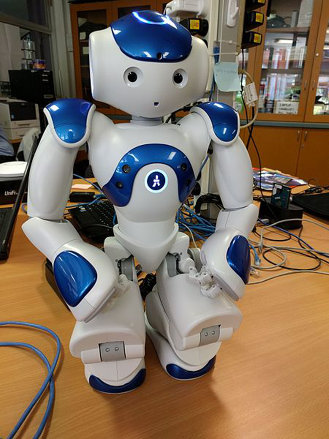 What’s different about today’s robots is more a matter of degree than of kind. Their programming is much more complex than post-Renaissance clockwork automata.
We’re also learning more about how humans act and respond. That helps us design AI and robots.
Today’s humanoid robots, robots shaped more or less like us, can do much more than walk, sit, and kneel. They’re still not quite as light on their feet.
They can, however, dance and play soccer. Nao’s famous for doing both.
The folks who developed Nao, a humanoid robot, worked for Aldebaran Robotics. SoftBank Group acquired Aldebaran in 2015, but I think “Aldebaran Robotics” sounds cooler, so that’s what I’ll call them.
The Nao synchronized dance performance at the Shanghai Expo in 2010 made international headlines.
With different programming, Nao robots played in the RoboCup.
Although accomplished dancers and athletes, Nao robots weren’t much for conversation.
They could be programmed to understand spoken words and speak. They could even detect emotional cues and emote with gestures and body language. But I gather that they weren’t very bright.
 Which brings me to the robot in that photo, Pepper. Aldebaran Robotics says Pepper is “kindly, endearing and surprising.”
Among other things, Pepper is programmed to notice major human emotions, respond appropriately, learn how individuals act and change its behavior accordingly.
The robot may be better at noticing and responding appropriately to human emotions than I am.
Or maybe not. I’ve been developing the skill for decades. I’m pretty good at noticing and identifying emotions in others.
But I’ve been told that my affect display, verbal and non-verbal displays of emotion, is well off the norm. That’s not surprising.
 Undiagnosed depression made dealing with also-undiagnosed PTSD, autism spectrum disorder and other quirks difficult.
My psychiatric oddities got identified a little over 11 years back.
I knew something was going wrong. So did my wife, who suggested I see a psychiatrist.
Being ‘cured’ won’t happen. But knowing what I deal with makes the job easier. Less difficult, at any rate. (January 7, 2018; December 17, 2017; March 19, 2017)
Being offended that Pepper and other robots may be better at acting like humans than I am is an option. But not a reasonable one, I think.
Fear and Frustrated Technicians
 Neither is fearing rogue robots or homicidal homunculi. Although that sort of thing can make a rousing good tale.
Concerns that a robot will take my job might make sense if I worked on an assembly line. (March 16, 2018)
I think truck drivers and cabbies may be better off if they start exploring other lines of work now. Driverless vehicles are here, with more in development.
Recent high-profile accidents involving automated vehicles give developers a public relations problem.
Three fatal accidents, each involving Tesla systems, aren’t making automated vehicles seem safer. How much of a threat autonomous cars are, that I don’t know.
I haven’t compared accident and fatality rates with automated and human-operated vehicles in equivalent circumstances. I strongly suspect that human owners aren’t quite ready for today’s technology. Or don’t understand it.
My memory tells me that one crash happened because the operator/driver wasn’t paying attention. I’d have to research that to be sure. My guess is that the automated vehicle was smart, but not smart and wise enough to be unsupervised.
We may develop fully-automated, ‘set and forget’ automated vehicles. Adjusting to the new tech will take time. I think we’ll deal with change as well as we have since stone tools were new. Or as poorly.
My guess is that someone saw cooking fires as a deadly technology. Which they can be. I think tech is as safe or unsafe as whoever’s using it.
Robots have worked on assembly lines for years, and are very close to filling other jobs. I’d be surprised if robots didn’t start working at reception desks and in stock rooms.
 But do I fear a robot apocalypse? No.
Skynet is still more fiction than science.
Economic, political or imperial ambitions strike me as more of a “human” thing.
Frustrated technicians dealing with a glitchy robot may lack the dramatic appeal of rampaging robot revolutionaries. But with today’s technology, it’s by far the more likely scenario. We’re still a long way from dealing with something like the HAL 9000 in “2001: A Space Odyssey” (March 16, 2018)
Mechanical Minions, Digital Despots and Being Human
 Nothing I’ve seen go from the ‘explore, hypothesize and clarify’ to the ‘design, develop and test’ stage looks promising as a robot overlord.
I think “The Phantom Creeps,” where a human mastermind used a robot makes sense as a plausible threat. Plausible enough for a movie, that is.
Another entertaining scenario could be the usual evil computer seeking world domination.
With the fate of humanity hanging in the balance, when all seems lost, as Our Hero hangs helpless in the grip of its mechanical minions, the digital despot declares: “Fool! Nothing can withstand my FILE NOT FOUND!” (January 28, 2018)
 I think robots will be increasingly good mimics of human behavior.
I think they’ll replace human workers in many jobs.
Replacing humans? That seems very unlikely at best.
My attitude comes partly from my experience as a human. I’ve been a delivery guy, computer operator and sales clerk. But that wasn’t “what I was,” except in a grammatical or economic sense. Certainly not “who I was” and am.
I see my jobs as what I’ve done, and “me” as the person who did the jobs. I see myself as a “who,” not a “what.”
That probably seems irrational to some folks. I am, after all, a Christian: and a Catholic to boot. We’re seen as unreasonable at best in some communities.
I’ll grant that some Christians, Catholics included, live up — or down — to the ‘ignorant and superstitious’ stereotype. It’s not, sadly, just the uneducated ones. (March 4, 2018; November 5, 2017)
If their ilk was all I’d seen of Christianity. I might feel that faith and reason, science and religion, get along about as well as cobra and mongoose.1 Folks taking spirit photographs and the like seriously don’t help. (April 11, 2018)
About robots, humans and being a “what” or a “who,” I’m quite certain that a robot couldn’t have a human soul. Robots aren’t, by most definitions, humans.
Whether a robot or other AI could have a soul of some other sort is another question. And a reasonable one:
In my considered opinion — my thoughts regarding theological implications of Artificial Intelligence will wait for another day.
It’s not merely a can of worms. It’s a 12-pack, at least.
“Kinda Now … Kinda Wow”
 Materialism isn’t a new idea.
Folks have been inventing, and re-inventing, variations on that theme for about two dozen centuries.
We’ve traced it back to China, India, Persia, Judea and Greece during the 8th to the 3rd century BC.
Many ideas started then, apparently. Folks started noticing the coincidence in the 18th century. Karl Jaspers called it Achsenzeit, the Axial Age.2
I suspect the trail is much older. But we don’t have evidence backing up my hunch. Not yet.
I’m dubious about the new ideas being developed independently.
I grant that there’s little evidence of major cultural exchange. Bodhidharma’s an exception.
I strongly suspect that individuals might have information which most others in their area didn’t, and weren’t fussy about naming their sources. Or open, transparent, forthright: you get the idea.
 About Bodhidharma, he’s credited with bringing Chan Buddhism to China. Folks in Japan call him Daruma, and that’s yet another topic. (April 2, 2017)
I think academics are starting to realize that folks travel. A lot. When we do, more often than not we also trade tech and ideas with folks we meet.
Some newcomers settle down, which leads to kids with different ancestry having kids of their own: making people like me possible. (March 2, 2018; May 19, 2017)
The current version of Western materialism popped up during the Enlightenment.
Someone puts a new paint job on it every few decades. Shiny new packaging gives folks something “kinda now … kinda wow” to fuss or gush over. Until the next metaphysical novelty item comes along.
A few ‘unprecedented paradigm shifts’ later, and it’s generally as well-remembered as the Charlie perfume 1973 jingle:
“There’s a fragrance that’s here today, and they call it — Charlie!
A different fragrance that thinks your way, and they call it — Charlie!
Kinda young, kinda now, Charlie!
Kinda free, kinda wow! Charlie!
The kind of fragrance that’s gonna stay, and it’s here now — Charlie!”
(Charlie by Revlon (1973),” Yesterday’s Perfume (July 19, 2010)
I could ‘act my age’ at this point, playing the cantankerous old coot.
Kvetching that history repeats itself and nobody ever learns may have a certain appeal. I’d much rather make sense.
Four Millennia After Sargon
 We do learn. Eventually. Not all new ideas or observations have the profundity and lasting value of advertising jingles.
Sometimes we even learn how to make a new idea work. That takes effort and time. Lots of both.
I see cycles in history, like Western civilization’s empire-collapse-rebuild pattern. Sargon of Akkad started the first cycle, about 43 centuries back. (May 28, 2017)
The first that we know of, at any rate.
I don’t “believe in” Atlantis, Mu or Caprona. Which doesn’t keep me from enjoying some ‘lost civilization’ yarns.
I think Plato’s tale may be inspired by stories of the Late Bronze Age Collapse and Thera eruption. Even if that’s true, both events happened a millennium and more after Sargon’s day. (November 3, 2017; March 30, 2017; March 12, 2017)
Philosophically-inclined Europeans noticed the empire-collapse-rebuild cycle a few centuries back. “Decadence” got its current meaning then. (October 22, 2017)
Each failed effort was unique, but I think the events were cyclic. We started the most recent “empire” phase about five centuries back. That’s when European explorers started finding new places, and new routes to places they already knew.
Europe’s imperial bosses never managed to do more than form uneasy and temporary alliances with each other. That sparked a global conflict about a hundred years ago.
Trying Something New
 Many of us survived. While clearing occasionally-radioactive rubble, some decided that enough was enough. (November 10, 2017)
A remarkable number of surviving bosses decided to write off what was left of their empires and try something else. That was a few years before I was born.
The United Nations is far from perfect. I don’t trust it any more than I trust America’s Congress. But as a possibly-viable alternative to another global war?
I’ll take what we’ve got and suggest that we can do better. Much better. (February 4, 2018; November 5, 2017; August 20, 2017)
I can understand feeling that it’s ‘the end of civilization as we know it.’
Folks near the start of each ‘rebuilding’ phase probably felt the same way. For me, it’s more like ‘it’s the end of civilization as we know it — and about time!’
 We’ve tried getting stability or security of a sort with empires.
Empires don’t work. Not for more than a few centuries.
We’ve survived and rebuilt each time. But that’s no reason to keep hoping the next cycle won’t take us back to another ‘rebuild’ phase. (May 28, 2017)
Suggesting that trying something new makes more sense to me than trying the same failed strategy again. Or assuming that humanity is doomed. Although I think “the centre cannot hold” attitudes gave us some memorable poetry:
“…Things fall apart; the centre cannot hold;
Mere anarchy is loosed upon the world,
The blood-dimmed tide is loosed, and everywhere
The ceremony of innocence is drowned….”
(“The Second Coming,” William Butler Yeats (1920))
Beliefs
 Western materialism — I’m back to that, finally — arguably makes more sense than feeling that God blundered by creating us with physical bodies. (January 14, 2018)
Christians who feel that way may be sincere. So, I hope, were those who tried merging materialism and religion. And who keep sharing End Times predictions. (September 29, 2017; March 24, 2017; August 13, 2017)
Small wonder some folks see faith and reason as polar opposites.
Materialism and idealism start with the idea that all reality is basically one thing. Philosophers call it monism. Materialism says that everything’s basically physical.
I’ll agree that physical reality exists. I think my body is ‘real’ in that sense.
Physically, I’m mostly oxygen, carbon, hydrogen, nitrogen, calcium and phosphorus with traces of other elements.3 Assuming that I’m nothing but the elements in my body and their chemical interactions is possible.
I could believe that my self-awareness is an illusion: probably caused by something in my brain. Or maybe it’s a conditioned response. Or some other physical phenomenon: something I could, in principle, detect and measure.
I think I have free will. (Catechism of the Catholic Church, 1730-1742)
I can decide to believe something is true when it’s not. But I won’t. I vastly prefer believing what I think is true.
That doesn’t stop me from acknowledging that other viewpoints are possible.
 I think many folks have my preference for truth. Maybe most. We don’t all arrive at the same conclusions, and that’s yet again another topic. (October 22, 2017)
Believing that free will isn’t real could let me act on whatever daft impulse I liked without feeling guilty. In principle, anyway.
I might also have to believe that feeling guilty is an illusion caused by instinct, social conditioning or something similar.
Believing that I can’t help it might feel liberating.
Dodging consequences of my behavior might not. But I could decide that cleaning up the mess is tomorrow’s problem and ‘live in the moment.’
I’m sure not all materialists feel that way.
And I know that all Christians don’t fear ‘thinking too much.’ But some act as if they believe ‘blessed are the absurd, for they shall spread absurdity’ is a Beatitude.
That sort of thing makes ‘faith and reason are incompatible’ seem — reasonable.
My attitude may need some explaining.
I’m a Christian, a Catholic. I can’t be a Catholic and believe that reality starts and ends with the material world. Not if I take my faith seriously. (Catechism, 285, 2124-2125; “To participants in the General Assembly of the members of the Pontifical Academy for Life,” 1 (2017); “Evangelium Vitae,” 23 (1995); “Populorum Progressio,” 18 (1967); “Gaudium et spes,” 10 (1965))
Using my brain isn’t an option. It’s an obligation. Faith, the Catholic sort, and reason work together. Faith is willing acceptance of God and all truth. Reason helps me live as if I accept God and truth. (Catechism, 35-37, 150, 154-159, 812; 1730, 1778)
I can’t be a materialist. Not if I’m going to be a Catholic and even remotely rational.
More; mostly what I think about robots, the universe and nifty photos:
1 Catholics don’t have to be scientists, but it’s an option:
2 Ideas and eras:
3 Views and ingredients:


 I’m not personally involved in the incidents. Living in central Minnesota, far from either city, staying calm about what happened is comparatively easy.
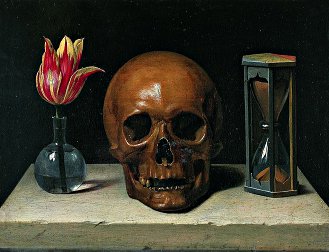 Murder is a bad idea. Folks with a remarkable number of different views agree on that, although what’s seen as “murder” has varied quite a bit over the millennia.
 News from Toronto, bad as it is, could be worse. Despite the incident being yet another van crime, I’ve yet to hear someone demanding tighter van laws.
 Folks had, and have acted on, crazy ideas long before the 20th century.
 The criminologist in Monty Python’s ‘Piranha Brothers’ skit was, happily, fictional. So was his madcap parody of sadly-real attitudes. (March 19, 2018)
 I don’t indulge in daydreaming about a utopian world where we’ve solved all our problems. Not much, anyway, now that I’ve passed my early teens.