Videos with “Samhain” in the title have been showing up on YouTube.com lately. So have Halloween-themed items.
With a little digging, I could probably find someone going ballistic over this year’s interest in Samhain and/or Halloween. Then I could either join folks who jumped on that bandwagon, or those who ridicule them.
Instead, I’ll take a look at Samhain, along with whatever else comes to mind, and wrap things up with a quick look at Halloween.
But first, I’ll (briefly, for me) rehash why I take ideas like “soul” and “supernatural” seriously, and can’t be superstitious. Not if I’m going to keep on being a Catholic.
- Ideas, Faith, Reason, Kermit and Uncle Deadly
- Samhain: Here Comes Cold and Darkness
- Halloween, Life, Death, and the Big Picture
Ideas, Faith, Reason, Kermit and Uncle Deadly

I’ll admit that I like looking up definitions, and learning where words in today’s language come from.
Considering what’s been happening to ‘religious’ ideas and the words that express them over the last century or so — some clarification couldn’t hurt.
Bear in mind that I think G. K. Chesterton was right:
“Theology and religion are not the same thing. When the churches are controlled by theologians religious people stay away.”
[Holbrook Jackson]
“Theology is simply that part of religion that requires brains”
[G. K. Chesterton’s comment, written in green pencil]
(“Platitudes Undone“, Ignatius Press (1997 page 25 (The Inner Temple)); facsimile edition of “Platitudes in the Making: Precepts and Advices for Gentlefolk“, Holbrook Jackson (1911) see “Satan, Sin, Politics, and Making Sense Anyway” (January 3, 2026) > Theology, Slogans, and Human Nature)
Enough preamble. Here’s a look at “soul”, “supernatural”, and “superstition” mean in a Catholic context:
“SOUL: The spiritual principle of human beings. The soul is the subject of human consciousness and freedom; soul and body together form one unique human nature. Each human soul is individual and immortal, immediately created by God. The soul does not die with the body, from which it is separated by death, and with which it will be reunited in the final resurrection (363, 366, cf. 1703).
“SUPERNATURAL: surpassing the power of created beings; a result of God’s gracious initiative. Our vocation to eternal life is supernatural. (1998, cf. 1722)
“SUPERSTITION: the attribution of a kind of magical power to certain practices or objects, like charms or omens. Reliance on such power, rather than on trust in God, constitutes an offense against the honor due to God alone, as required by the first commandment. (2110)”
(Catechism of the Catholic Church, Glossary)
Next, a closer look at “superstition”:
“Superstition is the deviation of religious feeling and of the practices this feeling imposes. It can even affect the worship we offer the true God, e.g., when one attributes an importance in some way magical to certain practices otherwise lawful or necessary. To attribute the efficacy of prayers or of sacramental signs to their mere external performance, apart from the interior dispositions that they demand, is to fall into superstition.”
(Catechism, 2111) [emphasis mine]
Secular definitions of “supernatural” aren’t all that different:
supernatural adjective
Merriam-Webster.com dictionary
- of or relating to an order of existence beyond the visible observable universe
- especially : of or relating to God or a god, demigod, spirit, or devil
- a : departing from what is usual or normal especially so as to appear to transcend the laws of nature
b : attributed to an invisible agent (such as a ghost or spirit)
“…There is No Logical Explanation”??

Another reason I occasionally check current dictionaries is that my language keeps changing.
For example, in my younger days, “supernatural” sometimes meant “unreal” or “irrational”.
Kermit “Uh, you will notice that I didn’t fall for their joke. And if it isn’t a joke — I mean, if there is someone or something behind me — there is no doubt a logical explanation for it. So I shall now just turn slowly around and see what is going on here.”
He turns around and faces Uncle Deadly.
Kermit “Uh, pardon me, sir, but is there a logical explanation for your presence here?”
Uncle Deadly (cackles)
Kermit “Apparently, there is no logical explanation.”
He runs away screaming. Uncle Deadly cackles.
(The Muppet Show, Episode 121: Twiggy (1976))
Don’t get me wrong: “The Muppet Show” is among my favorites.
But Kermit’s response to meeting Uncle Deadly reminds me of one of my favorite quotes:
“…If you must see ghosts, it is better not to disbelieve in them….”
(“That Hideous Strength”, Chapter Ten/”The Conquered City”, C. S. Lewis (1945)) (full text in The Internet Archive)
Faith AND Reason

Although I’m a very sentimental man, and occasionally indulge in nostalgia, I do not yearn for the ‘good old days’.
Much of what passed for “Christianity” gave the impression — intentionally or not — that someone could either be a Christian, or think: not both.1
As a Catholic, I don’t see faith and reason as the same thing. But I do see thinking as a good idea:
“Man’s faculties make him capable of coming to a knowledge of the existence of a personal God. But for man to be able to enter into real intimacy with him, God willed both to reveal himself to man, and to give him the grace of being able to welcome this revelation in faith. The proofs of God’s existence, however, can predispose one to faith and help one to see that faith is not opposed to reason.“
“By natural reason man can know God with certainty, on the basis of his works. But there is another order of knowledge, which man cannot possibly arrive at by his own powers: the order of divine Revelation. Through an utterly free decision, God has revealed himself and given himself to man. This he does by revealing the mystery, his plan of loving goodness, formed from all eternity in Christ, for the benefit of all men. God has fully revealed this plan by sending us his beloved Son, our Lord Jesus Christ, and the Holy Spirit.“
(Catechism of the Catholic Church, 35, 50) [emphasis mine]
Make that a very good idea, since thinking is part of deciding whether I’ll act ethically. (Catechism, 1730, 1749ff)
Actually, I could put my brain on hold and act on whatever whim dropped into my mind. But that’d be a daft idea. And another topic.
Samhain: Here Comes Cold and Darkness

A Gaelic end-of-harvest festival held November 1 and the month of November are both called Samhain.
Oíche Shamhna is Irish for Samhain night: which, along with Samhain, begins the cold, dreary, dark half of the year.
Samhain sounds sort of like Samaín, a Galician festival, but that word comes from sambucum, Latin for “elderberry”.
All of the above (except for the Galician festival) come from the Old and Middle Irish Samain or Samuin — ˈsaβ̃ɨnʲ, as language nerds would put it.
Samain/Samuin comes from proto-Indo-European *semo (“summer”), or proto-Celtic *samoni (“reunion, assembly”).
That proto-Celtic word is related to Old Norse saman, Gothic samana and Sanskrit samāna: all of which mean “together”, and Old Irish bech-samain, meaning “bee swarm”. Linguist and lexicographer Xavier Delamarre says that Samhain could have meant “assembly of the living and the dead”.
Some academics say that old Samhain customs influenced today’s Halloween celebrations, others say that Halloween influenced Samhain. Meanwhile, some folks have been more-or-less creative in their efforts to restart old pagan beliefs.
I’d be astonished if celebrations of the autumn equinox, as practiced by folks living in the British Isles, didn’t share many features.
As for celebrating the autumn — and spring — equinoxes, that’s something a whole lot of folks do:
- Álfablót (Norse/Germanic, sacrifice to the “elves” near autumn’s end)
- Dożynki (Slavic harvest festival)
- Higan (Japanese Buddhist holiday involving veneration of ancestors)
- Samhain (Gaelic, autumn equinox celebration: a liminal or threshold festival, when the boundary between this world and the Otherworld is blurred)
The “elves” in that discussion of Álfablót are the alfar: Scandinavian/Germanic analogs to the Irish aos sí/sídhe, “fairies” or “fair folk”.2
In folklore, not those daft 19th century retellings, “elves” are seriously powerful, emphatically not to be trifled with, and that’s yet another topic.
Halloween, Life, Death, and the Big Picture

Maybe, if my state, country, and world faced no greater problem than tacky holiday yard decorations, I could see Halloween as a threat. Maybe.
But maybe not. Yard decorations, tacky or otherwise, don’t bother me.
One of my minor pleasures this week has been seeing an inflatable Halloween duo in the yard a few doors north of this household: a ghost in a black hat, and Grogu.
At least I think that’s what they are. Since I haven’t been out this week, I’ve only seen them through a window.
Basically, I don’t see Halloween as a major threat to either my faith or my country.

Depending on who’s talking, Halloween is a Christian retread of Samhain and other harvest festivals, or the Christian observance of All Hallows (Saints) Eve with Gaelic trimmings.3 Or it’s a time to get upset because folks are having a good time.
I’m not at all surprised that the Church observes All Saints’ Day near the autumn equinox.
I think it’d be odd if we hadn’t picked a time of year when folks were already thinking about the dead for our celebrations of Saints and the faithful departed.
Life, Looking Ahead

I see remembering folks who have died as a big deal, since I think and believe that we don’t stop existing when we die.
Knowing that I’ve got only so much time to work with, and that how I use that time matters, encourages a sense of — urgency? My long-term hope and goal is to be in that “great multitude, which no one could count”, and that’s yet another topic.
“After this I had a vision of a great multitude, which no one could count, from every nation, race, people, and tongue. They stood before the throne and before the Lamb, wearing white robes and holding palm branches in their hands.”
(Revelation 7:9)
“This Innumerable Community”
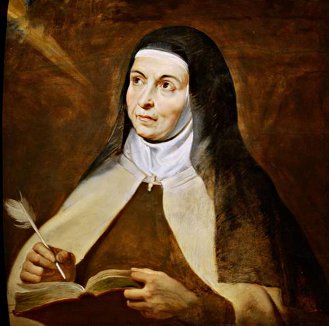
All Saints’ Day, tomorrow, is when we remember the Saints. Instead of nattering on about that, I’ll share what a recent pope said, along with a few other resources.4 The Vatican’s transcript includes a ‘for more information’ reference in the Catechism:
“…Today we venerate this innumerable community of All Saints, who, through their different paths of life, show us the various ways to holiness, united by a common denominator: to follow Christ and conform ourselves to him, the ultimate goal of our alternating human events. All the stages of life, in fact, can become ways of sanctification with the action of grace and with the commitment and perseverance of each one.
“Tomorrow, 2 November, is dedicated to the Commemoration of the faithful departed, it helps us to remember our dear ones who have left us and all the souls on the journey to the fullness of life, on the heavenly horizon of the Church, to which today’s Solemnity has elevated us.
“Since the early days of the Christian faith, the earthly Church, recognizing the communion of the whole mystical body of Jesus Christ, has honoured with deep respect the memory of the dead, she offers suffrage for them. Our prayer for the dead is therefore not only useful but necessary, as it can not only help them, but also make their intercession for us effective (cf. Catechism of the Catholic Church, n. 958)….”
(Angelus, Solemnity of All Saints, Benedict XVI (November 1, 2026)) [emphasis mine]

I mentioned Saints earlier this month, but didn’t talk about what makes them stand out. Essentially, they’re folks who have shown “heroic virtue”.
They’re not all martyrs, although I see that as a fast track to canonization.
“CANONIZATION: The solemn declaration by the Pope that a deceased member of the faithful may be proposed as a model and intercessor to the Christian faithful and venerated as a saint on the basis of the fact that the person lived a life of heroic virtue or remained faithful to God through martyrdom (828; cf. 957).
“SAINT: The ‘holy one’ who leads a life in union with God through the grace of Christ and receives the reward of eternal life. The Church is called the communion of saints, of the holy ones (823, 946; cf. 828). See Canonization.”
(Glossary, Catechism of the Catholic Church)
Links: A Holiday, Last Things, Saints, Faith AND Reason
I’ve talked about this holiday and vaguely-related topics before:
- Halloween, Divination, Making Sense
- “Halloween, COVID-19, Wolfgang’s Axe and Apple Bobbing” (October 31, 2020)
- “Ghosts?” (April 29, 2018)
- Last Things
- “Another Trip to the Emergency Room” (May 15, 2021)
- Saints
- “You Don’t Have to be Crazy to be Catholic…” (May 9, 2026)
- “Saints, Depression, Assumptions, and Me” (March 23, 2024)
- “St. Patrick’s Day: Shamrocks, Saints, Leprechauns, and Me” (March 16, 2024)

1 Faith AND Reason — or — Putting Victorian Politics in Perspective
- “Science, Religion, and Saying Goodbye to the 19th Century” (May 25, 2024)
2 Folklore and more:
- Wikipedia
3 A holiday:
- Wikipedia
4 A holiday’s background:
- Wikipedia
- Allhallowtide
- All Saints’ Day
- All Souls’ Day (“This article contains inline citations that are not properly formatted….”)
- “How to Cover the Mass”
Jerry Filteau, A resource of the Office of Media Relations, United States Conference of Catholic Bishops; Executive Editor Sister Mary Ann Walsh, Director, USCCB Office of Media Relations - The Holy See/Vatican
- Angelus, Solemnity of All Saints, Benedict XVI (November 1, 2026)
- “Lumen Gentium” , 50, Pope Saint Paul VI (November 21, 1964)
Discover more from A Catholic Citizen in America
Subscribe to get the latest posts sent to your email.