

When mental health, or lack thereof, pops up in stuff I read, I take notice. That happened Sunday afternoon, and I realized that I’d found something to talk about this week.
- “…A Catholic Approach to Mental Health Care….”
- Mental Health, Being Catholic, Making Sense
- Taking Mental Health Personally
- More Than You Need, or Maybe Want, to Know …
“…A Catholic Approach to Mental Health Care….”

“Faith, Hope and Mental Health”
Columbia staff, Columbia Magazine (April 1, 2026)
“An interview with psychologist Dr. Greg Bottaro on a Catholic approach to mental health care““The conversation around mental health and psychology has exploded worldwide in recent years, as professionals and average Joes alike grapple with the realities of mental illness.
“More than 1 billion people currently live with mental health disorders worldwide, according to World Health Organization data released in 2025. In the United States, an estimated 61.5 million people — 23.4% of the population — experienced mental illness in 2024, according to the National Survey on Drug Use and Health. This includes more than 33% of young adults ages 18 to 25.…”
[emphasis mine]
A third of young adult Americans having a screw loose — that didn’t surprise me so much. I’m in my mid-70s, but I remember being a young man.
We, many of us, act crazy when we’re young. Being me, I’d be impressed but a little concerned about a young man who displayed the reserve and composure of some guy who’s been stuck behind a desk for decades.
Nearly a quarter of all Americans experiencing mental illness — that’s a sizable fraction.
I could have started diving down rabbit holes, ferreting out the criteria and data behind that assertion. Instead, I looked for presumably-accurate counts of how many Americans experienced physical health issues recently.
Granted it’s comparing apples and oranges, but they’re both fruit.
Anyway, I learned that a tad over three quarters of American adults said they’d experienced “chronic” health issues like heart disease, cancer, stroke, or diabetes.
“Trends in Multiple Chronic Conditions Among US Adults, By Life Stage, Behavioral Risk Factor Surveillance System, 2013-2023”
Kathleen B Watson, Jennifer L Wiltz, Kunthea Nhim, Rachel B Kaufmann, Craig W Thomas, Kurt J Greenlund; Preventing Chronic Disease (National Center for Chronic Disease Prevention and Health Promotion) (April 17, 2025) via PubMed Central / National Library of Medicine, National Institutes of Health“Abstract
“…In 2023, 76.4% (representing 194 million) of US adults reported 1 or more chronic conditions, including 59.5%, 78.4%, and 93.0% of young, midlife, and older adults, respectively. Moreover, 51.4% (representing 130 million) of US adults reported MCC, including 27.1%, 52.7%, and 78.8% of young, midlife, and older adults, respectively. Among young adults, from 2013 to 2023, prevalence increased significantly from 52.5% to 59.5% for 1 or more conditions and from 21.8% to 27.1% for MCC….”
[emphasis mine] (MCC: in this context, probably “Major Complications or Comorbidities”, per ICD-10-CM/PCS MS-DRG v37.0 Definitions Manual.)
More than three out of every four American adults dealing with some chronic physical health issue? That’s a high percentage.

Here’s where I could indulge in anguish and pearl-clutching: bewailing the dreadful state of affairs and maybe blaming it on someone or something I don’t like.
That’d be a waste of time and effort. Besides, I don’t enjoy being at either the receiving or sending end of conventional conniption carnivals.
Mental Health, Being Catholic, Making Sense


“A Catholic Citizen in America” is supposed to be about “Being Catholic…”.
So what, if anything, does mental health have to do with being Catholic?
Quite a bit, actually, and it’s not what you may have gathered from my native culture’s viewpoints: old school fears, or today’s more nuanced bogeyman — and I’m drifting off-topic.
That Columbia Magazine article includes part of an interview with the founder of the CatholicPsych Instute, Dr. Greg. Bottaro:
“…COLUMBIA: How does the Catholic vision of the human person differ from prevailing secular models of mental health?
“BOTTARO: The secular model is based on postmodern relativism, and it’s built on scientism — a kind of idol worship of science. This means the scientific method is treated as the be-all and end-all purveyor of truth, which ironically is not even what science would claim of itself. Science is simply a manner of observing and testing what is observed….
“…There are standards that we accept and take for granted when it comes to physical health. Here’s a mind-blowing fact: There are no standards of mental health in the secular world. If you have a 104 F temperature, you know you’re sick because you’re comparing that to 98.6 F. That’s a standard. That doesn’t exist in the entire world of mental health. There are subjective, relative definitions….”
(“Faith, Hope and Mental Health” Columbia staff, Columbia Magazine (April 1, 2026))
That bit about standards sent me down another rabbit hole: specifically, the DSM (Diagnostic and Statistical Manual of Mental Disorders). Why it’s DSM and not DSMMD is a puzzle I still haven’t solved.
Standards in the DSM

The DSM is the American Psychiatric Association (APA)’s standardized guide for identifying which particular screws are loose in a patient’s head.
That’s right, standardized; although I’ll grant that the DSM’s standards have been changing. Here’s what the DSM says about a “neurodevelopmental disorder” I’m familiar with:
“…ADHD is a neurodevelopmental disorder defined by impairing levels of inattention, disorganization, and/or hyperactivity-impulsivity. Inattention and disorganization entail inability to stay on task, seeming not to listen, and losing materials, at levels that are inconsistent with age or developmental level. Hyperactivity-impulsivity entails overactivity, fidgeting, inability to stay seated, intruding into other people’s activities, and inability to wait—symptoms that are excessive for age or developmental level….”
(“Diagnostic and Statistical Manual of Mental Disorders“, Fifth Edition, American Psychiatric Association; p. 32 (2013))
A flavor of ADHD shows up in my medical records, even though I’m pretty much the opposite of fidgety. Just getting me to move is an effort.
ADHD overlaps autism spectrum disorder (pages 31-32, 50-59) in the current DSM:
“…Autism spectrum disorder is characterized by persistent deficits in social communication and social interaction across multiple contexts, including deficits in social reciprocity, nonverbal communicative behaviors used for social interaction, and skills in developing, maintaining, and understanding relationships. In addition to the social communication deficits, the diagnosis of autism spectrum disorder requires the presence of restricted, repetitive patterns of behavior, interests, or activities….”
(“Diagnostic and Statistical Manual of Mental Disorders“, Fifth Edition, American Psychiatric Association; p. 31 (2013))
I could stoutly deny that either label applies to me, but I’m self-aware. In any case, my focus on accuracy is ‘abnormally intense’ (page 50), so I acknowledge the approximate match.
Columbia Magazine didn’t include the complete interview, which apparently is on the CatholicPsych website. It’s probably there, somewhere, but I couldn’t find it.
Whoever designed their online presence did an aesthetically pleasing job, which you’ll probably find easy and intuitive. Me? I’m far more comfortable with walls of text and hierarchical structures. Let’s face it, I’m not normal. I’ll get back to that.
Ethical Principles and Tableware

Since I couldn’t find a transcript of the entire interview, I’ll assume that the standards Dr. Bottaro said were lacking these days were ethical ones: having some criteria other than ‘I feel like it’ for saying something is right or wrong.
I think he has a point.
I’m also old enough to remember the frustrating mix of attitudes and assumptions that made the Sixties possible. That’s a whole mess of topics for another day.
Basically, I think there are ethical principles written into reality’s source code: standards of right and wrong that haven’t changed since the Code of Hammurabi was written, and won’t. I’m a Catholic, so I call it natural law.
I also think that these unchanging ethical principles do not include rules we make up: like which side of the road I drive on and whether forks are a necessary part of tableware.
Forks and traffic regulations weren’t front and center in the Sixties, but a regrettable number of very loud Christians seemed unable to distinguish between their taste in music and the unalterable laws of the Almighty. It was an interesting era.
I’d prefer that my native culture had a firmer grasp on where personal preference left off and reality began. But as my mother said, quoting some old folk wisdom, “if wishes were horses, beggars would ride”.
Saints: Dealing With What They’ve Got, Doing it Well
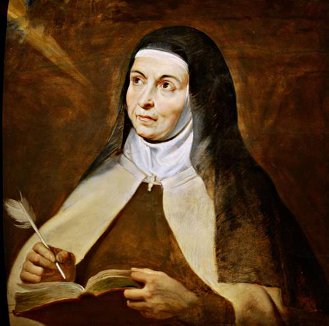
Then there are the Saints.
Some really were like folks in 19th century ‘lives of the saints’: utterly innocuous folks who died horribly but with smiles on their lovely faces.
Others profoundly were not.
What they’ve got in common is that they knew what they believed, and acted as if it mattered.
“CANONIZATION: The solemn declaration by the Pope that a deceased member of the faithful may be proposed as a model and intercessor to the Christian faithful and venerated as a saint on the basis of the fact that the person lived a life of heroic virtue or remained faithful to God through martyrdom (828; cf. 957).
“SAINT: The ‘holy one’ who leads a life in union with God through the grace of Christ and receives the reward of eternal life. The Church is called the communion of saints, of the holy ones (823, 946; cf. 828). See Canonization.”
(Glossary, Catechism of the Catholic Church)
That’s what the Church says Saints are.
Individual Catholics — I see advantages to being someone who became Catholic as an adult, after running out of reasons to not convert, and that’s yet another topic.
Some of us are well-informed about our faith: better-informed than I am.
Others — I remember an online discussion thread in which someone responded to a plea for help with depression with “There is no evidence [that Saints] had depression, they lived in faith….”
I don’t doubt that the assertion was sincere. But it struck me as being both inaccurate and about as helpful as giving a drowning man an anchor.
Someone could be perfectly healthy and still be a Saint. But good health — or its absence — is just what they live with. What matters is what they do with what they’ve got.
Some Saints lived with mental health problems, including these folks:
- Bartolo Longo (anxiety, depression and suicidality)
- Mark Ji Tianxiang (opium addiction)
- The Martin Family of Lisieux
- Louis (dementia)
- Therese (anxiety)
- Oscar Romero (obsessive compulsive disorder/scrupulosity )
One of these days I may go back and talk about some of those folks. Today I’ll share links and leave it at that.1
Taking Mental Health Personally

Very briefly, here’s how I see mental health, faith, and all that.
As a Catholic, I think that being and staying healthy is okay. So is not being healthy, and trying to get healthy. Getting well, helping others get well, and scientific research with those goals, are all good ideas. Ethics apply, just like with everything else we do. (Catechism of the Catholic Church, 1410, 1500-1510, 2292-2296)
But making good health my top priority — that’d be a problem, a big one. Putting anything or anyone where God belongs is idolatry, and a very bad idea. (Catechism, 2112-2113)
Applying those ideas to physical illness may not be much of a stretch. But what about mental illness?
I think each of us has a share of humanity’s “transcendent dignity”. (Catechism 1929 ff)
Trying to believe that and imagining that people experiencing mental illness stop being people, or that they’re an exception to a very basic principle: that’d require Olympic-level mental gymnastics. I don’t think it’d be worth the effort.
Plus, that sort of doublethink would be inconsistent with being a Catholic.
Besides, I’m one of ‘those people’.
Perceptions: Accurate Ones

One of my daughters summed up my personality as:
- Eccentric
- Scholarly
- Eclectic
Another daughter said I’m “colorful”.
I think they’re both right. That’s partly because they know me, and — as I said before, I’m self-aware.
My medical record includes similar assessments. My identified mental and neurological glitches have included, but have not been limited to:
- ADHD: Attention Deficit Hyperactivity Disorder, inattentive type
- ASD: Autism Spectrum Disorder
- Cluster A personality disorder
- Schizotypal personality disorder
- GAD: Generalized Anxiety Disorder
- PDD: Persistent Depressive Disorder
- PTSD: Post Traumatic Stress Disorder
I profoundly do not think I’m “normal”. Not in the psychological/psychiatric sense.
I’ll willingly accept the idea that I have a share in humanity’s transcendent dignity, although putting “dignity” and me in the same sentence seems a bit odd.
Like Father, Like Daughter

My wife said that our oldest daughter is pretty much a female version of me.
There are differences, of course.
She’s lactose-intolerant and I’m not, for example; and she has had a much harder time getting doctors to take what she says seriously. It doesn’t help, I think, that she’s a high soprano, while I sound like James Earl “Darth Vader” Jones.
But her psychiatric profile is a lot like mine. That may help me understand her intense frustration with a school counselor.
She’s long since graduated from elementary school, but the memories still irk her. We’re both good at being irked, and that’s yet again another topic.
“Normal” — SERIOUSLY?!
I wasn’t present at her counseling sessions, but I gather that she’d talk about her experiences and perceptions. Then the counselor would tell her that she’s normal.
This was when she was in elementary school, so she didn’t have the detailed knowledge of neurological quirks affecting executive functions, sensory processing, and emotional regulation that she and I have now.
But she wasn’t particularly oblivious. She was paying attention to other folks her age, and shares my knack for self-awareness.
It was patently obvious to her — and me — that neither of us are “normal”. Not in the sense of being close to the psychological 50th percentile.
Decades later, that ‘you’re normal’ still rankles enough for her to bring it up occasionally.
I’ve never had a school counselor tell me that I’m “normal”. I’ve never had that sort of conversation with a school counselor. Possibly because my teen years and the Sixties overlap almost perfectly.
I strongly suspect that the counselor meant well: and was trying to communicate the idea that my daughter ‘has worth’ or ‘is acceptable’. “Normal” might, for counselors, have a meaning similar to that.
For all I know, they may have been required to say “normal”, rather than use a term that would make more sense.
Of course, some of what she was experiencing almost certainly was “normal”: part of the steep learning curve we call childhood and adolescence. But I suspect that the familial neural quirks we share made our early years a tad more — interesting.
I wouldn’t tell her that she’s “normal”, not without first defining what I meant.
We’re both acutely aware of the degree to which we’re not average or typical. That doesn’t give us a greater or lesser share in humanity’s transcendent dignity. It just means that we don’t blend into the crowd.
More Than You Need, or Maybe Want, to Know …

Growing up in the Sixties was, like I said, interesting.
I’ve talked about that, mental health, and what I see as related topics, before:
- “‘We Will Come After You’, Being Careful, and Truth” (August 17, 2024)
- “Freedom of Speech: On the Whole, I Like It” (July 6, 2024)
- “Saints, Depression, Assumptions, and Me” (March 23, 2024)
- “A Prescription, Disorders, Conformity and Culture” (May 20, 2023)
- “Still Rejoicing” (July 2, 2017)

1 I said there’d be links, here they are:
- CatholicPsych
“You Are Not Alone. The path to true healing is through relationship, but it can be difficult to find someone you can trust.” - International Association of Catholic Mental Health Ministers
- “Faith, Hope and Mental Health”
Columbia staff, Columbia Magazine (April 1, 2026) - “Saints who battled mental illness”
Meg Hunter-Kilmer, Aleteia (published May 16, 2020, updated October 10, 2025) - “‘Some Saints lived with mental illness’”
Deacon Ed Shoener, Scranton, Pennsylvania, USA; Vatican News (November 3, 2021) - “Mentally Ill Are Also Made In God’s Image”
St. John Paul II (December 11, 1996) via EWTN
Discover more from A Catholic Citizen in America
Subscribe to get the latest posts sent to your email.





Dr. Bottaro’s talk about needing some time to disconnect from computer technology and the like reminds me of how often I see good intention but bad execution in our attempts to have moderation in the use of such technology. Heck, I’m pretty sure I’ve heard similar diction in the latest Sunday homily I listened to, and me thinking that I was listening to an old man back there got me thinking of His work on and through old folks like you, Mister Gill. Fortunately, reading through more of Dr. Bottaro’s talk, especially when he talked about what makes healthy masculinity and how society today makes it so difficult to uphold, reminded me about how my connections with people online have been quite beautiful to me whenever they got me healthily socializing offline too. And really, the goodness of my fellow fools I have found myself interacting with online and offline lately and how they got me further expressing myself while appreciating the true humanity that God gave them reminds me of how the Lord Jesus Christ mingled with sinners up close even though he would never encourage, let alone commit, any sin. And there is something musical about healthy online bonds, bonds which encourage you to go offline to more healthily connect, and then you come back online with more Godly beauty to grow and share until the time when going offline is the healthier thing to do yet again. It’s even more beautiful to think about with the fact that we have a Saint like Saint Carlo Acutis, a Saint who lived with pop and nerd things as well! Both old and new can be bad, and both old and new can be good. Good old things are archetypes, bad old things are cliches. Good new things are innovations, bad new things are fads. And God Almighty is The Archetypal Innovation, is He not? Thank you very much for this piece, then, Mister Gill.
🙂 “…something musical ….” — I like that figure of speech.
And *yes!* — I remember when assorted phrases, like “I hear you”, came and went as cliche phrases. A common denominator was a recognition that communication, relationship, mattered.
I was glad to see Carlo Acutis https://en.wikipedia.org/wiki/Carlo_Acutis canonized. We may be seeing a patron Saint of nerds. I appreciate the attributes associated with St. Carlo Acutis: laptop, monstrance, red polo shirt.
You may enjoy what I’ve been working on this week. Among other things, it looks at how tech can be used.
And thank **you** for reading and responding.