When Deborah was a judge of Israel, she told Barak that his victory against Jabin’s army was a sure thing. (Judges 4:1–7)
Barak refused to go unless Deborah came with him. Which she did. Barak’s forces won, but God and Deborah got credit for the victory. Sisera, Jabin’s general, fled: but died when Jael, wife of Heber the Kenite nailed his head to the floor.1 (Judges 4:8–22)
Judith and Editors
Then there’s Judith, who walked into an Assyrian siege camp with her maid, talked her way into the general’s quarters, and removed the general’s head.
Then the two women calmly walked out of the camp. With the general’s head in a bag. (Judith 10:11–18:20)
The Book of Judith says the Assyrian general’s name was Holofernes, and that he was sent by Nebuchadnezzar.
That’d be Nebuchadnezzar II, second king of the Neo-Babylonian Empire: or the Chaldean Empire, or Assyrians. It depends on who’s talking. That was around 630 BC, give or take a few decades.
Nebuchadnessar II’s territory had been what we call the Neo-Assyrian Empire up to around 610 BC, give or take a few years. I strongly suspect that’s why the book of Judith’s author called his people’s enemy “Assyrians.”
The Book of Judith is in my Bible. But if you’re an American, odds are that it isn’t in yours.
I’m a Catholic.
Folks like Jonathan Edwards set the religious tone of my homeland.
So Tobit, Judith, Baruch, Sirach, first and second Maccabees and Wisdom are edited out of most American Bibles.2
Editors had their reasons for deleting the Book of Judith.
Examination of Conscience: Getting Ready for Reconciliation
Since I’m human, I have within me an ember of the fire that forged the universe. We all do.
That sounds like the Victorian ‘lords of the universe’ attitude that made a mess we’ll be cleaning up for centuries. But it’s not.
Being made in the image of God means I have dominion over, and responsibility for, my share of this world. And for how I treat folks around me. That’s scary.
That’s also why my parish’s Advent Companion booklet has an examination of conscience before a DYI Advent wreath blessing.
The booklet’s ‘examination’ is an eight-point list that starts with —
“For the times when I forget that I need a Savior, and arrogantly conceive of myself as sufficient to myself.” (“The Magnificat® Advent Companion”)
Each item ends with “Come, Lord Jesus!”
Examinations of conscience aren’t just an ‘Advent’ thing.
They are, or should be, how I get ready for the Sacrament of Penance and Reconciliation: what my culture calls Confession. (Catechism of the Catholic Church, 1422-1484)
I don’t enjoy reviewing my thoughts and actions, looking for misdeeds. Sins. But it’s like flossing and brushing my teeth. I’m better off if I do it than if I don’t. Happily, there’s a mess of resources out there; including these.
Some actions are wrong, regardless of circumstances. Like murder, deliberately killing an innocent person. (Catechism, 1447)
Others, like sticking out my tongue, may be right during a dental exam, maybe-wrong when talking to someone, and quite often neutral.
And, although no sin is a good idea, some sins are worse than others; which is why we talk about venial and mortal sin. We also sort them out by what we misuse, how we misuse things — it’s complicated. (Catechism, 1846-1869)
But in another way, it’s simple.
Sin is a failure to love. When I don’t love God and my neighbor, and see everyone as my neighbor, that’s when I sin. And “my neighbor” includes everyone. No exceptions. (Matthew 5:43–44, 22:36–40, Mark 12:28–31; Luke 10:25–37; Catechism, 1706, 1776, 1825, 1849-1851, 1955)
Sin is an offense against reason, truth and God. (Catechism, 1849-1850)
And, as long as I am alive, seeking forgiveness is an option. (Catechism, 827, 976-983, 1021-1037, 1042-1050)
That’s all I’ll do for this week. Here are the usual links:
Brobdignagian bowling shoes in Macy’s Thanksgiving Day parade. (2020)
This week will be less routine than usual, partly due to Thanksgiving Day. I’ll be staying home, and haven’t decided whether or not I’ll try finding free online streaming of Macy’s Thanksgiving Day parade.
This — and probably my regular ‘Saturday’ post — will be the text equivalent of a clip show: excerpts from stuff I’ve posted before.
So: Happy Thanksgiving Day, Greetings on November 23, or whatever seems appropriate.
Giving Thanks Anyway
Feeling thankful when times are good should be easy.
Being thankful in bad times? Not so much.
I can be thankful that I’ve got a roof over my head, food in the house and a good family. Or I can kvetch about being born with bad hips, two of our kids dying, and every other rough patch in my life.
Being thankful strikes me as making more sense. Rough patches and current economic issues aside, I have a good life.
But what about folks who don’t have a roof over their head, food in their home and a good family? Or, in some cases, any surviving family.
What could someone living with rough times have to be thankful for?
A key word there is “living.” Remembering that being alive beats the alternative has helped me endure suicidal impulses.
I figure existence itself is cause for giving thanks.
That’s because I think God creates and maintains everything and everyone. And lets created beings, including us, help: each according to its nature. (Genesis 1:1; Psalms 136:1–9; Catechism of the Catholic Church, 301-308)
Our nature being what it is — I’ve talked about that before.
Rough Patches
One of my — and my wife’s — rough patches was when my wife almost died, and Elizabeth did.
I could say that I read Job 1:21 and Psalms 69:30–31 while sitting by my wife’s hospital bed: and immediately started thanking God for what was happening.
That’s not what I did.
I tried, briefly, bargaining with God; then got smart and started asking for help while dealing with the unpleasant reality.
Maybe I could score points in some circles by claiming Job-like virtue. But with my particular judgment approaching, that seems imprudent. At best.
Equality, Differences and Being Thankful
I don’t see a problem with telling God ‘thank you’ for having a roof over my head and food in the house.
Provided that I don’t start imagining that being in one of life’s smooth(ish) patches is due to my outstanding virtue. Or vice.
Stuff happens: wealth and poverty, sickness and health. None of that’s a sure sign of virtue or sin. What I do with what I’ve got: that’s what matters. (1 Timothy 6:10; Hebrews 13:5; Catechism 828, 1509, 2211, 2288-2291, 2292-2296, 2448, 2540, 2544)
That’s why I see no problem with traditional expressions of thanksgiving for abundance. Or simply for having “galore:” enough.1
I think each of us has equal dignity. And that we’re all different. Some need help. Others can give help. Giving, and getting, is part of what being human is about. (Catechism, 1934-1938)
I figure that most, maybe all, of us should be giving and getting help. And being thankful when we can give. (Acts 20:35)
I’m pretty sure being thankful when we give others the opportunity to help us make sense, too. And that’s yet another topic.
Here’s the post I took those excerpts from, and other related ones:
I was called “some conservative guy” in social media, several years back. In context, the label made sense. Particularly since I hadn’t been displaying liberal views.
Fact is, I’m like my father-in-law.
Many years back now, he was asked whether he was liberal and conservative.
He said he was Catholic. So am I. And the Catholic Church is literally catholic, καθολικός, katholikos, universal. (from κᾰθόλου: on the whole, general).1
I took a few of those online ‘discover your politics’ quizzes in 2017.
In each, I answered about 20 questions: and learned that I’m a right-wing conservative, a liberal, and a libertarian.
In each case, my assigned label matched political views on economics, state-sponsored micromanagement, that sort of thing.
I think employers should pay folks a reasonable wage, and don’t think a federal agency should tell me what color socks to wear. That very likely accounts for liberal and libertarian labels.
I suspect the right-wing conservative label came from my insistence on seeing humans as people, regardless of age. But it’s been years since I played with those online ‘what are you’ things, and don’t remember details.
Out of Step: a Half-Century-Plus and Counting
If I’d been born a little earlier or later, my teens and the 1960s wouldn’t have overlapped almost exactly. But they did, and that’s affected my attitude.
It was not a serene decade.
Quite a few Americans had started realizing that “legal” isn’t necessarily “right”.
Some were even questioning whether “she’s smart as a man” was really a compliment.
The Vietnam War had become an ongoing SNAFU: arguably on a par with the Charge of the Light Brigade.
America’s self-described defenders of freedom were having fits. In part, I suspect, because (alleged) Communists, fellow travelers, and other folks with controversial ideas, weren’t being consistently silenced.
I was not, putting it mildly, on the same page as The Establishment of that era. But I couldn’t reasonably go along with every belief of what became today’s Establishment.2
Good grief. I couldn’t even be conventionally unconventional, and that’s another topic.
I’ve over-simplified the situation, but the 1960s must have been rough on folks who’d gotten used to having their preferences and paranoia taken seriously.
Protecting Americans From Unsanctioned Ideas
Retracted “Human shields” cartoon, and examples of caricatures by cartoonist Michael Ramirez. (2023)
That cartoon was still visible on the Las Vegas Review-Journal’s website this Wednesday.
Folks visiting the Washington Post’s website, however, will not be exposed to the disturbing image. Because, apparently, it’s “racist”.
Back in my salad days, something offensive could be labeled “Communist”. And then right-thinking publications would shield their readers from the improper idea or image.
The good news then was that not all publications were right-thinking. Not from HUAC’s viewpoint, at any rate.3
The good news now is pretty much the same thing, although The Establishment’s preferred reality has shifted a bit.
On the other hand, folks who have become accustomed to having their preferences and paranoia taken seriously still favor stifling ‘subversive’ ideas to discussing them.
“…He added he’s happy the cartoon has sparked a debate about the ‘systematic undermining of the freedom of speech.’
“‘I want an open debate. I think America is better, more extraordinary because of that,’ he said.
“The two-time Pulitzer Prize-winning artist told Fox News Digital he will have a cartoon addressing what transpired published in Sunday’s edition of the Review-Journal and will pen a piece to accompany it.
“Offering a preview of what he will say, Ramirez cited the Washington Post’s motto ‘Democracy Dies in Darkness,’ saying ‘When the protests and rancor of a distressed newsroom offended by a cartoon exposing the truth causes adults to retreat to their safe spaces, clutching their participation trophies and cancel the freedom of speech, these are truly dark days.’…”
Caricature and Sensitivity
“Low types”, left and right; a person of the “superior races”, center. (1899)
Before I talk about caricature and that conniption-causing cartoon, a word or two about racism: which I’ll take as discriminating against (or for) folks, because they have the wrong (or right) ancestors.
Basically, it’s a bad idea and I shouldn’t do it. (Catechism of the Catholic Church, 1939)
Which should be obvious, since respecting humanity’s transcendent dignity and acting as if folks matter comes with being Catholic. Or should. (Catechism, 1928-1942)
Now, about caricatures.
They’re pictures of individuals in which the artist emphasized striking characteristics of that person.
In contrast, cartoons are pictures of individuals in which the artist emphasized striking characteristics of that person.
Okay. There’s more to comparing and contrasting caricatures and cartoons. But I’ll leave it at that today.
These days, artists make caricatures for satire, political cartoons and just for fun. Some folks like their caricatured likeness. Others don’t.
And some say they’re offended when a caricature looks like its subject.
The word “caricature” is only a few centuries old, but folks have been drawing caricatures for a long time: at least since someone scribbled that profile on the wall of a Pompeian villa.
All we know about that picture’s model is that he looked like Mr. Magoo. And that someone wrote “rufus est” over his head: “this is Rufus”.4 Who Rufus is, and why someone drew his profile on the wall, is a mystery which may never be solved.
“…War Rages as Outcry Grows….”
Family photo, before Hamas attacked.
I’ve said this before. I do not like wars. Things get broken and people get killed.
The plight of folks living in Gaza has been a regular feature in my news feed.
What’s been less obvious in the headlines is why the Jews have been paying so much attention to a hospital.
As I said last week — given their beliefs, I can’t blame Gaza’s rulers for digging in under their subjects’ homes and public services. They’re getting headlines and sympathy.
Too bad it comes at the expense of their subjects. And that’s yet another topic.
“…Doctors at the hospital say they have been working without power, food or water for days now — and that critically ill patients have died as a result, including newborn babies. People displaced by the fighting in Gaza have been sheltering in the hospital complex….
“…In the brightly lit corridors of the MRI unit, Lieutenant Colonel Jonathan Conricus shows us three small stashes of Kalashnikovs, ammunition and bullet-proof vests — he says they have found around 15 guns in all, along with some grenades….
“…'[And] we uncovered a lot of computers and other equipment which could really shed light on the current situation, hopefully regarding hostages as well.’…”
The point of bringing this up again is that, however much it’s under-emphasized in my country’s news, the Hamas tunnel systems are hardly a secret.
And, embarrassing as the idea may be, neither is the Hamas policy of using human shields.
As for whether or not Israel’s government should respect the sincerely held beliefs of Hamas, and not try keeping them from killing more Jews? I talked about double effect and living in a non-ideal world a few weeks back.5
Self-Appointed Guardians of Freedom and Decency: Then and Now
I don’t think the “Human shields” cartoon is racist — any more that Herb Block’s 1951 “Say, What Ever Happened To ‘Freedom-From-Fear?” cartoon was un-American.
I’d prefer that today’s Washington Post be as willing to incur the (self?) righteous wrath of America’s self-appointed guardians of freedom and decency as the paper was in McCarthyism’s heyday.
But editorial staff, and sometimes viewpoints, change with time.
And, although I’m not pleased that the Washington Post decided to let today’s analog to the old “Communist” trigger word suppress a [trigger word] cartoon — I’d be less pleased if a federal agency forced the Washington Post to publish it. Or, for that matter, forbade the Las Vegas Review-Journal from releasing it.6
One more thing before moving on.
I do feel sorry for folks living under Hamas rule. But I do not think it follows that Hamas leaders should be exempt from criticism and caricature.
American and Catholic
Udo Keppler’s anti-Catholic cartoon for Puck magazine: “The American Pope”. (1894)
I’m an American. My country is no longer the youngest in the world, but we’re not quite two and a half centuries old.
I’m also a Catholic. That makes me part of an outfit that’s two millennia old and counting.
There’s no problem, or shouldn’t be, being an American and a Catholic. As a citizen, I should — along with civil authorities — contribute to “…the good of society in a spirit of truth, justice, solidarity, and freedom….” (Catechism, 2239)
Civil authorities, politicos included, also have obligations. (Catechism, 2235-2237)
Obedience to and respect for authority are important. That’s reasoned obedience. Blind obedience is a bad idea and I shouldn’t do it. No emperor, king, president or boss is above natural law. (Catechism, 1900-1903, 2242-2243)
And that brings me to a mess involving an ex-bishop, a popular video, and our rules.
He Said WHAT?
Cathedral of the Immaculate Conception in Tyler, Texas, USA. (Vatican News)
Last week’s news hasn’t pushed the Gaza mess or presidential politics out of first place in my news feed.7 Can’t complain about that. Won’t, anyway.
“Bishop Strickland relieved of pastoral governance of US diocese“ “The Vatican has published the Pope’s decision concerning the pastoral governance of the Diocese of Tyler, Texas, following an apostolic visitation conducted by two US bishops.” Vatican News (November 11, 2023)
“…Cardinal Daniel Nicholas DiNardo, Metropolitan Archbishop of Galveston-Houston, released a statement in which he noted that the prelates who made the visit, Dennis Sullivan, the Bishop of Camden, and Gerald Kicanas, Bishop Emeritus of Tucson, ‘conducted an exhaustive inquired into all aspects of the governance and leadership of the Diocese of Tyler by its Ordinary, Bishop Joseph Strickland.’
“‘As a result of the Visitation,’ the statement continues, ‘the recommendation was made to the Holy Father that the continuation in office of Bishop Strickland was not feasible. After months of careful consideration by the Dicastery for Bishops and the Holy Father, the decision was reached that the resignation of Bishop Strickland should be requested. Having been presented with that request on November 9, 2023, Bishop Strickland declined to resign from office.’ Pope Francis then decided to remove the bishop….”
Maybe a juicy conspiracy theory will develop, inspired by the scattered ‘TRUE FACTS BEHIND…’ headlines I’ve seen.
I hope not. There’s more than enough nonsense bouncing around as it is: including a Catholic version of my country’s End Times Bible Prophecy, playing off the Gaza mess. I’m hoping that doesn’t get traction, and that’s yet again another topic.
I’m running behind schedule, so if I’m going to get this finished by Saturday, I’ll settle for hitting the highlights — that’s not quite the right word, but let it pass — of the Strickland situation, and move along.
Some of the trouble started back in 2020, with a rousing but misleading video.
“Bishop Joseph Strickland of Tyler, Texas, has endorsed a video that includes anti-immigrant remarks and homophobic slurs by a priest of Wisconsin in which the priest claims, ‘You cannot be Catholic and be a Democrat.’
“The video was released Aug. 30 by Fr. James Altman, pastor of St. James the Less Catholic Church in La Crosse, Wisconsin, and has since received more than 298,000 views….”
“…In referencing Martin’s participation at the Democratic convention last month, Altman labeled the Jesuit priest a ‘a hyper, confusing [!] spreading heretic’ who was a ‘premier speaker’ at the convention.
“In fact, Martin, who is known for promoting LGBTQ inclusion within the Catholic Church, did not speak and instead offered a prayer that included petitions for ‘the LGBT teen who is bullied’ and ‘the unborn child in the womb,’ among other vulnerable and marginalized groups….”
I’ll give Father Altman credit. He’s got a colorful style. And I can see why he was relieved of pastoral duties.
“Fr. James Altman has been removed from ministry after Bishop William Callahan of La Crosse sought privately to correct the priest for his inflammatory, though in some circles popular, commentary on social media.
“‘The obligation of a bishop is to ensure that all who serve the faithful are able to do so while unifying and building the Body of Christ,’ the La Crosse diocese said July 9. ‘Bishop William Patrick Callahan, in accordance with the norms of canon law, has issued a decree for the removal of Fr. James Altman as pastor of St. James the Less Parish.’…”
About Altman and Strickland being relieved of duty: as far as I can tell, they both broke rules about getting political. And in Altman’s case, misrepresented information.
In both cases, again as far as I can tell, due process was followed. And I hope everyone involved can learn something from the experience.
Resources: Political Life From a Catholic Perspective
As I said before, being an American and a Catholic isn’t a problem.
But I should remember that the Catholic Church isn’t an American political party.
I suspect, based on what I saw when I was modestly involved in local and state politics, that one or both of America’s major parties might get to the point where membership and being Catholic are incompatible.
But I hope we’re not there yet. And if we are, I’m not the one to make that call.
As for why J. Strickland and the Wisconsin priest got in trouble: I can guess at what the specific problem was.
Again, I’m running short on time. There’s a (lengthy) discussion of politics and being Catholic here:
“Doctrinal Note on some questions regarding the participation of Catholics in political life“ Congregation for the Doctrine of the Faith The Sovereign Pontiff John Paul II, in the Audience of November 21, 2002, approved the present Note, adopted in the Plenary Session of this Congregation, and ordered its publication. Published November 24, 2002, the Solemnity of Christ the King
Irksome as it may be for someone of the ‘God agrees with me’ ilk — the Church isn’t into politics. Not in the ‘you must belong to this party’ or ‘you must not admit to experiencing this temptation’ sense.
The Church’s job, in part, is pointing out what is — and is not — ethical.
And, irksome as it may be for someone of the ‘right and wrong are whatever I feel like’ ilk, some things are right. And some things are simply wrong. Not all that many, and that’s still another topic. Topics.
As I see it, neither of my country’s main political parties have platforms that line up with what the Church says is right.
But I suspect that there are folks in both parties who honestly believe that they are acting for the common good. It strikes me that making it easier for these folks to learn what actually is ethical behavior is a good idea. Now I’ll step down from that soapbox.
After a quick look through Canon Law, all I could find about Catholic clergy and political involvement was this:
Can. 287 §2. “They [clerics] are not to have an active part in political parties and in governing labor unions unless, in the judgment of competent ecclesiastical authority, the protection of the rights of the Church or the promotion of the common good requires it.”
Can. 317 §4. “Those who exercise leadership in political parties are not to be moderators in public associations of the Christian faithful which are ordered directly to the exercise of the apostolate.”
About Strickland and Altman: I can see why some devout, and conservative, Catholics may get upset over what’s happened.
And I can see why some devout, and liberal, Catholics may get upset when they realize that this isn’t the dawn of a glorious — and liberal — revolution in the Church.
Me? I’m Catholic. I think the Pope is Catholic. I also think the Church has been Catholic for two millennia: and that’s not going to change.
Cancel Culture: New Phrase, Old Habit
This isn’t the America I grew up in.
Back then, HUAC was protecting us from Communists, composers, fellow travelers, and other dangerous subversives.
That’s what they said they were doing, at any rate.
It was a long time before I realized there really was a “Communist threat”, and if I don’t stop reminiscing I won’t get this finished.
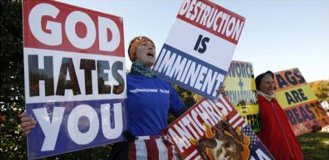
HUAC finally folded in 1975. We haven’t had anything quite like it, or the Army-McCarthy hearings, since.8 Which doesn’t disappoint me one bit.
These days, trigger words and phrases like “Communist” and “national security” don’t get the response — and broad support — they used to. Which, again, doesn’t disappoint me.
Now we’ve got new trigger words and phrases: like “racist” and “inclusive”. This, I’m not too thrilled about.
What’s been happening lately isn’t “McCarthyism”, and I’m pretty sure folks who want “racist” political cartoons banned feel that they’re protecting us. But I’m no great fan of “cancel culture”.
“Cancel culture is a phrase contemporary to the late 2010s and early 2020s used to refer to a culture in which those who are deemed to have acted or spoken in an unacceptable manner are ostracized, boycotted, or shunned. The term ‘cancel culture’ is predominantly used when these responses are to right-wing actions or speech, but is rare when the responses are to left-wing actions or speech….” (Cancel culture, Wikipedia) [emphasis mine]
Interestingly, Pope Francis doesn’t approve of “cancel culture” either:
“…As a result, agendas are increasingly dictated by a mindset that rejects the natural foundations of humanity and the cultural roots that constitute the identity of many peoples. As I have stated on other occasions, I consider this a form of ideological colonization, one that leaves no room for freedom of expression and is now taking the form of the ‘cancel culture’ invading many circles and public institutions. Under the guise of defending diversity, it ends up cancelling all sense of identity, with the risk of silencing positions that defend a respectful and balanced understanding of various sensibilities. A kind of dangerous ‘one-track thinking’ [pensée unique] is taking shape, one constrained to deny history or, worse yet, to rewrite it in terms of present-day categories, whereas any historical situation must be interpreted in the light of a hermeneutics of that particular time, not that of today….” (To the Diplomatic Corps accredited to the Holy See, Pope Francis (January 10, 2022)) [emphasis mine]
What’s funny, or sad, or both, is that folks who were on the McCarthy bandwagon and those who now strive to suppress ideas which aren’t theirs, may sincerely believe that what they’re doing is right.
(Only) Free to Agree With Me is Not Freedom
Self-appointed defenders of freedom, caricatured in the Washington Post. (1947-1954)
“Free to agree with me is not freedom” has been a catchphrase of mine.
I knew what I meant, so I didn’t realize how ambiguous it was. Maybe “murky” would be a better word.
Anyway, after some thought I decided that “only free to agree with me” is closer to what I have in mind.
Freedom has been a big deal in my country from day one.
“…In every stage of these Oppressions We have Petitioned for Redress in the most humble terms: Our repeated Petitions have been answered only by repeated injury. A Prince whose character is thus marked by every act which may define a Tyrant, is unfit to be the ruler of a free people….” (Declaration of Independence: A Transcription — America’s Founding Documents, National Archives)
It didn’t take long to realize that our freedoms needed to be spelled out.
“…Article the third… Congress shall make no law respecting an establishment of religion, or prohibiting the free exercise thereof; or abridging the freedom of speech, or of the press; or the right of the people peaceably to assemble, and to petition the Government for a redress of grievances….” (The Bill of Rights: A Transcription — America’s Founding Documents, National Archives)
It’s been an ongoing process. Partly because folks who influence or control key parts of government, media, education and other institutions, can forget that folks like me aren’t the enemy. My opinion.
That’s not an elegant way of expressing the idea; but it’s late, and I’m in a hurry.
Let’s take a hypothetical situation, imagining that by some freakish violation of probability, I became editor-in-chief of Liberty’s Blinding Light — a thoroughly fictional newspaper, part of the equally-fictional TDNN news corporation.
No. Even for me, that’s too hypothetical.
I am profoundly not corporate executive material.
The point I was groping for was that seeing ‘not mine’ opinions as subversive or otherwise [trigger word] can be easy.
Particularly for someone with sincerely-held opinions, who has lived among like-minded folks most of his or her life.
I’ve got sincerely-held opinions, lots of them. Some more important to me than others.
But I grew up in the 1960s. If folks who had been leaning toward McCarthyism’s views had made more sense, I might have taken them more seriously. But they didn’t. Neither did many of those who became supporters of today’s Establishment.9
“Leaves of Grass”, Underground Comix, and “Banned in Boston”
As it was, I remember when “banned in Boston” still mattered.
As something other than incentive for folks to go see what had upset the Boston Brahmins this time, that is.
On the other hand, I can sympathize with tight-collar folks. Sometimes I even think they’ve got a point.
But I’m not even close to thinking that celebrating Christmas is “Satanical”.
“The Obferation of Christmas having been deemed a Sacrilege, the exchanging of Gifts and Greetings, dreffing in Fine Clothing, Feafting and similar Satanical Practices are hereby FORBIDDEN” (Public notice deeming Christmas illegal. Boston (1659))
I’ve also not been filled with holy zeal and an urge to burn copies of Walt Whitman’s “Leaves of Grass”. Although, again, I can see why someone might, back in the ‘good old days’ of the 1850s.
A big, make that huge, problem I see with ham-handed suppression of [trigger word] opinions and ideas is that folks who hold them don’t always stay suppressed.
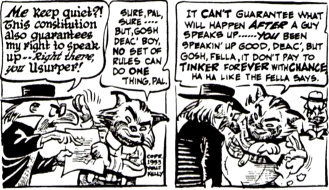
Underground comix, for example, still aren’t exactly mainstream.10
But they did, I think, encourage folks who had been willing to try something — almost anything — other than the ‘God agrees with me’ version of patriotism and ‘buy stuff you don’t need with money you don’t have to impress folks you don’t like’ notion of “success”.
Bottom line: opinions and ideas that make sense will, eventually, slip past the censors.
So will those that don’t make sense.
I prefer not being protected from [trigger word] cartoons. Not even those created by a cartoonist who went from national syndication to off-the-radar in a matter of days. As far as I can tell.
And that’s — actually, that’s not another topic, but it’s all I have time for this week.
michaelpramirez.com (November 15, 2023, “The connection has timed out / The server at michaelpramirez.com is taking too long to respond.” — November 17, 2023, Michael P. Ramiraz’s site was accessible. And [unrepentant??].)
“…The idea of ‘Dark Age medicine’ is a useful narrative when it comes to ingrained beliefs about medical progress. It is a period that stands as the abyss from which more enlightened thinkers freed themselves. But recent research pushes back against the depiction of the early Middle Ages as ignorant and superstitious, arguing that there is a consistency and rationality to healing practices at that time.
“As a historian of this period, which spanned roughly from 400 to 1000, I make sense of how the societies that produced vulture medicine envisioned it as one component of a much broader array of legitimate therapies. In order to recognize ‘progress’ in Dark Age medicine, it is essential to see the broader patterns that led a medieval scribe to copy out a set of recipes using vulture organs.
“The major innovation of the age was the articulation of a medical philosophy that validated manipulating the physical world because it was a religious duty to rationally guard the body’s health.…
“…Most intellectual activities in Northern Europe were taking place within monasteries, where the majority of surviving medical writings from that time were written, read, discussed and likely put into practice. Scholars have assumed that religious superstition overwhelmed scientific impulse and the church dictated what constituted legitimate healing—namely, prayer, anointing with holy oil, miracles of the saints and penance for sin.
“But ‘human medicine’—a term affirming human agency in discovering remedies from nature—emerged in the Dark Ages. It appears again and again in a text that monks at the monastery in Lorsch, Germany, wrote around the year 800 to defend ancient Greek medical learning. It insists that Hippocratic medicine was mandated by God and that doctors act as divine agents in promoting health. I argue in my recent book, ‘Embodying the Soul: Medicine and Religion in Carolingian Europe’, that a major innovation of that time was the creative synthesis of Christian orthodoxy with a growing belief in the importance of preventing disease.…” [emphasis mine]
The “recent research” Meg Leja mentions is:
“What’s Wrong with Early Medieval Medicine?“ Peregrine Horden, Department of History, Royal Holloway University of London; Social History of Medicine, Volume 24, Issue 1, April 2011, Pages 5–25 (published November 3, 2009)
Respecting Ancient Authorities: Above and Beyond the Call of Reason
About post-Roman Europe, very briefly.
Back then, folks lacked the economic, legal and infrastructure advantages of being in the Roman Empire, or near its border.
Along with pretty much everyone else, Medieval Europe’s monasteries were self-sufficient. They grew their own food and provided their own medical care.
They also served as hospitals for nearby communities.
And they were centers of learning.
Monks and nuns translated and expanded old medical texts, often reorganizing the documents. They added tables of contents, removed useless information, and added results from their own research and practical experience.
Then the Renaissance happened.
By the 14th century, medical research had shifted from monasteries to outfits like the Paris Medical Faculty.
Parisian and other secular doctors of the 14th century apparently respected ancient medical texts. Maybe a little too much.
Their notion of “medical research” was coping large sections of treatises by folks like Hippocrates, Galen and Aesculapius.
Adding, changing, or removing nothing.
Then they’d apply the ancient philosophers’ medical procedures exactly, unsullied by monastic research.
I’ve talked about this, and the Saeculum Obscurum — a really rough patch in Church history — before, and probably will again. But that’s not what I’m doing for this week’s ‘Saturday’ post.
Finally, like I said, it’s nice to know that historians are reconsidering the Enlightenment spin on Europe’s “Dark Ages”.1
“Chagall Window”, a Dag Hammarskjöld memorial: free-standing stained glass. (1963-1964)
105 years ago, a bunch of VIPs signed off on stopping the debacle we call World War I.
The November 11, 1918, armistice was a very big deal at the time; and still is. Although for different reasons.
Here in the United states, we called November 11 Armistice Day until 1954. Then it was re-named Veterans Day. It’s related to Remembrance/Poppy Day and Volkstrauertag.1
Veterans Day was and is a time to remember and honor all who have served in my country’s armed forces.
That strikes me as a good idea.
So does remembering why serving in our armed forces has been and remains necessary. And is necessary for any country whose leaders think the lives of citizens matter.
Still Learning
I’d prefer saying that humanity has finally learned that killing our neighbors is a bad idea and we shouldn’t do it.
But my news feed tells me that we haven’t all gotten the memo.
I think it’d be dandy, if politely asking armed thugs and their rulers to please stop killing and kidnapping — would stop those activities in places like Ukraine and Israel.
What would be dandy isn’t always possible.
Sometimes armed thugs ignore polite requests.
I talked about double effect, legitimate defense, and what St. Thomas Aquinas said, a couple weeks back.2
Wishes, Death at a Music Festival, Consequences
As long as I’m playing “I wish”, and since we live in a world where Gaza’s rulers decided that killing and kidnapping Jews was vital to their holy war against the (perceived) corrupters of Islam — Uff da. You can’t make this stuff up.
Anyway, we live in a non-ideal world.
So wishing that Gaza’s rulers had decided that killing Jews wasn’t nice — would be a nice thing to wish, but wouldn’t unkill those folks who’d committed the sin of being at a music festival.
Neither would wishing that Hamas isn’t continuing their allegedly-holy war, while using their subjects as a little extra protection for their shelters.
Can’t say that I blame them. The way things are, they can count on sympathy and headlines, whenever their subjects learn that living on top of their rulers’ shelters can have unpleasant consequences.3
“…Somethin’ to Say….”
“…Somethin’ to say on the eleventh day of November.” Walt Kelly’s Pogo. (November 11, 1953)
Porky Pine had a point. If I’m going to say something on the eleventh day of November, I should give it some thought. Maybe not spending a whole year in the process.
Anyway, I came up with two quotes: one about serving in a country’s armed forces, another what Lincoln said about human nature.
First, by way of recognizing and thanking those who have served in this country’s military:
“…Those who are sworn to serve their country in the armed forces are servants of the security and freedom of nations. If they carry out their duty honorably, they truly contribute to the common good of the nation and the maintenance of peace.” (Catechism of the Catholic Church, 2265, 2310)
Finally, something to think about.
The usual sound and fury of my country’s presidential election is already in progress.
There’s nothing I can do about that. But I can suggest that there is some wisdom in remembering that this isn’t our first election cycle. And, despite the impression left by headlines and sound bites, it’s probably not our last.
I think Abraham Lincoln made sense in a short speech he made, after winning a second term as president in 1864.
This was during the American Civil War, our only internal war so far:4 and something I sincerely hope we don’t go through again.
“…The strife of the election is but human nature practically applied to the facts of the case. What has occurred in this case must ever recur in similar cases. Human nature will not change. In any future great national trial, compared with the men of this, we will have as weak and as strong, as silly and as wise, as bad and as good. Let us, therefore, study the incidents of this as philosophy to learn wisdom from, and none of them as wrongs to be revenged….” (“On Democratic Government“; Response to a Serenade, November 10, 1864; Abraham Lincoln (November 10, 1864) via Project Gutenberg) [emphasis mine]
I’ve seen no indication that we’ve gotten any more silly or wise over the half-century or so since I started paying attention.
But I have noticed that we can learn.
We don’t have to.
We’ve got free will, so running around a familiar squirrel cage is an option.
Or we can, each of us, think about what’s happening, and what has happened before — and seriously consider not making the same mistakes again.
It’s not easy, but I think it’s a good idea anyway:
Keep up with A Catholic Citizen in America: subscribe. (below) (Don't worry, I won't bug you. Check out my Privacy Policy.)
Weekly Schedule
Something new each Saturday.
Life, the universe and my circumstances permitting. I'm focusing on 'family stories' at the moment. ("A Change of Pace: Family Stories" (11/23/2024))
Blog - David Torkington
Spiritual theologian, author and speaker, specializing in prayer, Christian spirituality and mystical theology [the kind that makes sense-BHG]
I was born in 1951. I'm a husband, father and grandfather. One of the kids graduated from college in December, 2008, and is helping her husband run businesses and raise my granddaughter; another is a cartoonist and artist; #3 daughter is a writer; my son is developing a digital game with #3 and #1 daughters. I'm also a writer and artist.



 …Abram left Ur, changing his name to Abraham. He had two sons: Ishmael and Isaac.
 Then there’s Judith, who walked into an Assyrian siege camp with her maid, talked her way into the general’s quarters, and removed the general’s head.
 Since I’m human, I have within me an ember of the fire that forged the universe. We all do.
 “Sins?” I’d better clarify that.





 Apart, that is, from adding the usual links: