Georgia O’Keefe painted “New York Street with Moon” on 47th Street in Manhattan.
That’s been what art critics, scholars and reporters have been saying for decades.
Except for one, in an article in Sky and Telescope’s most recent issue.
Astrophysicist and forensic astronomer at the Texas State University Donald W. Olson says that he got together with some colleagues and found evidence that Georgia O’Keefe’s painted “New York City with Moon” at the corner of Vanderbilt and 48th Street East.1
And that the scene is what she saw on the night of January 9th, 1925. After having been filtered through the artist’s imagination and her Precisionist style.
So how come folks in the art field say the painting shows a scene on 47th Street?
For one thing, that’s what Georgia O’Keefe wrote in 1976, a half-century later:
“…I began talking about trying to paint New York. Of course, I was told that it was an impossible idea — even the men hadn’t done too well with it. From my teens on I had been told that I had crazy notions so I was accustomed to disagreement and went on with my idea of painting New York.
“My first painting was a night scene of 47th Street, ‘New York with Moon.’ There was a street light in the upper foreground at about the Chatham Hotel … five of us [five painters, along with two photographers] had a group show on the top floor of the Anderson Galleries. My large flowers were shown for the first time. At the end of the hall just outside the door of the elevator to go toward the show. But the ‘New York’ wasn’t hung — much to my disappointment.
“The next year Stieglitz had a small corner room at the Anderson Galleries. There were three large windows. As you entered you saw my first ‘New York’ between two windows … My large ‘New York’ was sold the first afternoon. No one ever objected to my painting New York after that.” (“Georgia O’Keeffe,” Georgia O’Keeffe, 1976: text accompanying catalogues 17 and 18. Via Sky and Telescope (January 2023 issue) [emphasis mine])
There’s a lot going on there, but today I’ll stick mostly to the ‘Case of the New York Moon’s Street’ mystery.
‘You Can’t Paint New York City?!’
Hotel Chatham and Colegiate Church of St. Nicholas on East 48th, New York City. (1927)
O’Keeffe’s painting isn’t photorealistic.
But her version of the Precisionism style gave us several identifiable objects: a Bishop’s Crook lamppost, the moon, clouds and a church steeple.
The pattern and opacity of the clouds suggests that they’re the altocumulus variety: according to Olson, at least, and I think he’s right.
The moon is riding high in the sky, which it would in the winter.
We know that O’Keeffe painted “New York Street with Moon” before Alfred Stieglitz’s Seven Americans exhibition
That exhibition had opened at Manhattan’s Anderson Galleries on March 9, 1925; and hadn’t included “New York Street….”
Normally, a painting’s absence from an exhibition wouldn’t be proof that it existed. But in this case, I gather that O’Keeffe left us written records of her frustration at its absence.
And that she’d wanted “New York Street…” included, but her husband didn’t.
Because at the time, everybody knew that nobody could paint New York City. Anyway, men artists had said nobody could paint New York City and if they couldn’t, a woman artist certainly couldn’t.
I know.
But let’s remember: this was 1925. “Roaring Twenties” or not, Western culture in general and American culture in particular were on very steep learning curves.2
‘She’s smart as a man’ was still supposed to be a compliment in my youth, and that’s another topic.
The good news, as I see it, was that O’Keeffe could not only get that scene painted; but convince the guys that showing it was okay. And only a year after her husband balked.
Now, back to the ‘Case of the New York Street and Moon’ mystery.
A Street Corner That’s Not There Any More
New York City’s East 48th, near where Vanderbilt Avenue used to be. (November 2022)
O’Keeffe said her painting showed “…a street light in the upper foreground at about the Chatham Hotel.” And she’d included enough detail to show it was one of New York City’s Bishop’s Crook designs, intended for narrow streets.
She’d also said, a half-century after creating “New York Street With Moon,” that she’d been on 47th street.
Just one problem with that. The Hotel Chatham was on East 48th Street, not East 47th. And there wasn’t a church with a steeple like the one she’d painted down the street from the Chatham.
There had, however, been one on East 48th: the Collegiate Church of St. Nicholas.
It’s not there any more, and neither is the 48th Street Hotel Chatham.
Hotel Chathams, on the other hand, seem to be alive and well and pretty much everywhere folks want to spend money.
The St. Nicholas church had been built between 1869 and 1872, and wasn’t torn down until 1949. The church had been known for “its towering 265-foot-high steeple.”3
Remembering Details, Some Details
A photo of the Collegiate Church of St. Nicholas is a pretty good match for one O’Keeffe’s painted: the spire, that is.
Olson put a great deal more detail into his Sky and Telescope article. Including weather reports for late 1924 and early 1925: which, combined with information from published O’Keeffe correspondence, narrows the painting’s inspiration down to the night of one full moon.
According to Olson, that is. I expect that art experts, scholars and fans will either look at the data he’s presented: or not.
Meanwhile, I’m hoping that the magazine will add his “The Night Skies of Georgia O’Keeffe” to their website: but the article’s in their current issue, and I’m drifting off-topic again.
Bottom line? I think Georgia O’Keeffe remembered the building and street light that had been front and center when she began painting “New York City with Moon.” And that at the time she wasn’t obsessing over street numbers.
That she got the street number almost right — off by only one integer — a half-century later: that’s doing pretty well.
Bear in mind that I’m an artist, too; albeit an amateur, unless you count doing promotional graphic design.
And remembering whether the Foshay Tower was at the corner of Marquette and 9th or Marquette and 10th4 when I took a photo of it in 1971? I’d be lucky to remember the Marquette Avenue part.
Finally, finally about the painting that is, my oldest daughter’s observation suggests that “New York City with Moon” made a lasting impact on our culture. Pop culture, at any rate:
“Looks a lot like the art style for Batman: The Animated Series’s opening credits.” (N. M. Gill, during chat on Discord. (November 24, 2022))
Bishop’s Crook Street Lights? Bishops Crook Street Lights?
A Bishop’s Crook street light in New York City.
I virtually visited East 48th Street and Vanderbilt Avenue in New York City this week, using Google Maps.
Seems that Vanderbilt Avenue doesn’t cross East 48th any more. I suppose the folks in charge decided that getting more room for buildings was more important that keeping that particular section of street open.
But Bishop’s Crook street lights are back in New York City:
The Bishops Crook was the first of a number of decorative street lights to be introduced as early as 1900 on narrow city streets. Bracket versions of the Bishops Crook were also attached to the facades of buildings. The reproduction of the Bishops Crook was introduced in 1980 at Madison Avenue and 50th Street outside the Helmsley Palace Hotel (now the New York Palace Hotel). (Bishops Crook Pole, New York City Street Design Manual)
Bishop’s Crook street lights, the name comes from their resemblance to a Bishop’s crosier, aren’t unique to New York City.
I found mentions of their use in University of Georgia and University of Vermont archives. And learned that New York City’s new ones have LEDs.5
There’s probably more Bishop’s Crook street light lore out there. Maybe you can find it.
I don’t know why Olson used the possessive form, Bishop’s Crook; and New York City’s Street Design Manual uses the plural, Bishops Crook. Or, for that matter, whether or not that’s something worth the time it’d take to get an answer.
I’ve been distracted this week, so instead of wandering off into the stories of 20th century American art, why I don’t miss the ‘good old days,’ and discussions of street lighting from assorted viewpoints — I’ll admit to myself that I’ve run out of time.
And, of course, add the usual links to more stuff; starting with what I’ve written.
And, not-so-usually, show a selection of headings in my posts. That way, you can guess what they’ll be about.
“My Church in Sauk Centre, Minnesota: Vandalized“ (This Could Have Been Much Worse / Justice and Statues, Saints and Art / Repairing Harm Done: When Possible / Wow! The Wheelchair’s Still Intact! — or — Unknown Motives / EEEK! Catholics!!! — or — Acting Like Love Matters, Anyway) (September 24, 2022)
“Opulence in Miniature: Coleen Moore’s Fairy Castle“ (“…The Space Inside Your Mind….” / Designing an Enchanted Castle / The 13th Room / Science, Technology, Priorities and a Video) (February 26, 2022)
“Faustus: Good Angel, Bad Angel, Parma and Politics“ (Faustian Grapes and Groceries / Angels, Real and Imagined / Cherubim, Putti, Space-Time and Language / Good Angel, Bad Angel: Dichotomous Duos, Dramatic Dialog and Comic Relief) (January 29, 2022)
1 An astronomer, an artist, a painting and a magazine:
“The Night Skies of Georgia O’Keeffe” Donald W. Olson, Sky and Telescope (January 2023 issue)
“New York Street with Moon“ Georgia O’Keeffe (1925) Oil on canvas. 122 x 77 cm. Carmen Thyssen Collection, Inv. no. (CTB.1981.76), Room J, Museo Nacional Thyssen-Bornemisza Madrid
“New York Street with Moon“ www.GeorgiaOKeeffe.org (“a personal website covering the career of famous American painter Georgia O’Keeffe, … [not] an official website….”)
It’s Thanksgiving Day, here in America. This year I’ll be talking about the Two Turkeys: and reviewing their last few years.
Well, I hope these aren’t their last few years. Let’s say their most recent years.
Yes, that’s much better.
2010: The Saga Begins
The Two Turkeys began their epic struggle with these defiant words: “You’ll never take us alive!”
The year was 2010.
The month was November, shortly before Thanksgiving.
The place: unknown, possibly a turkey farm in the vicinity of Loonfoot Falls: a legendary, and imaginary, town based very loosely on Fergus Falls, Sauk Centre and other central Minnesota towns.
That’s very loosely. In addition to possibly being near the origin point of two talking turkeys, I’ve discovered that Loonfoot Falls is home to Apathetic Lemming of the North. I’ll refer to him as ALN hereafter. For today, at least.
One of these days, I may find and organize every snapshot featuring the Two Turkeys.
But today all I managed to find were those from 2015 to the present, and their enigmatic original image. Sounds cool, describing it that way, doesn’t it? 😉
2015: The Two Turkeys and Organic Soy Husks
This picture hasn’t appeared before in A Catholic Citizen in America. This was their last effort to convince the American public that products like Rainbow Acres Organic Soy Husks would make the holidays better for everyone.
2016: Two Troubled Turkeys
I’m still not sure what happened, or where the Two Turkeys ended up.
2017: Traveling on the Halloween Express
I’m also not sure how, when or where they boarded the Halloween Express. My guess is that it was shortly after 2017’s Halloween.
2017: The Two Turkeys Arrive in Loonfoot Falls
ALN’s question is, I think, reasonable. Particularly considering that he apparently agreed to shelter the Two Turkeys, at least for the 2017 Thanksgiving season.
2021: A Slip of the Tongue
For all I know, the Two Turkeys have been staying with ALN since 2017.
One of the them seems blissfully unaware of their peril. He’s nowhere near as serious as his counterpart, at least. Which very likely explains the other Turkey’s occasional expressions of exasperation.
Try saying that five times, fast!
2022: Up, Up and Away in a Turkey-Filled Balloon
And that brings me up to this year’s Thanksgiving/Christmas holiday season.
How the Two Turkeys got in that balloon, and where they’ll land, I have no idea.
But I’m back on track with Thanksgiving pictures and the Two Turkeys. And glad to be there. Or should that be glad to be here? At any rate —
That gap, from 2018 to 2020, wasn’t the most creative or pleasant period of my life; possibly due in part to pandemic angst.
(Almost) finally, a word about ALN. Apathetic Lemming of the North was the mascot for a blog of the same name, back when I was using Blogger as my hosting service. He’s that anthropomorphic oversize ‘lemming’ in the 2017 and 2020 Two Turkeys pictures.
I’ve been thinking about bringing him back in some capacity for A Catholic Citizen in America, but haven’t gotten past the ‘this sounds like fun’ stage.
And (really) finally, the usual links to more stuff. This time with a short(ish) description of each post:
It’s been a while since I talked about what I’m doing here and why I’m doing it.
And even longer since I talked about Nancy H. C. Ward’s “Sharing Your Catholic Faith Story: Tools, Tips, and Testimonies.”
The book’s a big deal for me. It’s the first time since I wrote for the Red River Valley Historical Society’s Heritage Press that I’ve had an in-print byline. More to the point, as Lisa Hendey said, it’s “an enjoyable template for the challenge of evangelization.”
So today I’ll talk about social media, evangelization, science, history, art, “Sharing Your Catholic Faith Story” and why I post something here weekly. Not necessarily in that order.
First off, I’m a Christian, so being evangelical is part of my job. Both ideas, very likely, need explanation.
Billy Sunday, preaching something fierce in Philadelphia. (March 1905)
I’m a Christian, a Catholic Christian: which isn’t an oxymoron.
I’m a Christian because I acknowledge Jesus of Nazareth as my Lord and Savior. (Catechism of the Catholic Church, 430-451, 587-591, 599-618, 1811, and more)
I’m a Catholic because I learned who currently holds the authority our Lord gave Peter. (Matthew 16:13–19)
I’m evangelical because sharing the best news humanity’s ever hand with anyone who will listen is part of being Catholic. (Matthew 22:18–20; Acts 1:8; Catechism, 898-907)
But I’m not “an Evangelical” because, well, I’m a Catholic. I rely on Jesus of Nazareth for my salvation, and don’t think I know more than the Magisterium.1 Besides, as I discussed in Becoming a Catholic, I learned who’s holding our Lord’s authority.
I’m “evangelical,” lower-case “e,” because I’m a Christian who takes both Sacred Scripture and millennia of accumulated wisdom seriously.
Good News and Making Sense
The best news humanity’s ever had is that Jesus is God’s Son, and saved us by reconciling us with God. (Catechism, 124, 430-451, 456-478, 1002-1004)
If I’m going to share that news, and have it make sense, then I’d better get my thoughts organized beforehand. This isn’t a situation where I’d feel comfortable winging it.
And that brings me to 1 Peter 3:15-16, a couple verses Nancy H. C. Ward quotes in “Sharing Your Catholic Faith Story.”
I think putting quotes in context is a good idea, so here’s a slightly extended excerpt.
“Now who is going to harm you if you are enthusiastic for what is good? “But even if you should suffer because of righteousness, blessed are you. Do not be afraid or terrified with fear of them, “but sanctify Christ as Lord in your hearts. Always be ready to give an explanation to anyone who asks you for a reason for your hope, “but do it with gentleness and reverence, keeping your conscience clear, so that, when you are maligned, those who defame your good conduct in Christ may themselves be put to shame.” (1 Peter 3:13–16) [emphasis mine]
It’s from the bit where Peter talks about living like a Christian. Even if it’s awkward.
Happily, I haven’t had to be particularly heroic about being a Christian and a Catholic. And that’s fine by me.
Imitating folks like Thomas More is a fast track to Sainthood. But it’s also quite unpleasant, in the short run.2
“By Word and Testimony of Life”
Evangelization is part of being a Christian. But just what is “evangelization?”
For starters, it’s not combing my hair back, going on television and then having trouble with zipper and wallet issues.
The televangelist meltdown in the late 1980s didn’t help Americans take Christianity seriously.
And I’m drifting off-topic. Or maybe not.
Briefly, evangelization is “the proclamation of Christ and his gospel….”
“EVANGELIZAION: the proclamation of Christ and his gospel (Greek evangelion) by word and the testimony of life, in fulfillment of Christ’s command (905 cf 861). “ (Catechism of the Catholic Church, Glossary)
That phrase “the testimony of life,” gives me many options. Some good, some as prudent as the CFIT (controlled flight into terrain) courses taken by some televangelists.3
Options and Opportunities
A lesson from faith-based fiascos is not, I think, that religion is a scam.
Or that it makes people do bad things. Or is just plain crazy. Although I’ll freely grant that sometimes craziness or evil has a religious theme. And/or a political one.
And I’m quite sure that television, computers, smart phones or any other technology, doesn’t make us do bad things. So I can’t reasonably denounce television or today’s information technology. Not that I’d want to.
Sin, deliberately acting against reason, truth, right conscience and God, is an option because each of us has free will. (Catechism, 386-387, 1440, 1730, 1849-1851, 1853)
Tech can make doing something bad easier, but choosing to do wrong is my decision.
Take information technology and social media, for example.
I could use it as an orifice for spewing whatever rage-inspired screed falls out of my mind.
Or I could try doing something a trifle less futile and self-defeating. Like heading off impulses to act foolishly. And writing about something that caught my attention and that I figure maybe you’d find interesting.
Putting it that way, the decision is a no-brainer. Which is why I see my spot in “the world of social communication” as an opportunity for making sense.
“…Evangelization requires that we pay much attention to the world of social communication, especially the new media, in which many lives, questions and expectations converge. It is the place where consciences are often formed, where people spend their time and live their lives. It is a new opportunity for touching the human heart….” (“Message to the People of God, concluding the 13th Ordinary General Assembly of the Synod of Bishops,” 10; Synod of Bishops (October 26, 2012))
What I make of that opportunity is up to me.
Art and Science, Truth and Beauty, Quotes and Links
Several years back, one of my daughters opined that Catholics doing ‘normal person’ stuff was a good idea.
I thought she was right, and still do. We’d been talking about “Catholic writers” and Catholics who are writers.
If I was a “Catholic writer” I might be writing another ‘lives of the Saints’ book or composing prayers.
Nothing wrong with either of those options.
But I’m a Catholic who is a writer.
I’ve been writing mostly about science and history, along with art and anything else that comes to mind.
I’m about as sure as I can be that this is okay. Bishops discussing “the new evangelization for the transmission of the Christian faith” mentioned why both science and art are basically good ideas.
“…A particular field of the encounter between faith and reason today is the dialogue with scientific knowledge. This is not at all far from faith, since it manifests the spiritual principle that God placed in his creatures. It allows us to see the rational structures on which creation is founded. …
“…We also want to thank men and women involved in another expression of the human genius, art in its various forms, from the most ancient to the most recent. … We are grateful when artists through their beautiful creations bring out the beauty of God’s face and that of his creatures. The way of beauty is a particularly effective path of the new evangelization….” (“Message to the People of God, concluding the 13th Ordinary General Assembly of the Synod of Bishops,” 10; Synod of Bishops (October 26, 2012)) [emphasis mine]
For me, doing ‘normal person stuff’ includes sharing what I’ve noticed about our growing knowledge of this vast, ancient and wonder-packed universe. And talking about what folks were doing, back when — say — Periclean politics were current events.
The science I talk about is real science, by the way: the sort done by scientists. I’ve talked about that before, as well as why I became a Catholic:
Catechism of the Catholic Church talks about art mostly in the context of sacred art: the sort of thing I’d find in chapels or churches. (Catechism, 2500-2503)
A couple more points before moving along.
There’s nothing wrong with art or science. But living for the sake of painting, studying, playing canasta, or whatever? That’s another matter.
“…true happiness is not found in riches or well-being, in human fame or power, or in any human achievement — however beneficial it may be — such as science, technology, and art, or indeed in any creature, but in God alone, the source of every good and of all love….” (Catechism, 1723)
“…art is a distinctively human form of expression; beyond the search for the necessities of life which is common to all living creatures, art is a freely given superabundance of the human being’s inner riches. … Like any other human activity, art is not an absolute end in itself.…” (Catechism, 2501) [emphasis mine]
Top priority is where God belongs. Putting anything or anyone else there is idolatry: and a bad idea. (Catechism, 2112-2114, 2289)
The New Evangelization: a DIY Book
As the title suggests, “Sharing Your Catholic Faith Story” is mostly for folks who are Catholic and looking for a way of telling others why being Catholic makes sense.
The book first discuses what a faith story is and why it matters. Then there’s the ‘tools and tips’ section.
“…Divided into two distinct parts, this book is very well organized and highly accessible. The tools and tips presented in Part I are both sound and inspirational. For example, Ward encourages readers to take up spiritual journaling…” (“Sharing Your Catholic Faith Story: A Guidebook for the New Evangelization,” Julie Vickery (February 13, 2020))
I see the point of spiritual journaling, and think it’s a good idea. But journaling, spiritual or otherwise, is something I haven’t tried since my youth. The experience didn’t encourage me to try again.
On the other hand, my testimony, “The Annoying Lesson of Humanae Vitae” — Ward assigned that title, not me — has the “Three Components of Every Faith Story” described in her book’s Part 1, 6. It outlines who I was before, what God moment or Galilee moment changed me, and who I am now.
About change, Galilee moments and me: I don’t think I’ve changed all that much.
I still insist that what I believe must make sense, no matter how I’m feeling, and think that making decisions based on feelings or impulse is a bad idea. That insistence had unintended consequences.
I did not want to become a Catholic. My father-in-law had warned me that if I kept digging into Church history, I’d learn too much. He was right.
“…Years later, I grudgingly admitted to myself that I had learned who currently held the authority that our Lord gave Peter….” (“Sharing Your Catholic Faith Story,” The Annoying Lesson of Humanae Vitae (Brian Gill), (2019))
I’m pretty sure that you’ll find that the other 29 Testimonies in “Sharing Your Catholic Faith Story” describe more appealing accounts of conversion, reversion and renewal.
You Might Enjoy It
Which is why I think folks who aren’t Catholic might enjoy reading this book.
It’s a look at why more than two dozen different folks became or stayed Catholic. Intentionally.
No two of the 30 Testimonies are alike.
However, we’re not a statistically valid cross-section of Catholics, since all 30 of us are writers. Besides that, we all speak English. And, despite the back cover’s assertion that we’re from “all walks of life,” I’m pretty sure that our native culture(s) is/are nowhere near simple enough to be covered by 30 examples.
Showing How Sharing Our Faith Works: With Examples
I could see problems like self-selection bias as a possible issue with a book like this.
But I don’t.
It’s a sort of DIY evangelization guide, with examples: not a statistical analysis
I figure lack of statistical rigor won’t be a problem. So I’m spared the task of looking up arcane phrases like Bayesian statistics and Berkson’s paradox.4
One more item. Four, actually. A 10-point tips list in “Sharing Your Catholic Faith Story” includes things to not do:
Avoid self-righteousness
Don’t pick apart other people, churches or ministries
Stick to your part of the story
Discretely avoid sordid details
All of which should be obvious, but arguably aren’t. I spot and delete the occasional snarky zinger while writing my stuff, and probably miss others.
Now, a few reviews, and places carrying “Sharing Your Catholic Faith Story” —
Before moving on, a statement or two. Or three. Those are links I found after a quick Google search. Following them or not is up to you. So is your decision about buying this book, borrowing it from a library or a friend, or doing something completely different.
Next, a quick look at social media from Catholic viewpoints. Including mine.
Social Media, Ideas, Attitudes and Me
Levels of Internet censorship and surveillance by country. Pink, pervasive; green, little or no. (2018)
I see the Internet in general and online social media in particular as good news/bad news.
Good news: folks like me can find information faster and in more detail than was possible during my youth. And I can share ideas with a large fraction of folks around the world.
Bad news: same thing.
Which it is depends on who’s talking.
On the whole, I’d prefer living in a country that’s “green” on Jeffrey Ogden’s map: with little or no censorship and/or surveillance. But I’m okay with America being in the next-best category: selective censorship and/or surveillance.
Ideally, there would be no reason for controlling who can find what, and what folks are saying. Also ideally, nobody would run confidence schemes, use ransomware, or try to keep citizens from learning what their country is really doing to a neighbor.
But I keep saying this: we do not live in an ideal world. And I live in a country that was obliged to replace a major metropolitan trade center after those September, 2001 incidents.5
So I realize that letting anyone say anything and communicate with anyone else, without at least keeping an eye on the situation, might have unpleasant consequences.
Freedom of Expression, Labels and Remembering Our Past
I also realize that the folks in charge can user noble-sounding terms like “national security” and “tolerance” as reasons for silencing unwanted ideas.
I remember McCarthyism’s dying gasps and the heyday of political correctness too well to imagine that when the folks in charge say they say are defending freedom, they mean everyone’s freedom. Including those who don’t agree with them.
In large part because I don’t think freedom means “free to agree with me.”
So I’ll take America’s 2014 “enemy of the Internet” status with a grain of salt,6 and hope that we don’t get too protected from naughty ideas.
Living in a Broken Echo Chamber
I think my echo chamber is broken, and that my filter bubble has long since popped.7
That’s no virtue on my part.
I wasn’t a big fan of the establishment back in the 1960s, and have little reason to cheer for the folks who seen equally anxious about their top-dog status today.
My interests pretty much guarantee that I’ll be rubbing elbows with folks near several ends of assorted political and social spectra. Occasionally rubbing elbows, that is. I don’t actively seek out rabid champions of any viewpoint’s crackpot fringe.
That’s one reason I’m not writhing in anguish over the coming American apocalypse, digital disaster or media meltdown — alliteration’s an arguably under-valued rhetorical figure, and that’s another topic.
Anyway, I don’t think we’re doomed.
But I do think that John Grosso had a point when he discussed social media and common sense in the context of pandemic panic and holiday preparations.
“…In March, social media became a place to rally around our first responders and essential workers, to start fun trends and learn how to bake bread or whipped coffee. “But as society realized we were in this for the long haul, our discourse on social media began to deteriorate into partisan bickering at its best and poisonous, threatening rhetoric at its worst. “Catholics are not only not exempt from this, but in my experience, have been some of the worst offenders of it. That coupled with the practice of ‘doomscrolling’ (scrolling before bed obsessively on social media and bracing for bad news), has led many to abandon social media entirely….”
On the other hand, I haven’t noticed any side getting a clear lead in venom-spitting.
I’ve suspected that some Catholics, at least, stay offline or limit their activity to a tight circle of family and friends because they’re metaphorically keeping their heads down.
“…Not … Demonizing the Internet…”
Something like 69,697,000 of America’s 331,893,000 citizens say they’re Catholics. That’s a lot of folks.
We’re not all the same.
And, sadly, some of us are jerks. But some of us aren’t. Many, in my experience.
And some are media professionals. Like members of SIGNIS: AKA World Catholic Association for Communication, a Catholic lay ecclesial movement. Oddly enough, SIGNIS isn’t an acronym. It’s a mix of SIGN and IGNIS: Latin for “fire.”8
“…The digital media revolution of recent decades has proved to be a powerful means of fostering communion and dialogue within our human family…. “At the same time, the use of digital media, especially social media, has raised a number of serious ethical issues…. Sometimes and in some places, media sites have become places of toxicity, hate speech and fake news….” (“Message of the Holy Father to the Participants in the SIGNIS World Congress [Seoul, 15-18 August 2022],” Pope Francis (July 15, 2022)) [emphasis mine]
Pope Francis gave another good news/bad news view of the online world in 2021.
“Opportunities and hidden dangers on the web
“…The internet … can increase the capacity for reporting and sharing, with many more eyes on the world and a constant flood of images and testimonies. … It is a powerful tool, which demands that all of us be responsible as users and consumers…. “At the same time, the risk of misinformation being spread on social media has become evident to everyone…. Being critical in this regard is not about demonizing the internet…. All of us are responsible for the communications we make, for the information we share, for the control that we can exert….” (“Message of His Holiness Pope Francis for the 2021 World Communications Day,” Pope Francis (January 23, 2021)) [emphasis mine]
And so did Pope Benedict XVI in 2013.
“…Dialogue and debate can also flourish and grow when we converse with and take seriously people whose ideas are different from our own. ‘…people need not only to accept the existence of the culture of others, but also to aspire to be enriched by it and to offer to it whatever they possess that is good, true and beautiful’ (Address at the Meeting with the World of Culture, Bélem, Lisbon, 12 May 2010). “The challenge facing social networks is how to be truly inclusive…. The digital environment is not a parallel or purely virtual world, but is part of the daily experience of many people, especially the young. …” (“Message for the 47th World Communications Day,” Pope Benedict XVI (January 24, 2013)) [emphasis mine]
Apart from a couple decades doing marketing for a small publishing house, and a stint as researcher/reporter for a regional historical society, I’ve never been a media professional. Of any sort.
But I can, thanks to a decent Internet connection and living in a country with comparatively — lax?? — online censorship and/or surveillance, do research and share what I find. Along with how I see the facts, opinions and issues in play.
I see that as good news.
I’m also glad that I can share my ideas and opinions without first getting approval of an editorial board or oversight committee.
Even though I am a member of what’s nationally a minority religion. Granted, Catholics are a large minority these days, and maybe not seen as quite so serious a threat as in ‘the good old days.’ Which I don’t miss.
About “approval of an editorial board or oversight committee” — that’s an unlikely but possible situation. It could happen here.
Happily, prior restraint, requiring folks to get permission before sharing information, is a hard sell in America. Although it’s been tried now and again.9
Now What?
I post something on A Catholic Citizen in America every week. Life, the universe and circumstances permitting.
Sometimes it’s obviously “evangelical,” or at least faith-related. That happens more often around seasons like Advent and Lent.
More often, I’m focusing on something else: science news, people and events from humanity’s long and continuing story, or whatever else came to mind that week.
I’ll occasionally talk about how the week’s topics relate to my beliefs. But mostly I figure that if you’re curious, you’ll check out the navigation bar’s About Me or maybe Science AND Religion links.
Maybe that’s not being full-bore ‘evangelical.’ But it’s something I can do, and I hope it’s something you enjoy reading.
As if you hadn’t seen enough already, I put longer versions of some of this week’s excerpts below, along with links to a few “New Evangelization” documents.10
“MAGISTERIUM: The living, teaching office of the Church, whose task it is to give as authentic interpretation of the word of God, whether in its written form (Sacred Scripture), or in the form of Tradition. The Magisterium ensures the Church’s fidelity to the teaching of the Apostles in matters of faith and morals (85, 890, 2033).”
“…The digital media revolution of recent decades has proved to be a powerful means of fostering communion and dialogue within our human family. Indeed, during the months of lockdown due to the pandemic, we saw clearly how digital media could bring us together, not only by disseminating essential information, but also by bridging the loneliness of isolation and, in many cases, uniting whole families and ecclesial communities in prayer and worship. “At the same time, the use of digital media, especially social media, has raised a number of serious ethical issues that call for wise and discerning judgment on the part of communicators and all those concerned with the authenticity and quality of human relationships. Sometimes and in some places, media sites have become places of toxicity, hate speech and fake news.…” (“Message of the Holy Father to the Participants in the SIGNIS World Congress [Seoul, 15-18 August 2022],” Pope Francis (July 15, 2022)) [emphasis mine]
Extended excerpt, 2021 World Communications Day:
“Opportunities and hidden dangers on the web
“The internet, with its countless social media expressions, can increase the capacity for reporting and sharing, with many more eyes on the world and a constant flood of images and testimonies. Digital technology gives us the possibility of timely first-hand information that is often quite useful. We can think of certain emergency situations where the internet was the first to report the news and communicate official notices. It is a powerful tool, which demands that all of us be responsible as users and consumers. Potentially we can all become witnesses to events that otherwise would be overlooked by the traditional media, offer a contribution to society and highlight more stories, including positive ones. Thanks to the internet we have the opportunity to report what we see, what is taking place before our eyes, and to share it with others. “At the same time, the risk of misinformation being spread on social media has become evident to everyone. We have known for some time that news and even images can be easily manipulated, for any number of reasons, at times simply for sheer narcissism. Being critical in this regard is not about demonizing the internet, but is rather an incentive to greater discernment and responsibility for contents both sent and received. All of us are responsible for the communications we make, for the information we share, for the control that we can exert over fake news by exposing it. All of us are to be witnesses of the truth: to go, to see and to share….” (“Message of His Holiness Pope Francis for the 2021 World Communications Day,” Pope Francis (January 23, 2021)) [emphasis mine]
Extended excerpt, 2013 World Communications Day:
“…Dialogue and debate can also flourish and grow when we converse with and take seriously people whose ideas are different from our own. ‘Given the reality of cultural diversity, people need not only to accept the existence of the culture of others, but also to aspire to be enriched by it and to offer to it whatever they possess that is good, true and beautiful’ (Address at the Meeting with the World of Culture, Bélem, Lisbon, 12 May 2010). “The challenge facing social networks is how to be truly inclusive: thus they will benefit from the full participation of believers who desire to share the message of Jesus and the values of human dignity which his teaching promotes. Believers are increasingly aware that, unless the Good News is made known also in the digital world, it may be absent in the experience of many people for whom this existential space is important. The digital environment is not a parallel or purely virtual world, but is part of the daily experience of many people, especially the young. Social networks are the result of human interaction, but for their part they also reshape the dynamics of communication which builds relationships: a considered understanding of this environment is therefore the prerequisite for a significant presence there….” (“Message for the 47th World Communications Day,” Pope Benedict XVI (January 24, 2013)) [emphasis mine]
(Florida National Guard sending water to Hurricane Ian survivors. (October 3, 2022))
Yesterday was Veteran’s Day. In my country, it’s a time to remember folks who have served in America’s military.
Today I’ll talk about why countries have military forces, and why I think it’s a good idea. Even though I don’t like war.
In a nearly-ideal world, the ninth-most populous nation’s leader would not have his troops invade one of that country’s neighbors, saying that he’s hunting Nazis.
After which the troops kill random civilians, while having mixed success against locals who could shoot back.
It sounds like the plot for an edgy comedy.
Maybe someone’s already writing a screenplay for “The Fearless Nazi Killers.”
Depending on the producers, it might be an over-the-top comedy. Or a dead-serious propaganda film for Mother Russia.
But, as I keep saying, we don’t live in an ideal world. Or even a nearly-ideal one.
Wars have been going on for decades in places like Afghanistan, Colombia, Jammu and Kashmir, Myanmar, and Papua.
Then there’s the “Mexican drug war.”1 Whether it’s technically a “war,” that I don’t know.
Again, I don’t like war. It breaks things and kills people.
But I’d make a terrible pacifist, since I realize that sometimes war is not the worst option.
This may take a little explaining.
Societal Mores and a Tin Soldier
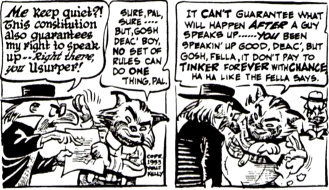
Excerpt from ‘Mamma’s Girls:’ Islam, Catholicism and other Satanic plots. (2012)
My teen years and the 1960s overlap.
I wasn’t the craziest of ‘those crazy kids,’ but I wasn’t a great fan of that era’s establishment, either. On the other hand, I wasn’t conventionally unconventional.
Despite ample opportunities for jumping on assorted pacifist bandwagons, and a growing contempt for those who apparently believed that God agreed with them about rock music, Catholicism, communism and other Satanic plots — I somehow realized that the Indochina involvement was not the only armed conflict in humanity’s long story.2
I also became thoroughly fed up with what looked like societal mores:
“…Go ahead and hate your neighbor, Go ahead and cheat a friend. Do it in the name of heaven, You can justify it in the end….” (“One Tin Soldier,” Dennis Lambert, Brian Potter. (first recorded 1969 by The Original Caste))
Happily, I realized that there was more to religion than my area’s frothing radio preachers, kept trying to make sense of faith and life: and eventually became a Catholic. And that’s another topic.
Now, about doing something “in the name of heaven” and justifying it “in the end.”
Even if I really believe that doing something bad will produce good results, ‘I meant well’ doesn’t make intrinsically disordered behavior okay: “…The end does not justify the means….” (Catechism of the Catholic Church, 1753)
Conscience and Conflict
New York City’s Word Trade Center rubble and fires after the 9/11 attack. (September 14, 2001)
Another point or two, before I wade into the whys and wherefores of valuing human life, but not thinking that we should beat our swords into plowshares. Not all of them, at any rate, and certainly not now.
First, what I mean by “pacifist” in today’s context:
“A pacifist is someone who believes that violence is wrong and refuses to take part in wars.” (Collins English Dictionary)
“A person who believes in pacifism or is opposed to war or to violence of any kind.” (Dictionary.com)
That’s a narrow definition. But I figure some folks are “pacifists” in that sense.
Finally, before talking about plowshares and principles, how I see conscience and conflict.
Some folks sincerely believe that they must not bear arms. For this reason, authorities should respect their conscience and not force them into fights. But conscientious objectors should still serve the human community. (Catechism, 2311)
Again, I’d make a terrible pacifist, since I don’t think that military force is always wrong.
But I appreciate sincerely dedicated pacifists. And I think they will prosper: as long as there are non-pacifists protecting them.
Living in a Less-Than-Ideal World
Vietnam Veterans Memorial, Washington Monument.
“He shall judge between the nations, and set terms for many peoples. They shall beat their swords into plowshares and their spears into pruning hooks; One nation shall not raise the sword against another, nor shall they train for war again.” (Isaiah 2:4)
I think Isaiah had the right idea. And that he was talking about conditions “in days to come,” when the mess we’re in has been sorted out. Beating swords into plowshares and spears into pruning hooks, metaphorically, is a good idea. But we’re not there yet.
And meanwhile, we’re living in a less-than-ideal world.
On the ‘up’ side, the rules I should live by are simple.
That’s it: love God, love my neighbor. Those two rules are “…the whole law and the prophets….” (Matthew 22:40)
It’s simple, and very hard to do. But it’s still a good idea.
Explaining how ‘love God, love my neighbor’ applies to living in today’s world gets a tad complicated.
Staying Alive, or Not
Bodies on a Bucha street: during and after Russian occupation. (BBC News (April 11, 2022))
Human life is precious. Every person’s life. Each person’s life. That’s because human life is sacred. We’re made “in the image of God.” (Genesis 1:27; Catechism, 2258, 2261, 2268-2283, 2319)
Each of us has equal dignity. No matter where we live or how we act. Respecting “the transcendent dignity of man” may be hard, but it’s part of my faith. So is doing what’s good while avoiding what’s evil. (Catechism, 360, 1700-1706, 1928-1942)
Here’s where it gets complicated.
Everyone’s life matters. But some of us don’t act as if everyone’s life matters.
Everyone’s life matters, anyway. Including mine. So valuing my own life is a good idea.
But suppose someone is trying to kill me? That person’s life matters, too.
I’m a Catholic, so I must value my own life and value my hypothetical attacker’s life.
Maybe I could defend myself by avoiding the attack or stopping it without killing my hypothetical attacker.
But suppose non-lethal prevention isn’t possible? Do I devalue my own life and let myself be killed?
In this hypothetical situation, defending myself is okay. Even if doing so results in my hypothetical attacker’s death. If my intent was defending myself, using the least force possible, and that my attacker’s death was unavoidable in the circumstances. (Catechism, 2258, 2263-2269; “Summa Theologica,” Thomas Aquinas, II-II,64,7)
The same principle applies to groups of people.
Legitimate Defense
Ukrainians, liberated by Russian troops in Bucha, Ukraine. (April 2022)
Avoiding war is a good idea. But sometimes the only other option is letting innocent folks get killed. (Catechism, 1909, 2263-2269, 2307-2317)
This idea of double effect, where preserving my life or the lives of others is an intended result but the death of the attacker is not, is “legitimate defense.” (Catechism, 2263, 2265)
I could slap the “legitimate defense” label on a bad idea.
But that wouldn’t make our idea of double effect a bad idea. Saying ‘I thought he was going to hit me, so I hit him back first’ would be an example of how we’re living with consequences of a really, really bad decision made by the first of us.3
“…Till the War-Drum Throbb’d No Longer….”
My “Some of Us Got Off the Planet in Time” poster. (2016)
I first read this bit of Tennyson during my teens:
“…For I dipt into the future, far as human eye could see, Saw the Vision of the world, and all the wonder that would be….
“…Till the war-drum throbb’d no longer, and the battle-flags were furl’d In the Parliament of man, the Federation of the world.
“There the common sense of most shall hold a fretful realm in awe, And the kindly earth shall slumber, lapt in universal law….” (“Locksley Hall,” Alfred Lord Tennyson (1842) via Cummings Study Guide)
It’s still among my favorite poetic excerpts. Although I’ve developed a deeper appreciation for just how much work is still needed, before we build a close approximation to “the Parliament of man, the Federation of the world.”
And I’ve long since realized that even then, it won’t be an ideal solution. Although I suspect my fictional Otha Sisk may be overly pessimistic.
I’ll wrap up this week’s ‘Discursive Detour’ by looking back at what popes and the Pontifical Council for Justice and Peace said about an idea that I think makes sense. Even though implementing it won’t be easy.
But first, a few places that aren’t war zones.
Occasionally Getting Something Right
Singapore’s Gardens by the Bay. (2019)
“…O beautiful for patriot dream That sees beyond the years Thine alabaster cities gleam Undimmed by human tears!…” (“America the Beautiful,” Katharine Lee Bates, 1911 version, via Wikipedia)
Cities like Kyoto, Singapore. San Francisco and Toronto get on “world’s most livable” 0r “world’s best” lists because they fit some outfit’s criteria.
Some places, like San Francisco and Singapore, show up on more than one list.
“I Left My Heart in San Francisco,” but I realize that the city has problems.
That won’t keep me from appreciating what folks there and elsewhere have gotten right.
Or, for that matter, utopian cities that either didn’t work or never got started.4
Building the Civilization of Love and Peace
California Academy of Sciences, San Francisco, California (2008)
“When the moon is in the Seventh House And Jupiter aligns with Mars Then peace will guide the planets And love will steer the stars… “…Harmony and understanding Sympathy and trust abounding No more falsehoods or derisions Golden living dreams of visions…” (“Aquarius/Let the Sunshine In;” Medly from “Hair;” James Rado, Gerome Ragni; Galt MacDermot (1967))
“You’ve got to be taught to hate and fear You’ve got to be taught from year to year It’s got to be drummed in your dear little ear You’ve got to be carefully taught…” (“You’ve Got to be Carefully Taught,” from “South Pacific” Richard Rodgers, Oscar Hammerstein II (1958))
Curing humanity’s ills will take more than musicals like “South Pacific” and “Hair.” But I see hope in their popularity.
I think many of us are learning that humanity is “us,” not “us and dangerous foreigners.” Granted, some neighbors don’t act neighborly. But I think building the “civilization of love” outlined by popes makes sense anyway.5
Which reminds me. The sort of “love” I’m talking about here isn’t that warm fuzzy feeling I experience when seeing kittens or thinking about my family: sometimes.
Love is an emotion: an attraction to what is good. It can cause desire for that which is good but not here; and encourage hope, seeing a good which is possible but not present. Love is also an act of will: a decision to help another person. (Catechism, 1765-1766)
“LOVE: See Charity”
“CHARITY: The theological virtue by which we love God above all things for his own sake, and our neighbor as ourselves for the love of God. (1822)” (Catechism of the Catholic Church, Glossary)
Like charity, this sort of love is something we do. Not necessarily something we feel. (Catechism, 1766, 1822-1828)
That sort of love doesn’t come easy, at least not to me.
But it’s a good idea. So are values like justice, and acts of charity; along with respecting humanity’s “transcendent dignity.” Working toward a society where justice, charity and respect are the norm starts in me, with an ongoing “inner conversion.” (Catechism, 1886-1889, 1928-1942, 2419-2442)
Like I said, that won’t come easy. But it’s a good idea, anyway.
“…The answer to the fear which darkens human existence at the end of the twentieth century is the common effort to build the civilization of love, founded on the universal values of peace, solidarity, justice, and liberty….” (“To the United Nations Organization,” Pope St. John Paul II (October 5, 1995))
I think building the civilization of love makes sense, even though I think it will take generations, centuries, of hard work, slow progress and momentary disappointments.
More likely, we’ll still be at it millennia from now. Sifting through humanity’s unresolved issues, accumulated over uncounted ages, is a very long-haul project.
But I think Pope St. Paul VI is right. We can do this.
“…Consequently, love is also the loftiest and most noble form of relationship possible between human beings. Love must thus enliven every sector of human life and extend to the international order. Only a humanity in which there reigns the “civilization of love” will be able to enjoy authentic and lasting peace’….”[quoting from “Message for the 2004 World Day of Peace,” Pope St. John Paul II] “Compendium of the Social Doctrine of the Church,” Conclusion, For a Civilization of Love; Pontifical Council for Justice and Peace (2004)
“…As such, dialogue is a privileged means for building the civilization of love and peace that my revered predecessor Pope Paul VI indicated as the ideal to inspire cultural, social, political and economic life in our time. At the beginning of the Third Millennium, it is urgent that the path of dialogue be proposed once again to a world marked by excessive conflict and violence, a world at times discouraged and incapable of seeing signs of hope and peace….” (“Dialog between Cultures for a Civilization of Love and Peace,” Pope St. John Paul II; World Day of Peace (January 1, 2001)
“…Peace is no dream, no utopia, no illusion. Nor is it a labour of Sisyphus. No, Peace can be prolonged and strengthened. Peace can write the finest pages of history, inscribing them not only with the magnificence of power and glory but also with the greater magnificence of human virtue, people’s goodness, collective prosperity, and true civilization: the civilization of love. “Is Peace possible? Yes, it is. It must be. But let us be sincere: Peace, as we have already said, is a duty and is possible, but it is so only with the concourse of many and not easy conditions. We are aware that to discuss the conditions for Peace is a very long and very difficult task.…” (“If You Want Peace, Defend Life,” For the Celebration of the Day of Peace January 1, 1977, Pope St. Paul VI (December 8, 1976) [emphasis mine])
Sin, original sin, and the human tendency to make bad decisions; from a Catholic viewpoint —
“CONCUPISCENCE: Human appetites or desires which remain disordered due to the temporal consequences of original sin, which remain even after Baptism, and which produce an inclination to sin (1264, 1426, 2515).”
“ORIGINAL SIN: The sin by which the first human beings disobeyed the commandment of God, choosing to follow their own will rather than God’s will. As a consequence they lost the grace of original holiness, and became subject to the law of death; sin became universally present in the world. Besides the personal sin of Adam and Eve, original sin describes the fallen state of human nature which affects every person born into the world, and from which Christ, the ‘new Adam,’ came to redeem us (396-412).”
“SIN: An offense against God as well as a fault against reason, truth, and right conscience. Sin is a deliberate thought, word, deed, or omission contrary to the eternal law of God. In judging the gravity of sin, it is customary to distinguish between mortal and venial sins (1849, 1853, 1854).” (Catechism of the Catholic Church, Glossary)
4 Pleasant, but not perfect, places; and two would-be utopias:
A road and village in northern France. (September 1916)
On this day in 1918, World War I finally ended. Officially.
The Armistice of 11 November 1918 wasn’t, apparently, a “surrender.” But it did say that the killing would stop at 11:00 a.m. Paris time on November 11, 1918.
It didn’t, of course. Communications in 1918 weren’t what they are today, and that’s another topic.
But November 11, 1918, was a day when “The War That Will End War” ended.
There was reason to celebrate, at least for the winners.
Folks in England, Belgium, France, the United States, Canada and other countries celebrated Armistice Day for a couple decades after 1918. We still do, although the name and meaning has changed.
I gather that the first Armistice Day celebration kicked off on the evening of November 10, 1919, in Buckingham Palace.
The next day, public Armistice Day events on the Palace grounds included a two-minute silence.
At the time, the idea was commemorating those who had died during the war, and those they left behind.
Time passed. More wars happened.
Now, in my country, November 11th is Veterans Day.1
“…Veterans Day honors all of those who have served the country in war or peace — dead or alive — although it’s largely intended to thank living veterans for their sacrifices….” (“5 Facts to Know About Veterans Day,” Katie Lange, Here’s how you know, U. S. Department of Defense (November 5, 2018))
I think changing the name and purpose of the November 11th observance made sense.
The 1918 armistice was a significant event. But a great deal has happened since then.
The Treaty of Versailles, for example.
It Seemed Like a Good Idea at the Time?
The Versailles Treaty’s massive reparations imposed on Germany, along with strict controls on Germany’s military, local urban and rural police, and forest guards — may have seemed like a good idea at the time.
To the folks in charge of England and France, at any rate.
To this day, some historians are big fans of the Versailles Treaty.
My opinion — seeing what happened after the Weimar Republic tried solving their financial problems with hyperinflation — is that punishing Germany and Germans for losing a war had unintended consequences.
Anyway, the Weimar Constitution’s Article 48 let the chancellor sidestep Germany’s legislature during emergencies. I figure this looked like a good idea at the time, too.
Then, in the early 1930s, a chancellor invoked Article 48. And a little later the second “War That Will End War” took off. Or the second phase of the 20th century’s global war.
That’s arguably why folks in various countries started calling November 11, or a date near that, Remembrance Day. Or Poppy Day.
The United States opted for calling it All Veterans Day, later shortened to Veteran’s Day.
For Poland, November 11 is National Independence Day. That’s because November 11, 1918, is when Poland stopped being divvied up between the German, Austro-Hungarian and Russian empires.2 That, I think, is something the Treaty of Versailles got right.
Changing Attitudes
Urukami Roman Catholic Cathedral, Nagasaki, Memorial service. (November 23, 1945)
A remarkable number of us survived World War II.
An even more remarkable number seem to have learned from the 20th century’s debacles.
Some lessons had already been learned.
Tombs of an unknown soldier or soldiers, for example, go back at least to the 1865 Civil War Unknowns Monument. But now they’re an international phenomenon.
During the 1920s, several countries — including mine — built tombs for unknown soldiers who had been killed in what we now call World War I.
I think this is a big deal, since it’s a break from the tradition of monuments dedicated to war leaders. And focusing instead on the folks who fought their wars.3
“Here rests in honored glory an American soldier known but to God.” (Inscription on The Tomb of the Unknown Soldier‘s west side. (Arlington National Cemetery))
My attitude toward the “honored glory” of America’s Unknowns is that of respect and regret, which doesn’t make me a “hawk” or a “dove.”
I can’t be either a pacifist or sabre-rattling jingoist. And that’s something I’ll talk about tomorrow, in my regular “Saturday” post.
“….But let no nation confuse our perseverance and patience with fear of war or unwillingness to meet our responsibilities. We cannot save ourselves by abandoning those who are associated with us, or rejecting our responsibilities. “In the end, the only way to maintain the peace is to be prepared in the final extreme to fight for our country — and to mean it….” (Remarks by President John F. Kennedy, Veterans Day National Ceremony, Arlington National Cemetery (November 11, 1961) via va.gov)
“…On that day let us solemnly remember the sacrifices of all those who fought so valiantly, on the seas, in the air, and on foreign shores, to preserve our heritage of freedom, and let us reconsecrate ourselves to the task of promoting an enduring peace so that their efforts shall not have been in vain….” (Proclamation 3071; Veterans Day 1954; By the President of the United States of America; Federal Register, Volume 19, Number 198 (October 12, 1954) via va.gov)
Something new each Saturday.
Life, the universe and my circumstances permitting. I'm focusing on 'family stories' at the moment. ("A Change of Pace: Family Stories" (11/23/2024))
Blog - David Torkington
Spiritual theologian, author and speaker, specializing in prayer, Christian spirituality and mystical theology [the kind that makes sense-BHG]
I was born in 1951. I'm a husband, father and grandfather. One of the kids graduated from college in December, 2008, and is helping her husband run businesses and raise my granddaughter; another is a cartoonist and artist; #3 daughter is a writer; my son is developing a digital game with #3 and #1 daughters. I'm also a writer and artist.

 Georgia O’Keefe painted “New York Street with Moon” on 47th Street in Manhattan.
 O’Keeffe’s painting isn’t photorealistic.
 A photo of the Collegiate Church of St. Nicholas is a pretty good match for one O’Keeffe’s painted: the spire, that is.
 I’ve been distracted this week, so instead of wandering off into the stories of 20th century American art, why I don’t miss the ‘good old days,’ and discussions of street lighting from assorted viewpoints — I’ll admit to myself that I’ve run out of time.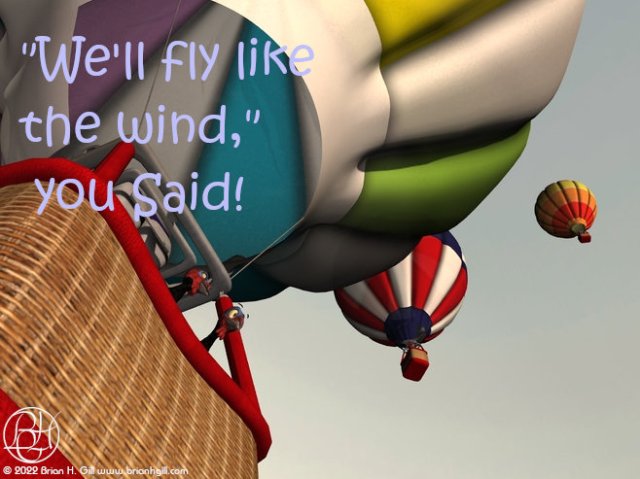
 The Two Turkeys began their epic struggle with these defiant words: “You’ll never take us alive!”


 And that brings me up to this year’s Thanksgiving/Christmas holiday season.


 As the title suggests, “Sharing Your Catholic Faith Story” is mostly for folks who are Catholic and looking for a way of telling others why being Catholic makes sense.




 My teen years and the 1960s overlap.